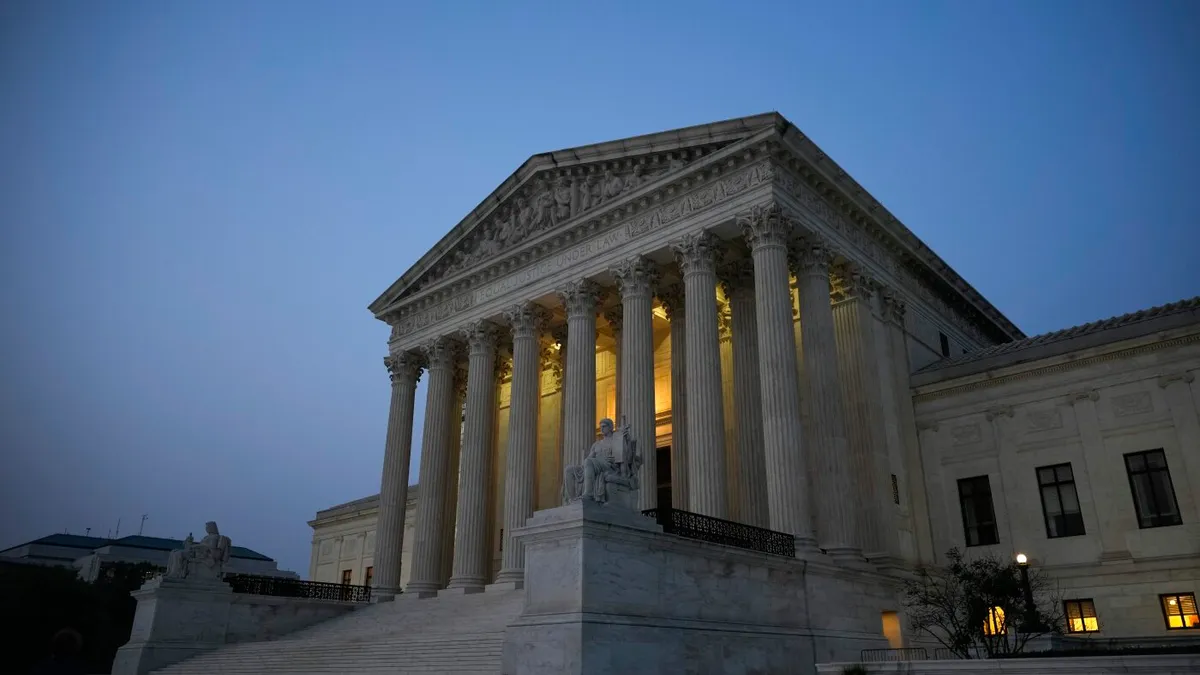
Well, that was a quick constitutional crisis averted. The Supreme Court just delivered a definitive smackdown to a former president's executive order, firmly — and quite loudly — declaring that birthright citizenship is, in fact, enshrined in the U.S. Constitution.
Chief Justice John Roberts penned the 6-3 majority opinion, essentially telling everyone that the 14th Amendment means exactly what it says, and has meant for over a century.
The Court Has Spoken
The executive order in question, dropped on the first day of the former president's hypothetical second term, aimed to strip citizenship from babies born in the U.S. if their parents were undocumented or on temporary visas. Lower courts had already waved it off as “blatantly unconstitutional,” which, if you think about it, is a pretty strong hint.
We're a new kind of news feed.
Regular news is designed to drain you. We're a non-profit built to restore you. Every story we publish is scored for impact, progress, and hope.
Start Your News DetoxThe former president had argued that the Constitution's guarantee didn't stretch that far. Roberts, however, pointed out that the folks who wrote the 14th Amendment after the Civil War were quite deliberate in defining citizenship broadly. They specifically rejected ideas to limit it. The amendment's words are pretty clear: "All persons born or naturalized in the United States and subject to the jurisdiction thereof, are citizens of the United States."
Turns out, "the entire world" is included, despite some arguments to the contrary. And courts have been backing that interpretation for a solid 160 years.
A Century of Not Messing Around
Roberts’ opinion leaned heavily on the 1898 case of Wong Kim Ark. Wong was born in San Francisco in 1873 to Chinese immigrants. His parents ran a business, then headed back to China. When Wong tried to re-enter the U.S. in 1895 after visiting his family, officials decided he wasn't a citizen. He challenged it. The Supreme Court sided with him.
The justices, in a 6-2 vote, decided “subject to the jurisdiction thereof” meant automatic citizenship for pretty much everyone born on American soil, with only a few exceptions like children of foreign diplomats (because, well, they're not really subject to our laws in the same way).
This Wong Kim Ark decision wasn't just some dusty legal footnote. It was widely accepted. Even during periods of intense anti-immigrant sentiment, birthright citizenship held firm. Consider World War II: Japanese citizens were rounded up and held in detention camps, but their children born in the U.S. automatically became American citizens. Congress later codified this understanding into law, just to be extra clear.
Cecillia Wang of the ACLU, who herself is a birthright citizen and argued the case before the Supreme Court in April, put it quite simply: the 14th Amendment's writers chose to give citizenship to the child, not the parent. Meaning, in America, we don't punish kids for their parents' choices. We wipe the slate clean. "When you're born in this country, we're all American, all the same."
Justices Clarence Thomas, Neil Gorsuch, and Samuel Alito, however, found themselves on the dissenting side of this particular historical footnote.