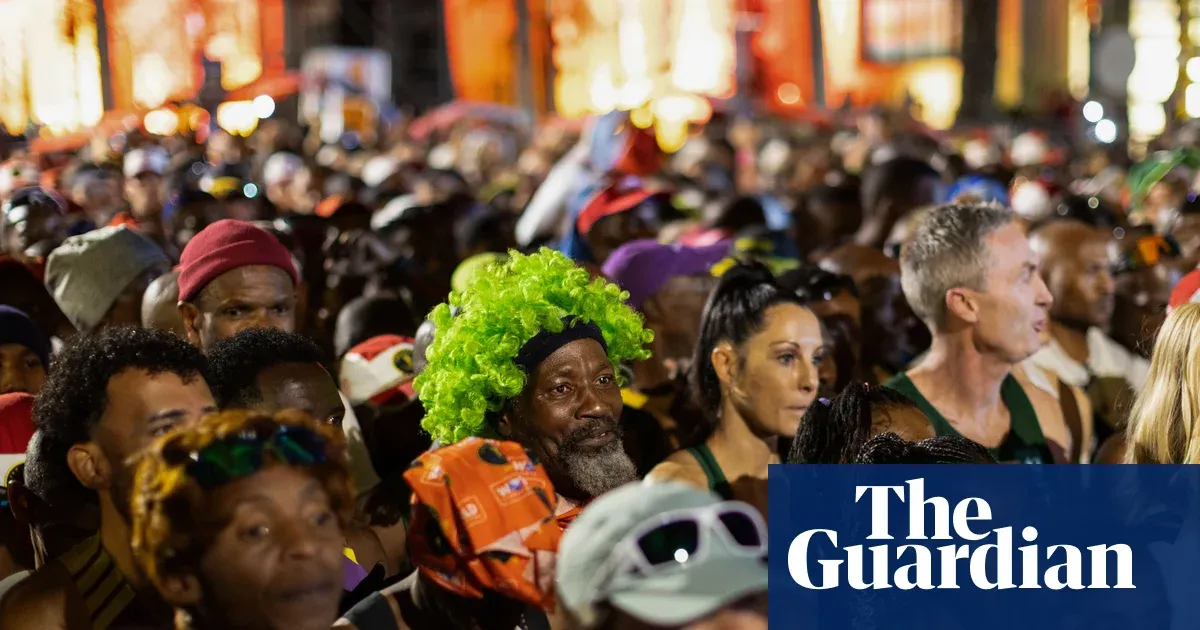
Imagine this: It’s 5 AM in South Africa. The national anthem plays, then a migrant workers’ song, then the iconic piano from Chariots of Fire. Then, a gun fires, and 20,000 people willingly sprint into the pre-dawn darkness to run 55 miles uphill. Because apparently, that’s where we are now.
This is the Comrades Marathon, the world’s largest and oldest ultramarathon, and it’s less a race and more a national fever dream. This year, over 20,000 runners gathered in Durban, aiming to conquer the 55-mile "up run" to Pietermaritzburg within a brutal 12-hour cutoff.
The Ultimate Uphill Battle
The Comrades started in 1921 with 34 white men running downhill. The next year, they ran uphill. And for over a century, the direction has flip-flopped annually, ensuring maximum confusion and leg pain. It’s a tradition born from a WWI veteran wanting to honor fallen soldiers, which makes you wonder if those soldiers would have preferred a nice, quiet memorial bench.
We're a new kind of news feed.
Regular news is designed to drain you. We're a non-profit built to restore you. Every story we publish is scored for impact, progress, and hope.
Start Your News DetoxFast forward to today, and the race is a cornerstone of South African life. Security guards run alongside bankers, celebrities next to shop workers. For one day each June, the country’s deep inequalities take a backseat to the shared agony of 88 kilometers.
Take William Seleka, for instance. His marriage ended, he battled depression, and in March 2025, he decided running 10k wasn't enough; he’d tackle the insane Comrades. He joined a club, ran 10k every weekday evening after fixing appliances for Smeg, and considered a half-marathon a "recovery" run. Let that sink in.
This year’s "up run" meant climbing 1,800 meters (5,900 ft), finishing 650 meters higher than where they started. By 12 miles in, the sun was up, spectators were cheering, and Seleka was smiling, exchanging quick hugs. Because nothing says "I’m having fun" like hugging someone while your quads scream.
From Segregated to Unifying
The Comrades wasn't always this grand, unifying spectacle. For years, it was an all-white, all-male affair. Frances Hayward became the first woman to finish in 1923, and Robert Mtshali the first Black man in 1935, but neither was officially recognized for decades. It took desegregation in 1975, and then national TV broadcasts starting in 1976, to truly change things. Suddenly, South Africans were captivated by the sight of a delivery driver like Hoseah Tjale competing against eight-time winner Bruce Fordyce.
Journalist Ryan Lenora Brown noted that seeing a white runner share water with a Black runner in the 1980s was a small, yet profound gesture in an apartheid-era society. It proved that even when society tried to divide, the shared suffering (and occasional water bottle) of a grueling race could bridge gaps.
As the runners left Durban, they pushed through lush landscapes, past families barbecuing roadside, and through aid stations blasting music. By the halfway point, most were walking the hills. Seleka, at 34 miles, was in agony after a shoe change mistake. He found himself singing hymns, despite not typically going to church. When you’re 46 miles into an ultramarathon, apparently, all bets are off.
As darkness fell, some runners danced across the finish line. Others, arm-in-arm with strangers who’d become friends, stumbled or collapsed. The famous "buses" — groups led by pacers — brought dozens of runners in just before the final 12-hour gun fired. Shahieda Thungo, the last 12-hour bus driver, crossed at 11:56:34, her bus full of grateful, exhausted passengers. A remarkable 91% of runners finished this year.
Seleka himself crossed at 10:30:49, tears streaming, dedicating his pain to his sister who suffered kidney failure. He’s already planning for next year. Because when you’ve run 55 miles uphill, battled depression, and found God in a hymn, what else is there to do but sign up for more punishment? It’s a new chapter, indeed.