Sweden plans to ban mobile phones in schools starting this fall. This move is part of a growing international trend to reduce screen time in classrooms.
Shifting Away from Screens
Sweden, known for its digital advancements, has been moving towards less screen time since 2023. The government's center-right coalition wants to prioritize reading and traditional learning tools, especially for preschool students.
Joar Forsell, who chairs the Swedish parliament's education committee, noted a drop in reading and writing skills among younger students. He believes that books and traditional learning methods are better for children.
We're a new kind of news feed.
Regular news is designed to drain you. We're a non-profit built to restore you. Every story we publish is scored for impact, progress, and hope.
Start Your News DetoxThis shift is happening worldwide. Many countries initially equipped schools with laptops and tablets. Now, more parents, teachers, and school districts feel it's time to cut back on screens.
Other Nordic countries are also making changes. Denmark is considering a similar ban, and Finland started restricting mobile devices in schools last August. Countries from Spain to South Korea are also limiting phone use in classrooms or screen-based homework. In the U.S., the Los Angeles Unified School District plans to ban screens until second grade and set daily screen time limits.
Boosting Learning with Books
Sweden's mobile ban aims to create learning environments with fewer distractions. Many schools in the country of over 10 million people have already put their own phone restrictions in place.
This year, the government set aside 555 million Swedish krona (about $59 million) to buy textbooks and teacher guides. This "back-to-books" policy was prompted by declining reading levels. A 2022 study showed that 24.3% of Swedish ninth graders couldn't reach a basic reading level. This is slightly better than the European Union average of 26.2%.
Magnus Haake, a cognitive science professor at Lund University, explained that learning with physical materials helps engage the motor sensory parts of children's brains, which "boosts the whole system."
Sweden is also encouraging screen-free zones at home. The public health agency advises parents to be good role models for screen use.
Fewer Distractions, Better Focus
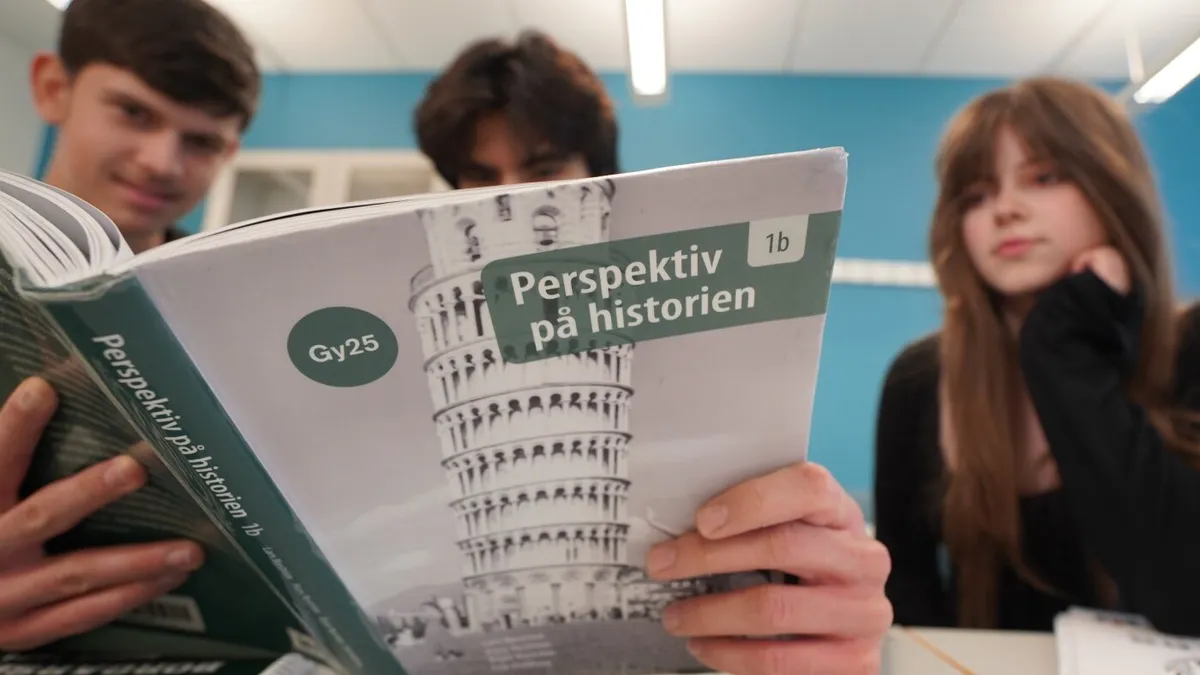
At Malmö Borgarskola high school, phones are already banned during classes. Students put their phones in a "Mobile Hotel" box and pick them up after class.
Melina Sallahi, a 17-year-old student, said, "When you have a phone, there's always something to look at. It's less of a distraction." Her classmate, Vasilije Stjepanovic, also 17, added that games and social media are "more fun than learning," and removing phones helps students learn better.
Deputy Headmaster Patrik Sander noted that while every student gets a laptop, they are now discouraged from using them in class unless a teacher says so. He observed, "We have pushed back, learning that writing with your hands and a pencil helps you remember."
Since last summer, Swedish children under two years old have been encouraged to use only non-digital materials. Preschoolers are not required to use digital learning tools. A new curriculum focusing on book-based learning is expected in 2028.
Debates Over Digital Learning
Not everyone in Sweden agrees with the move away from digital learning. The trade association Swedish Edtech Industry warned that 90% of future jobs will likely need digital skills. They believe a lack of this knowledge could lead to a skills shortage and higher unemployment among young Swedes.
Peter Carlsson, CEO of Imvi Labs, a startup that uses virtual reality for brain-eye coordination training, argued that not all screens are disruptive. He said some software is "critical" for children with learning difficulties. Carlsson believes good tools can make teaching more efficient.
However, students at Malmö Borgarskola are not worried about digital skills. Melina Sallahi said, "Everyone uses digital devices during their free time, so I don't think that's something that should be taught in school." Aslan Özhan Kilicasan added, "We learn much more easily when we use books."