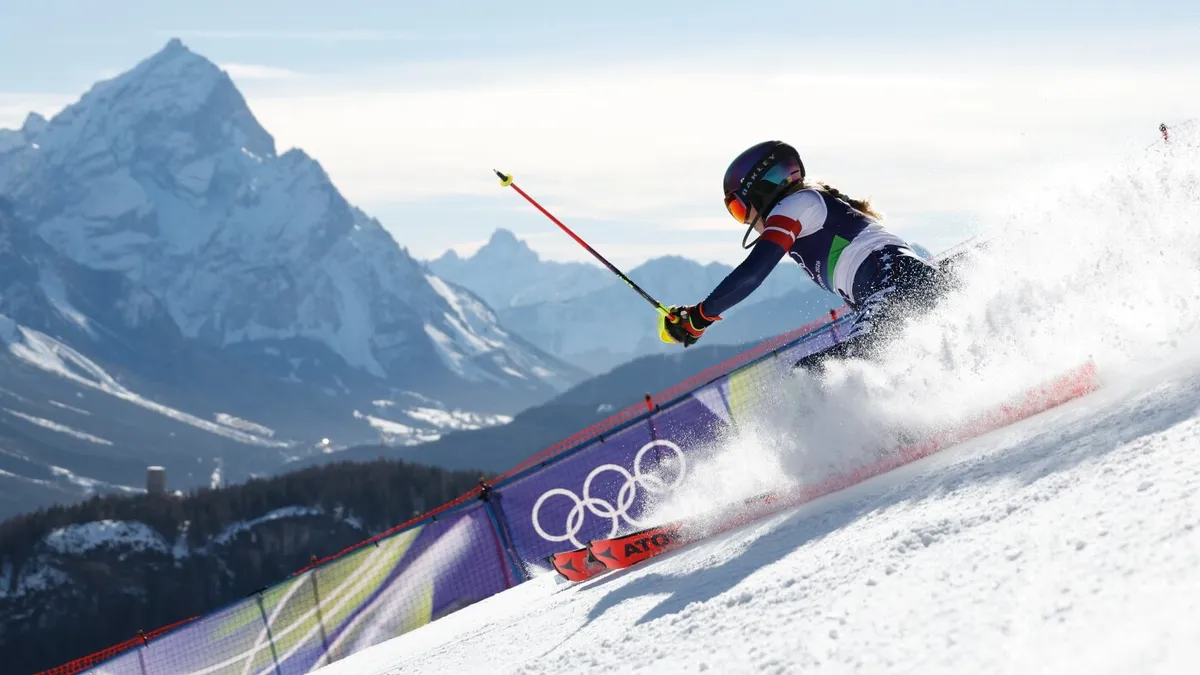
Mikaela Shiffrin crossed the finish line in Cortina d'Ampezzo on Wednesday and finally exhaled. After eight consecutive Olympic races without a medal—two in this Italian resort town, six in Beijing four years ago—the American skier had just won gold in the women's slalom, her first Olympic victory since 2018.
The margin was decisive: 1.5 seconds over second place. But the real story was in how she got there. Shiffrin's first run was nearly flawless, a 0.82-second lead that she then expanded in the second run. Afterward, still catching her breath, she described the mental tightrope she'd been walking. "I was also a bit on the limit," she said. "There were probably three different times on the course where I thought, I could easily be pushed off the course right now."
That honesty—acknowledging the razor's edge between precision and disaster—captures what made this win matter beyond the medal itself. Shiffrin arrived in Cortina carrying eight years of accumulated weight. She's the winningest Alpine skier in history with 108 World Cup victories. She's a two-time Olympic gold medalist. And yet, she'd watched herself slip through the gates again and again, unable to translate her dominance on the World Cup circuit into Olympic success.
We're a new kind of news feed.
Regular news is designed to drain you. We're a non-profit built to restore you. Every story we publish is scored for impact, progress, and hope.
Start Your News DetoxThe pressure was literal and visible. Organizers played dramatic music before each of her runs, a reminder that the entire narrative arc of these Games seemed to hinge on whether she could break the spell.
But Shiffrin had been battling more than just the mountain. She lost her father in 2020 and has spoken openly about the PTSD and grief that followed. She's endured severe injury. She's felt the particular scrutiny that comes with being a top American athlete at the Winter Olympics—the kind of attention that can either propel you or crush you, sometimes both at once.
After her earlier races in Cortina, she'd been candid about not finding her rhythm. "I didn't quite find a comfort level that allows me to produce full speed," she said. The work wasn't in the skiing alone; it was in the mental recalibration, the adjustment in a sport where milliseconds separate triumph from heartbreak.
On Wednesday, all of it came together. Not perfectly—she described her skiing as "nailed it with some question marks"—but completely enough. She closed her Olympics the way she needed to: on the podium, with gold around her neck, and with the eight-race drought finally behind her.