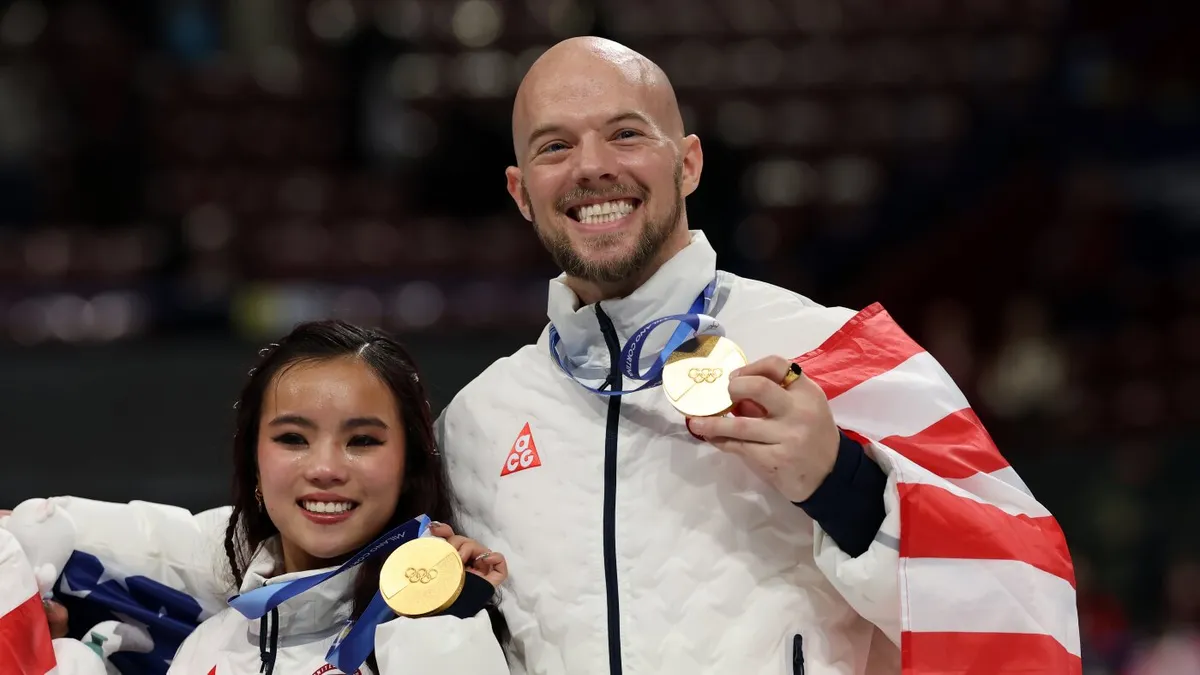
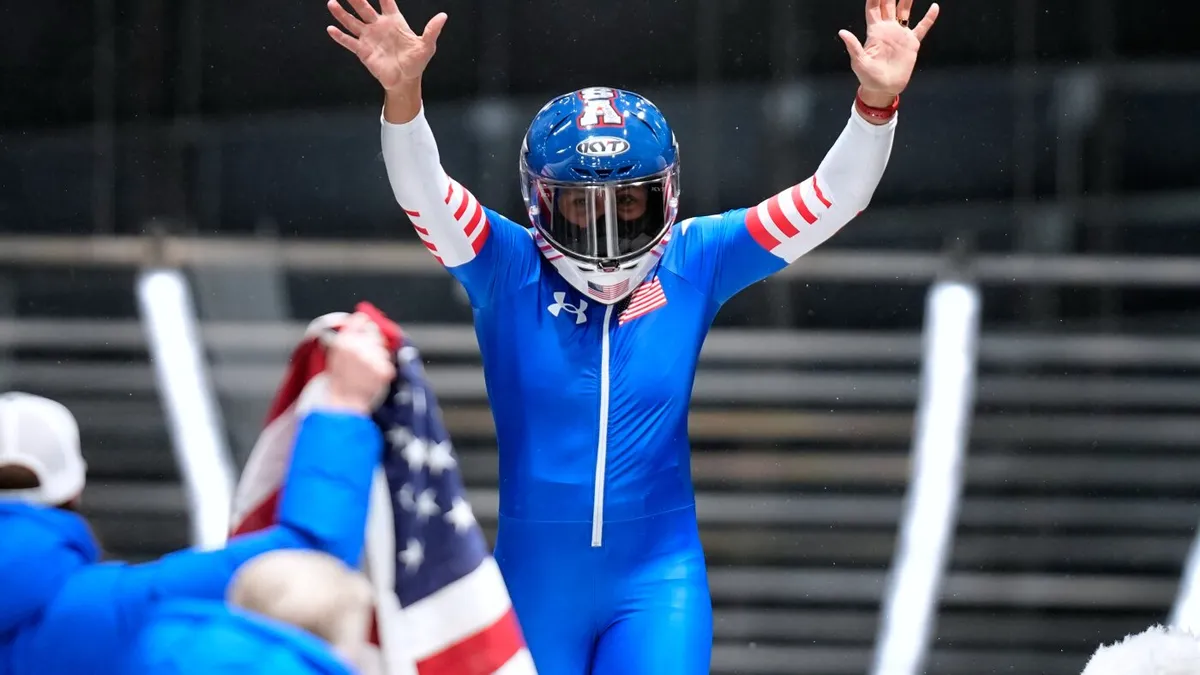
On the icy track in Cortina d'Ampezzo, Italy, Elana Meyers Taylor and Kaillie Humphries did something that shouldn't have been possible: they raced four heats of Olympic bobsled and came away with gold and bronze medals, respectively. Meyers Taylor was 41. Humphries was 40. Both were mothers.
Meyers Taylor's win came in the monobob event—a single-athlete race where one person pushes and steers a 400-pound sled down a frozen track at speeds that would terrify most of us in a car. She came from behind in the final heat, banking cleanly through the steep curves and holding her line on the straights to secure her first career gold medal. The race was tight; Germany's Laura Nolte, 27, took silver.
What made the moment resonate beyond the podium was the context. Meyers Taylor, who has two sons, now holds the record for the most Olympic medals won by a Black athlete in Winter Games history—a gold, three silvers, and two bronzes. Humphries, who gave birth to her son in 2024, added bronze to her collection of three golds and two bronzes.
We're a new kind of news feed.
Regular news is designed to drain you. We're a non-profit built to restore you. Every story we publish is scored for impact, progress, and hope.
Start Your News DetoxAlessandra Tarantino/AP
The long game
This was their second consecutive Olympics on the monobob podium. In Beijing 2022, Humphries won gold while Meyers Taylor took silver—a result she achieved after testing positive for Covid and training in isolation. But their impact extends beyond their own medals. Both women are widely credited with pushing the International Olympic Committee to add the women's monobob event to the Winter Games in the first place, bringing the sport into parity with men's competitions.
Humphries has spoken openly about the physical toll of her path here. She was diagnosed with endometriosis and underwent IVF treatments before her son was born. "I got back in the bobsled 4 1/2 months postpartum, so it wasn't the ideal timeline," she said before these Games. "I'm not a spring chicken anymore."
Meyers Taylor acknowledged her own struggles: years of breastfeeding, chronic sleep deprivation, back pain, the simple fact of getting older while competing at an elite level. "It's been quite a bit on my body," she said. "But I wouldn't trade it for the world."
That's not the language of sacrifice or compromise. It's the language of someone who chose both things—motherhood and Olympic glory—and found a way to make them coexist, even when the system wasn't built for it. Their medals on that Italian ice weren't just personal victories. They were proof that the conversation about what elite athletes can be, and when, is still being rewritten.