A young boy went missing near his mother's rice field in Indonesian Borneo. After nearly a day of searching, villagers found him standing near a massive strangler fig tree. He wasn't hiding, he insisted. The spirits living in the fig had called his name, drawn him in, and then made him invisible to his mother even as she walked circles around the tree looking for him.
The family brought him to a shaman, who confirmed what the boy described: he'd been touched by entities dwelling in the tree. To protect him, they gave him an entirely new name.
This isn't folklore filed away in an anthropology archive. It's a belief system with measurable ecological power.
We're a new kind of news feed.
Regular news is designed to drain you. We're a non-profit built to restore you. Every story we publish is scored for impact, progress, and hope.
Start Your News DetoxHow belief becomes conservation
Researcher Ditro Wibisono Wardi Parikesit spent time with the Iban Indigenous community in Sungai Utik, West Kalimantan, documenting their relationship with the forest. Almost every community member interviewed—30 out of 32—held a deep conviction that large strangler figs host supernatural entities. These spirits, they believe, will harm anyone who damages the trees.
New research published in Biotropica shows this belief system isn't just culturally significant. It's ecologically functional. When farmers in the Iban community assess their land, they leave strangler figs standing. Not because conservation policy demands it. Not because an NGO offered them incentives. Because the trees are considered sacred, dangerous to touch.
Strangler figs are keystone species—trees that anchor entire forest ecosystems. They produce fruit year-round when other food sources vanish, sustaining fruit-eating animals that would otherwise starve. Birds, bats, primates, and insects depend on them. When you protect the figs, you protect the web of life around them.
The Iban community's land-use practices reflect this. Their agricultural areas are interspersed with mature forest patches, including these protected fig trees. The result is a landscape that functions more like a working forest than a cleared farm. Wildlife moves through it. Soil stays intact. Water cycles remain functional.
Why this matters now
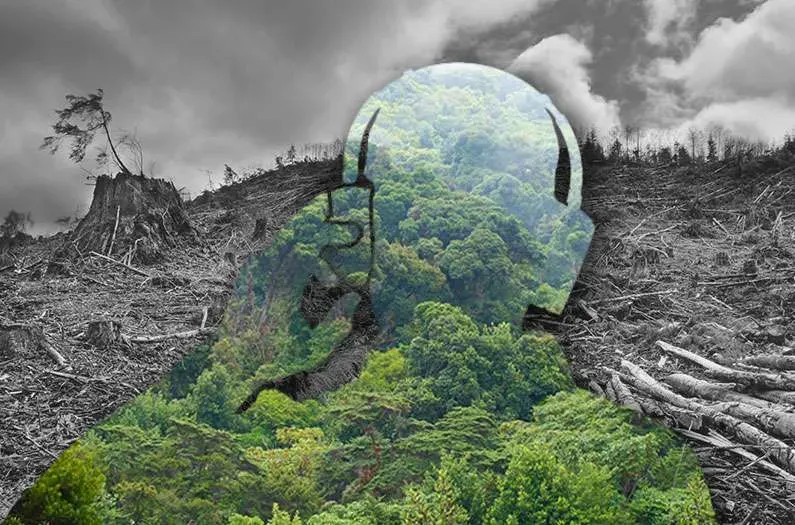
Borneo is losing forest at a pace that should alarm anyone paying attention. Industrial agriculture, logging, and development have carved away vast tracts. But in places like Sungai Utik, Indigenous land management practices are creating pockets of resilience. The spiritual taboo against harming strangler figs isn't separate from conservation—it's the mechanism that makes conservation work.
This isn't unique to the Iban. Across the world, Indigenous communities manage roughly 80% of remaining biodiversity on just 22% of global land. Their spiritual beliefs, their naming practices, their taboos—these aren't obstacles to conservation. They're often the reason ecosystems still exist.
What researchers are documenting now is something communities have known for generations: the most durable protection for a forest isn't a fence or a law. It's a story that travels through families, a belief so woven into identity that harming the tree becomes unthinkable.
As conservation efforts increasingly recognize Indigenous land rights and knowledge systems, stories like this one—of a boy renamed to escape spirits, of trees left standing because they're sacred—are gaining attention from policymakers. The question is whether that recognition will translate into real support for Indigenous communities managing these lands, or whether it will remain another research finding filed away while bulldozers keep moving.