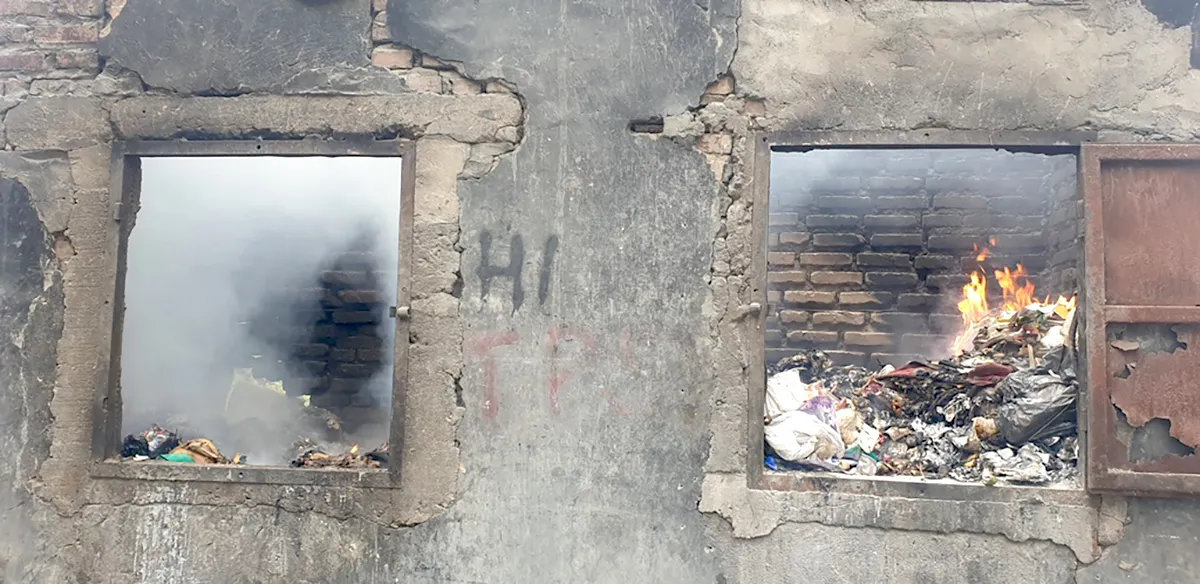
In Bogor, just south of Jakarta, neighborhood leader Erwinsyah faces a familiar problem: residents leave broken furniture and old mattresses on the streets. Left there, they become hazards. So he burns them in an empty field instead. It's illegal under Indonesia's 2008 Waste Management Law, but it's also the path of least resistance.
He's not alone. A 2023 Ministry of Health survey found that 57% of Indonesian households burn their waste — making it the most common disposal method by far. Only 27.6% hand waste to collectors, 8.7% dump it at disposal sites, and just 0.1% recycle. The practice is so entrenched that breaking it requires more than a law on paper.
Open burning releases a toxic mix: particulate matter, carbon monoxide, dioxins, and furans. Researchers have linked exposure to respiratory problems, cardiovascular disease, and cancer. The health cost is real and immediate, especially for children and elderly people breathing the smoke daily.
We're a new kind of news feed.
Regular news is designed to drain you. We're a non-profit built to restore you. Every story we publish is scored for impact, progress, and hope.
Start Your News DetoxBreaking the cycle
The Indonesian government and nonprofits are now testing whether structured alternatives actually work. The "Zero Waste to Nature" program, run by the Ministry of Environment and Forestry, has rolled out in several cities with a straightforward model: distribute waste bins, train residents on sorting, and partner with local waste banks to handle recycling. Early results show participating communities are burning less and recycling more.
Ecoton, a nonprofit focused on waste management, takes a different angle. They're educating communities about the health impacts while working with local governments to build the infrastructure that makes alternatives viable. The logic is simple: if burning is the default because nothing else exists, build something else.
But scaling these pilots faces real obstacles. Rural areas often have no waste collection service at all, making open burning the only practical option for households. Funding is thin. And habits built over decades don't shift because a new bin appears.
Experts point to what actually works: sustained government investment in collection and processing infrastructure, enforcement that's consistent enough to matter, and community engagement that acknowledges why people burn waste in the first place. Erwinsyah isn't burning mattresses because he enjoys it — he's doing it because bulky waste has nowhere else to go.
The pilot projects suggest the problem isn't that Indonesians don't care about pollution. It's that they've had no real alternative. As these initiatives expand and prove the model works, the question shifts from whether change is possible to how fast it can scale across the country.