Raeann Garnett is 29 and carries a responsibility that stretches back generations. As tribal chief of the Native Village of Venetie, she represents about 200 people living above the Arctic Circle in northeastern Alaska—and she's watching a decades-long fight reach a critical moment.
The U.S. Bureau of Land Management just opened nominations for the first oil and gas lease auction in the Arctic National Wildlife Refuge (ANWR). Three Gwich'in governments, including Garnett's, have filed suit to stop it.
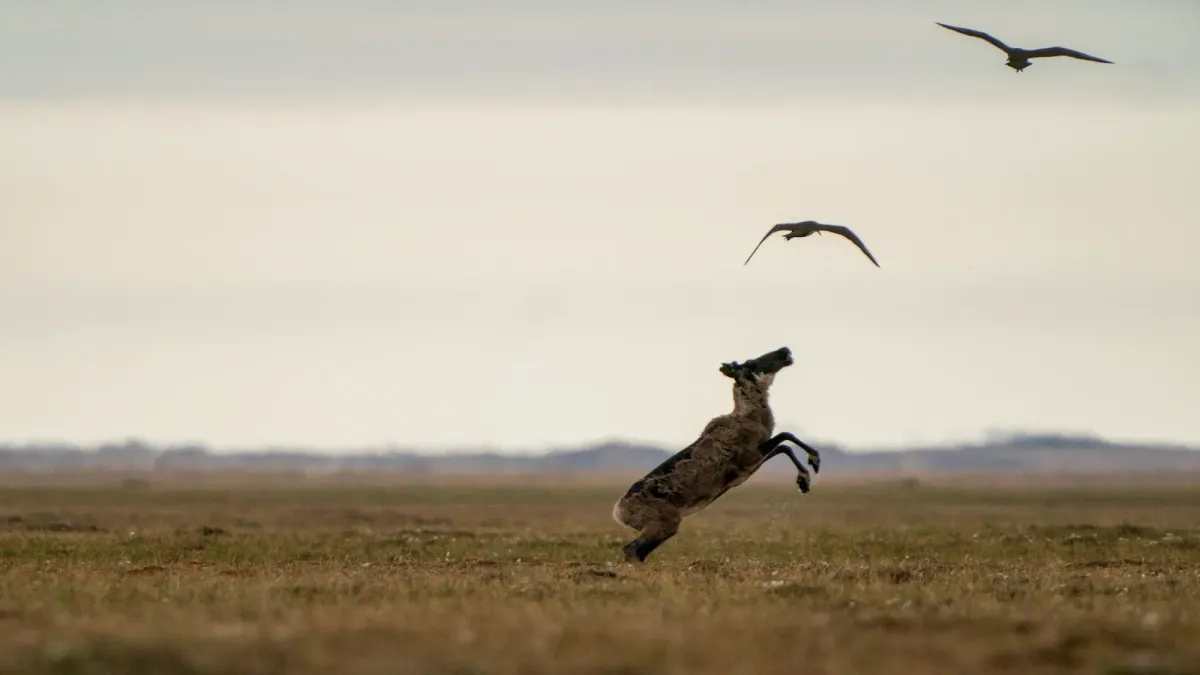
The Gwich'in call themselves the "caribou people" for a reason. For centuries before colonization, they've survived on the Porcupine caribou herd—not as a choice, but as the foundation of their food security and culture. The herd forages and calves on the refuge's coastal plain, an area the Gwich'in call Iizhik Gwats'an Gwandaii Goodlit: the sacred place where life begins.
We're a new kind of news feed.
Regular news is designed to drain you. We're a non-profit built to restore you. Every story we publish is scored for impact, progress, and hope.
Start Your News DetoxIn January, the Native American Rights Fund filed the lawsuit on behalf of Garnett's government, the Arctic Village Council, and Venetie Village Council. The case challenges the Department of Interior's plan to lease roughly 100 miles of coastal plain for oil development. The argument is straightforward: development at that scale would disrupt caribou migration, foraging, and calving—essentially making the refuge uninhabitable for the herd.
Alaska Native tribes never signed treaties with the U.S. government, but federal law functions similarly, protecting certain rights and obligations. The lawsuit contends the DOI violated those legal protections.
"I'm the main protector of our land that we own and I do it for all our tribal members," Garnett said. For Gwich'in communities, this isn't abstract environmentalism. Caribou provides the primary food source. Moose, birds, and fish supplement it. High fuel costs and expensive groceries mean subsistence hunting isn't optional—it's survival.
The pressure is intensifying from another direction too. Climate change is already reshaping the Arctic in visible ways. "The weather has been changing a lot these past couple of decades," Garnett said. "I feel worried for the next generations, after us, after me. I want them to have what we have now."
The lawsuit now moves through federal court, with the outcome likely to influence how much of ANWR remains open to extraction.