In a world constantly shifting, where cultures often get swept aside by the relentless tide of modernity, a group of women in Nepal are quietly, fiercely, keeping an entire way of life alive. The Rana Tharu women aren’t just passing down traditions; they’re building a living, breathing archive of language, history, and identity, all while the world outside their villages seems intent on forgetting.
The Everyday Keepers of Everything
Imagine learning your first words, not from a textbook, but from a lullaby woven with centuries of history. For Rana Tharu children, this is often the reality, thanks to their mothers and grandmothers. While Nepali and English dominate schools and media, these women are the frontline defense for their local language. Every conversation, every wedding song, every folk tale isn't just a moment shared; it's a brick in the wall against cultural erosion.
Older women become living libraries, sharing stories of ancestors, the rhythm of the forest, the secrets of farming, and the heartbeat of community life. This isn't just language preservation; it's memory preservation, ensuring words remain tethered to the experiences that gave them meaning.
We're a new kind of news feed.
Regular news is designed to drain you. We're a non-profit built to restore you. Every story we publish is scored for impact, progress, and hope.
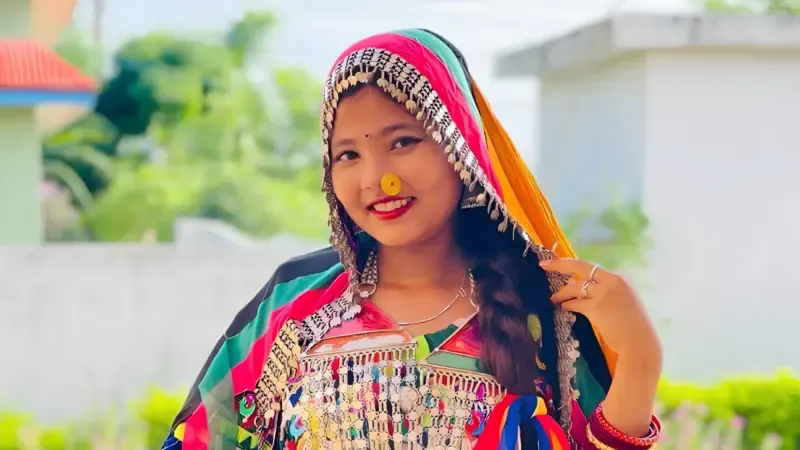
Start Your News DetoxTheir guardianship extends far beyond words. Take the Rana Tharu textiles: intricate floral embroidery, vibrant pom-poms, tassels, and patchwork that aren't just pretty to look at. They're a visual diary of art, resourcefulness, spiritual beliefs, and an unbreakable bond with nature. Each stitch tells a story, each design holds a cultural meaning, passed down, yes, mostly by women.
And the jewelry? It’s not just adornment. Each piece is a miniature map, charting ancient trade routes, migrations, family sagas, and the enduring spirit of a people stretching across Nepal and northern India.
Jeevan Rana, a local policy bigwig, put it perfectly: traditional clothes are "a living expression of our identity, history, and collective memory." So, when they wear these garments, they’re not just getting dressed; they’re performing an act of profound cultural remembrance and transmission.
Then there's the Teej festival, where most Hindu women fast for their husbands. Not the Rana Tharu. Here, women fast for the health and longevity of their brothers and nephews. It's a subtle but powerful twist, highlighting their unique social fabric and the central role women play within it. Rambeti Rana, a Teej song competition winner, shows how it’s done.
More Than Just a Story
The Rana Tharu are one of five main Tharu groups in Nepal, predominantly residing in the Terai region. They trace their ancestry to Rajput royalty, claiming a dramatic flight from India centuries ago after a Muslim invasion. While scholars might raise an eyebrow at some details, the community holds fast to this origin story, a testament to shared memory and identity.
One intriguing oral history tells of a Brahmin woman fleeing with them who fell for a king's servant. To honor her higher caste, he was forbidden from entering the kitchen when she cooked – an early, symbolic elevation of women's status within the community.
Beyond the obvious markers of culture, Rana Tharu women are also the spiritual bedrock. They lead agricultural rituals, praying for bountiful harvests and healthy livestock. They oversee weekly worship, seasonal deity services, and family ceremonies that continuously strengthen spiritual bonds. It’s a lot to carry, but they do it, often against a tide of challenges.
From the 1950s to the 70s, government programs and land reforms displaced many from their ancestral lands. The expansion of Shuklaphanta Wildlife Reserve further exacerbated the issue. And then there's the relentless subdivision of land due to inheritance, making farming less viable and pushing more people towards wage labor and migration.
Education has historically been a struggle too, and while things are improving, Rana Tharus are still underrepresented in higher education and decision-making roles. Even access to traditional materials for crafts like basket weaving and house building has been curtailed by restrictions on forests and wetlands. Yet, through it all, the Rana Tharu women persist, weaving, singing, and storytelling their culture into tomorrow. Because apparently, that’s where the real power lies.