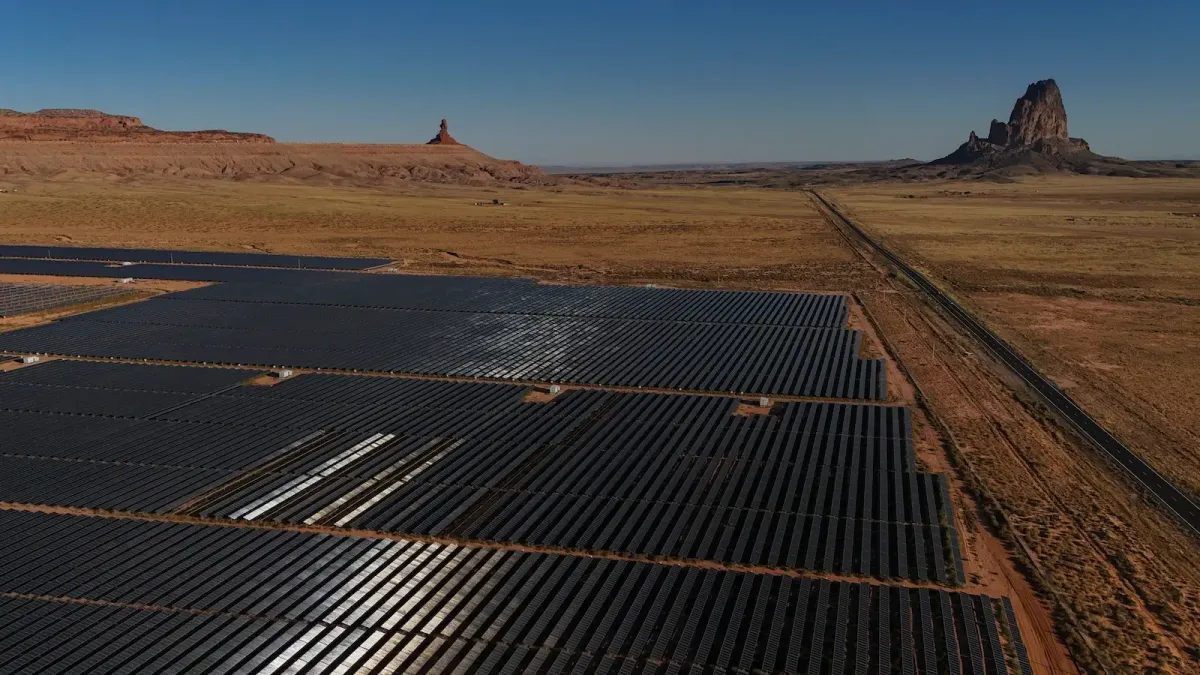
Last week, David Harper stood in front of tribal leaders, investors, and farmers at the Bluewater Resort and Casino on the Colorado River Indian Tribes reservation in western Arizona. They were there to launch something new: the tribe's first agrivoltaics project—solar panels with crops growing underneath them. It felt like a win.
But the timing stung. Just months earlier, in October, President Trump's tax bill pulled roughly $1.5 billion in federal funding that had been earmarked for tribal renewable energy and climate resilience projects. Nearly 1,600 projects by tribal governments and Native entities lost some or all of their federal support.
Harper, CEO of the newly created tribal energy financing organization Huurav, wasn't shocked. "Were we surprised by the claw back? No, they've done it before," he said. "What it does is it makes us create a better pathway for ourselves."
We're a new kind of news feed.
Regular news is designed to drain you. We're a non-profit built to restore you. Every story we publish is scored for impact, progress, and hope.
Start Your News DetoxThat better pathway is already taking shape across Indian Country.
Finding Money Without Washington
The Biden-era Inflation Reduction Act of 2022 had poured historic money into tribal renewables. But experts and tribal leaders always knew it wasn't enough. Robert Maxim, a member of the Mashpee Wampanoag Tribe and Brookings fellow, put it plainly: the federal government created these problems through land theft and disinvestment. A one-time cash infusion doesn't fix that.
"Things like a clean environment, adequate energy to supply homes, basic investments in electricity without higher levels of pollution—these are all key to that trust and treaty relationship," Maxim said.
So tribes are filling the gap themselves. Philanthropy, low-interest loans, and nonprofits are stepping in. Organizations like the Alliance for Tribal Clean Energy launched initiatives like its Indigenous Power and Light Fund, backed by partners including the MacArthur Foundation. Huurav itself drew expertise from the Agrivoltaics Growth through Resilience and Innovation program, run by the National Laboratory of the Rockies and the Farmland Trust.
Community financial development institutions—CFDIs—are also meant to bridge lending gaps by offering funding to Native-led organizations pursuing renewable projects. More than half of Native-operated CFDIs cite lack of funding as a major challenge, but they're still moving forward.
On the Hawaiian island of Molokai, Native Hawaiians are using profitable renewable energy projects to tackle two problems at once: cutting utility bills that are among the highest in the country, and advancing their landback initiatives. Kyle Whyte, a Citizen Potawatomi Nation professor of environmental justice at the University of Michigan, sees the strategy clearly. "They're making the case that they can get investors to invest in their landback projects," he said. "One of the ways they'll succeed in governing that land is through profitable renewable energy projects."
Why This Actually Matters
The energy burden on tribal communities is real. A 2023 Department of Energy report found that tribal households face an energy burden 28 percent higher than the national average. In the Southwest, the Hopi Tribe and Navajo Nation have the highest rates of unelectrified homes and often rely on coal or propane for heat. Many tribes lack reliable transmission lines, leaving them vulnerable to floods and wildfires fueled by climate change.
Some tribes are also exploring different paths—pursuing federal grants aligned with the Trump administration's priorities, like tapping nearly $172 million in Department of Energy geothermal funding or seeking transmission upgrades backed by a $1.6 billion federal loan guarantee.
What's happening here goes beyond solar panels and wind turbines. It's about self-determination. As Harper framed it: "We don't trust the federal government, but we have to work with them to understand that we have to continue in our process of survival and self-sustainability."
The tribes cut off from federal clean energy money are proving they don't need Washington's permission to build their own energy future.