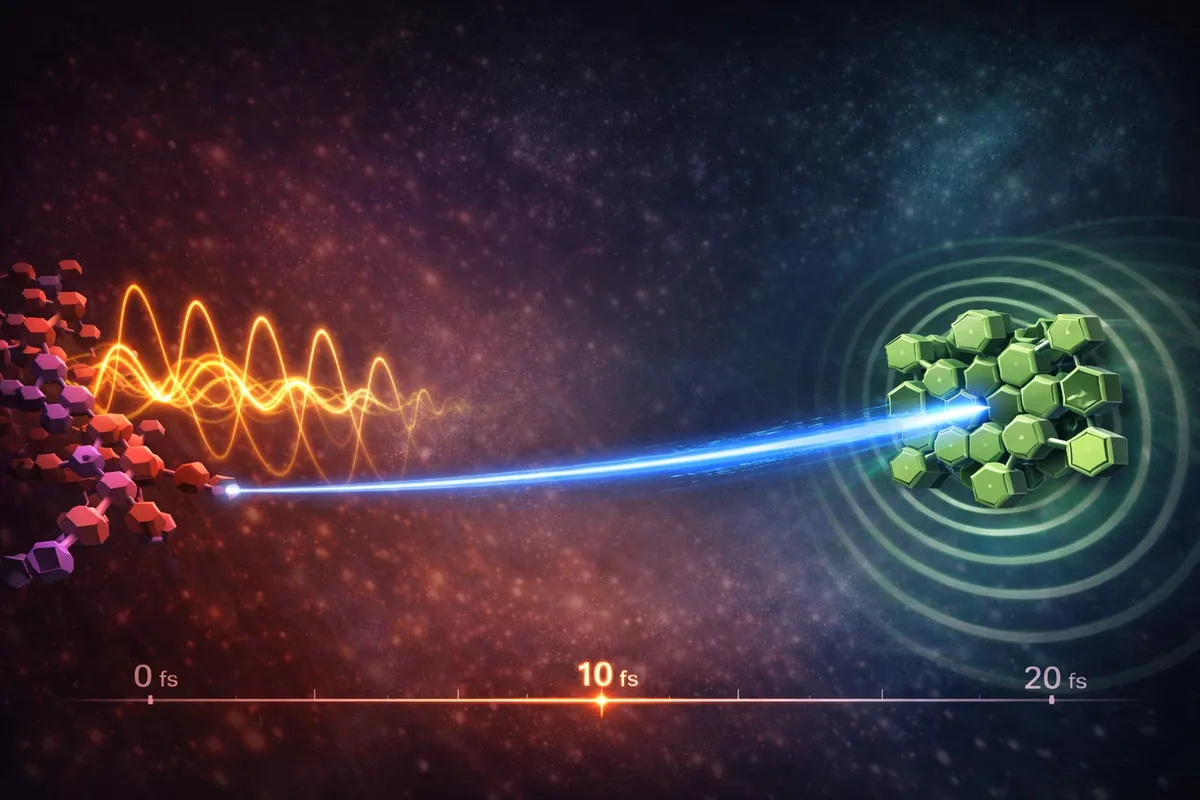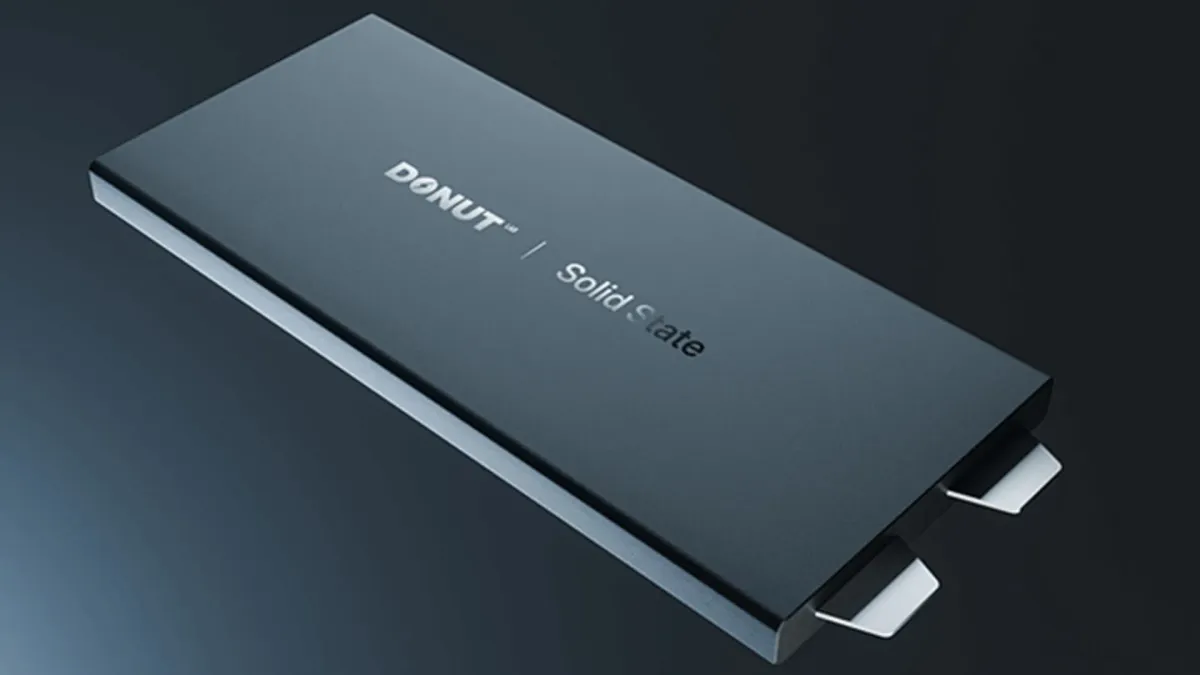
Finnish startup Donut Lab just put an old question to rest: their solid-state battery is actually a battery, not a souped-up supercapacitor pretending to be one.
The distinction matters more than it sounds. Since Donut Lab announced their "Donut Battery" last year—claiming 370-mile range, five-minute charging, and the kind of performance specs that made skeptics raise their eyebrows—people have been asking whether something that charges that fast and performs that well is really a battery at all, or just a very clever capacitor.
A new independent test from VTT Technical Research Centre of Finland provides the answer. After charging the cell to 50 percent capacity and leaving it sitting for 10 days at room temperature, the battery retained 97.7 percent of its charge. That's the kind of self-discharge profile you'd expect from an actual battery. A supercapacitor would have bled away significantly more energy in that time—that's the fundamental tradeoff with supercapacitors. They're brilliant at moving charge in and out quickly, but they can't hold onto it when you're not using it.
We're a new kind of news feed.
Regular news is designed to drain you. We're a non-profit built to restore you. Every story we publish is scored for impact, progress, and hope.
Start Your News Detox"The Donut Battery behaves like a battery and can maintain a charge for significantly longer," said Donut Lab's CTO Ville Piippo in a statement that felt almost understated given what the data actually shows.
What the test actually measured
VTT's methodology was straightforward: charge the cell, measure its voltage every 10 seconds for 240 hours, then discharge it and see how much energy came back out. The results showed something interesting about how batteries stabilize after charging. The cell dropped about 60 millivolts in the first 10 seconds—that's voltage relaxation, a normal physical process—then another 43 millivolts over the next 50 minutes. After that, things stabilized dramatically. From hour 10 onward, the battery lost only 12 millivolts over the remaining 230 hours of the test. When they discharged it at the end, they recovered 12.029 amp-hours out of the original 12.3 amp-hours charged in.
This matters because it reveals how the battery actually behaves under real-world conditions. You're not going to notice that initial voltage drop when you unplug your phone. But you will notice if your electric motorcycle loses 30 percent of its range sitting in your garage for a week.
Donut Lab designed this battery for Verge Motorcycles' TS Pro, which is where those ambitious specs—400 watt-hours per kilogram, charging from empty to 80 percent in about five minutes—come from. This is the third independent test the company has released. The first confirmed the five-minute charging capability. The second showed the battery actually works better at high temperatures (110 percent capacity at 80°C, 107 percent at 100°C), which is counterintuitive enough that it needed proving.
What's emerging from these tests is a picture of a genuinely different kind of battery. Solid-state batteries replace the liquid electrolyte in conventional lithium-ion cells with a solid material, which eliminates a whole category of failure modes and safety concerns. They can be packed more densely with energy. They can handle higher temperatures. And apparently, they can charge absurdly fast without behaving like a supercapacitor—which means they might actually hold onto that charge when you need it to.
The next question isn't really about the physics anymore. It's about manufacturing at scale and cost. Donut Lab says this is "the world's first production-ready solid-state battery for electric vehicles." The test results support that claim. What remains is whether they can actually build enough of them, and whether the price point makes sense for vehicles beyond high-end motorcycles.