In the village of Nigré, Côte d’Ivoire, Chief Djahi Bertin recently welcomed a rather specific crowd: scientists, conservationists, and park rangers. His village, now a patchwork of rice, cassava, oil palm, and rubber farms, used to be dense forest. The reason for the gathering? To figure out how to bring some of that forest back.
After sharing kola nuts and other traditional offerings, Chief Bertin poured wine onto the floor. He watched as the splash spread, then pointed to it. "It looks like a hand," he explained, "fingers spread out but still connected. We are of one mind." A surprisingly poetic, and accurate, metaphor for what these folks are trying to do.
Nigré sits near the edge of the Taï Forest, a whopping 5,000 square kilometers (about 1,930 square miles) of dense, humid green. It's the largest surviving chunk of the Upper Guinean rainforest, which once stretched across Liberia, Côte d’Ivoire, Ghana, and even into Togo. Now, thanks to human activity, it’s more like a collection of isolated green islands in a sea of agriculture.
We're a new kind of news feed.
Regular news is designed to drain you. We're a non-profit built to restore you. Every story we publish is scored for impact, progress, and hope.
Start Your News DetoxReconnecting the Green Dots
Those isolated forest patches are a huge problem for wildlife. Monkeys, chimpanzees, and elephants don't exactly thrive when their ancient migration routes are suddenly a rubber plantation. So, the "one mind" Chief Bertin spoke of is focused on reconnecting these fragmented habitats, essentially building biological bridges so animals can roam freely again.
This isn't just about planting a few trees. It's a complex, multi-decade effort involving local communities, international organizations, and a serious amount of scientific planning. They're looking at things like agroforestry – integrating trees into farming systems – to create corridors that benefit both people and wildlife. It's a delicate dance between human needs and ecological imperatives.
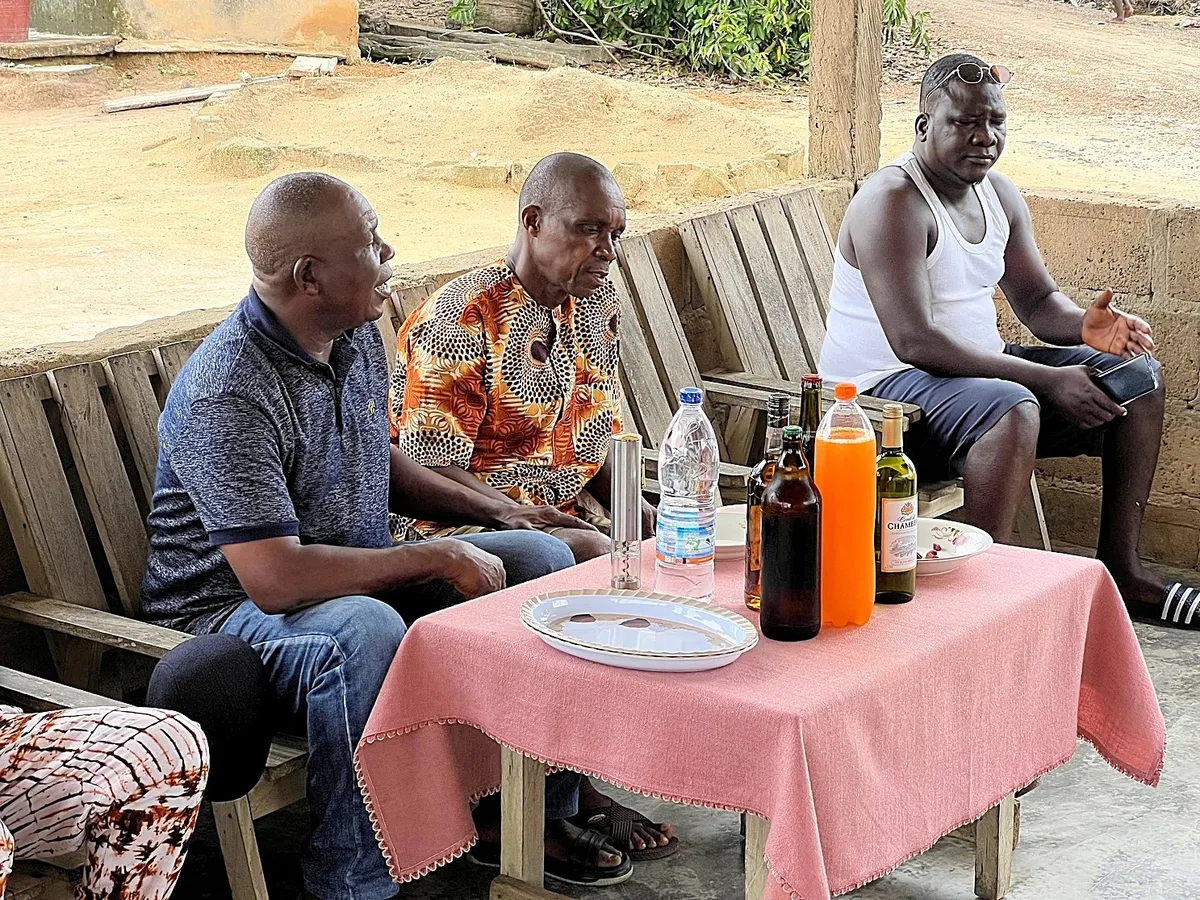
And it all started with a chief, a splash of wine, and a simple, powerful image of connection. Because sometimes, the most profound scientific challenges are best understood through a bit of ancient wisdom.