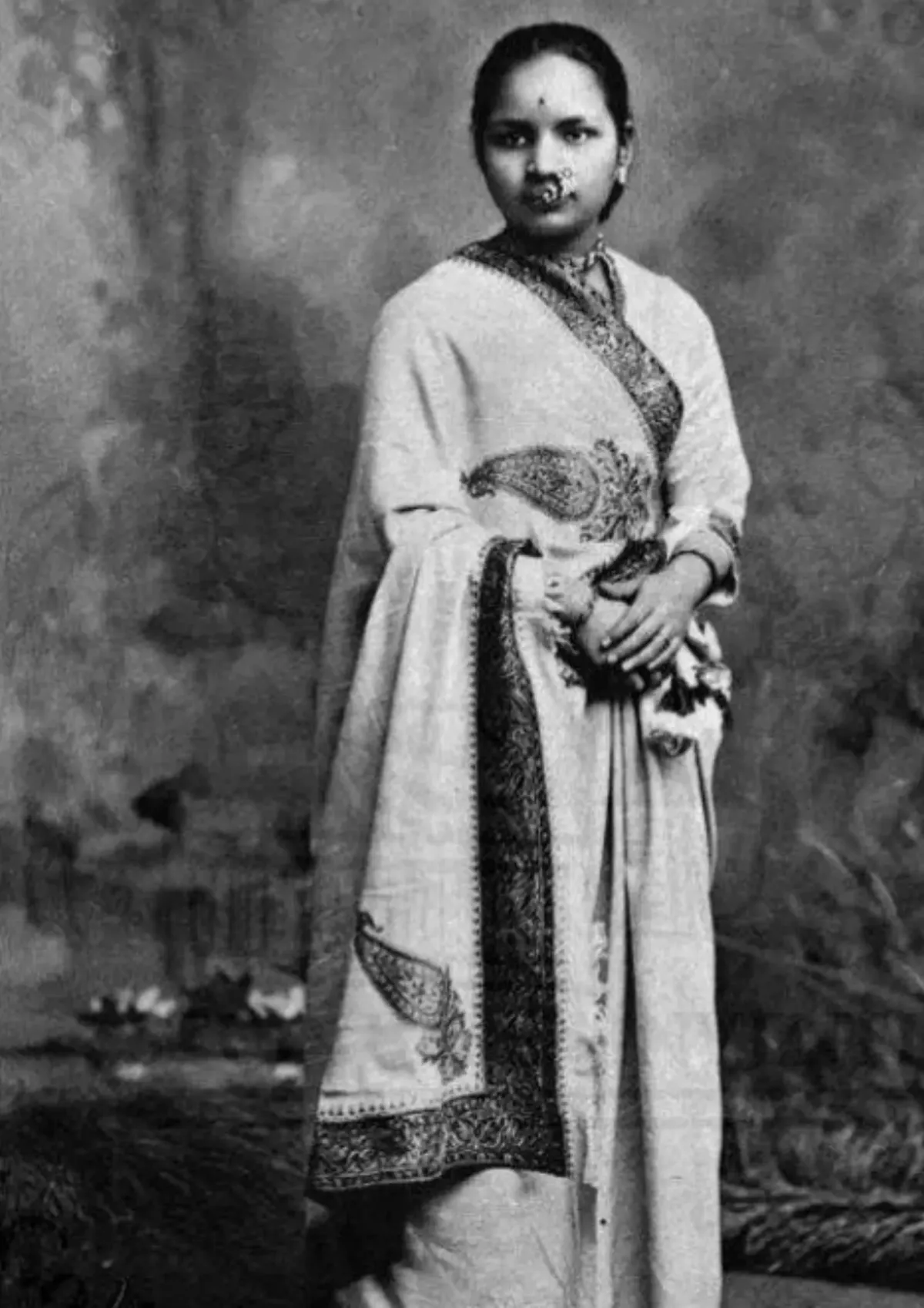
Anandi Gopal Joshi was nine when she was married off. She was fourteen when her newborn died. At twenty-two, she was dead herself—but not before she'd cracked open a door that millions of women would walk through.
Born in 1865 to an orthodox Marathi Hindu landlord family in Kalyan, near Mumbai, Anandi lived in a world that had decided her future before she could read. The death of her infant son in 1879 might have been the end of her story. Instead, it became the beginning.
She told her husband, Gopalrao—a widower twice her age—that she wanted to study medicine. He listened. In 1880, he wrote to Royal Wilder, an American missionary with connections to medical schools in the United States, asking for help. Wilder had one condition: convert to Christianity. The family refused.
We're a new kind of news feed.
Regular news is designed to drain you. We're a non-profit built to restore you. Every story we publish is scored for impact, progress, and hope.
Start Your News DetoxAnandi didn't wait for permission to change. She took her ambition public, speaking before an audience that included the American Consul General at Serampore College Hall. "There is a growing need for Hindu lady doctors in India," she said, "and I volunteer to qualify myself for one." The words traveled. Money came in from citizens and officials. The Viceroy of India himself, the Marquess of Ripon, contributed 200 rupees.
Without direct admission to an American college, Wilder did something else: he arranged for Anandi's letters to be published in Missionary Review, a Princeton University periodical. One reader was Theodicia Carpenter, a woman who wrote back offering support. Through Carpenter's help, Anandi gained admission to the Women's Medical College of Pennsylvania—the world's first medical college for women.
When neighbors heard she was leaving for America, they threw stones and cow dung at her house. She went anyway.
The door opens
In 1886, Anandi graduated. She did it alongside Kei Okami from Japan and Tabat Islambooly from Syria—three women from three continents, all earning degrees in Western medicine in the same year. Queen Victoria sent a congratulatory message when she heard the news.
Anandi returned to India at twenty-one and took a position as physician-in-charge of the female ward at Albert Edward Hospital in Kolhapur. She had less than a year. Tuberculosis killed her on February 26, 1887.
She was twenty-two.
What matters isn't how long she lived. It's what her life proved: that a girl from an orthodox family in a colonial India could refuse the life assigned to her, could speak her ambition aloud, and could become a doctor. That act of refusal—public, unapologetic—gave permission to the women who came after. She opened one door. Generations of Indian women physicians walked through it.