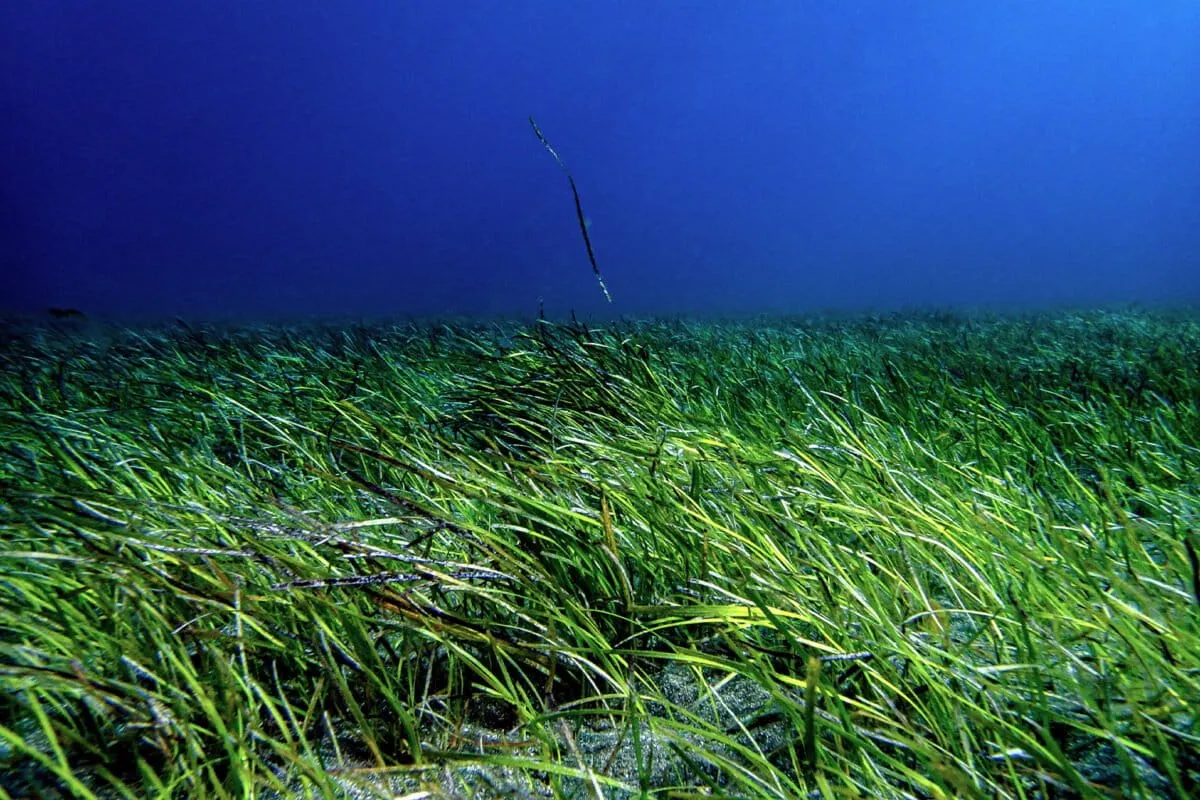
You know that feeling when you finally find something that just works? That's seagrass. These underwater meadows, often overlooked, are basically the unsung heroes of our coastlines, quietly doing the heavy lifting to keep our beaches from vanishing.
Turns out, their dense root systems aren't just for show. They're like nature's rebar, anchoring into the seabed and binding sediment with an impressive grip. Think of it as a tiny, aquatic forest stabilizing the soil, only instead of preventing landslides, it's preventing your favorite beach from becoming a memory.
Oscar Serrano Gras, a researcher who clearly spends more time thinking about these things than most of us, points out that seagrass meadows are basically a natural, self-repairing barrier against erosion. Oh, and as a bonus, they're also rather good at soaking up carbon dioxide. Because apparently, saving beaches wasn't quite enough.
We're a new kind of news feed.
Regular news is designed to drain you. We're a non-profit built to restore you. Every story we publish is scored for impact, progress, and hope.
Start Your News DetoxThe Unsung Wave-Blunting Heroes
With climate change turning storms into a more frequent, more aggressive affair, coastlines are taking a beating. And when seagrass disappears, it's like removing a vital shock absorber. These dense green carpets slow down water movement, essentially deflating waves before they even get a chance to crash violently onto the shore.
Heidi Nepf, an engineering professor at MIT who probably knows a thing or two about resistance, explains that seagrass leaves are basically tiny speed bumps for water. They create drag, weakening waves as they muscle their way through the plants. The bigger the leaves, the better the blunting. Neptune grass, with its wider leaves, is particularly adept at this — far more effective than its smaller, dwarf eelgrass cousins.
Beyond just slowing things down, these plants are also busy stabilizing sediments, helping them accumulate over time. A 2024 study in Nature (because where else would you publish such findings?) suggested that if we lose too much Neptune grass, parts of the Mediterranean coast could be looking at significantly higher water levels. Which, if you think about it, is both impressive and slightly terrifying. So next time you're at the beach, maybe give a silent nod to the humble seagrass doing its thankless work.