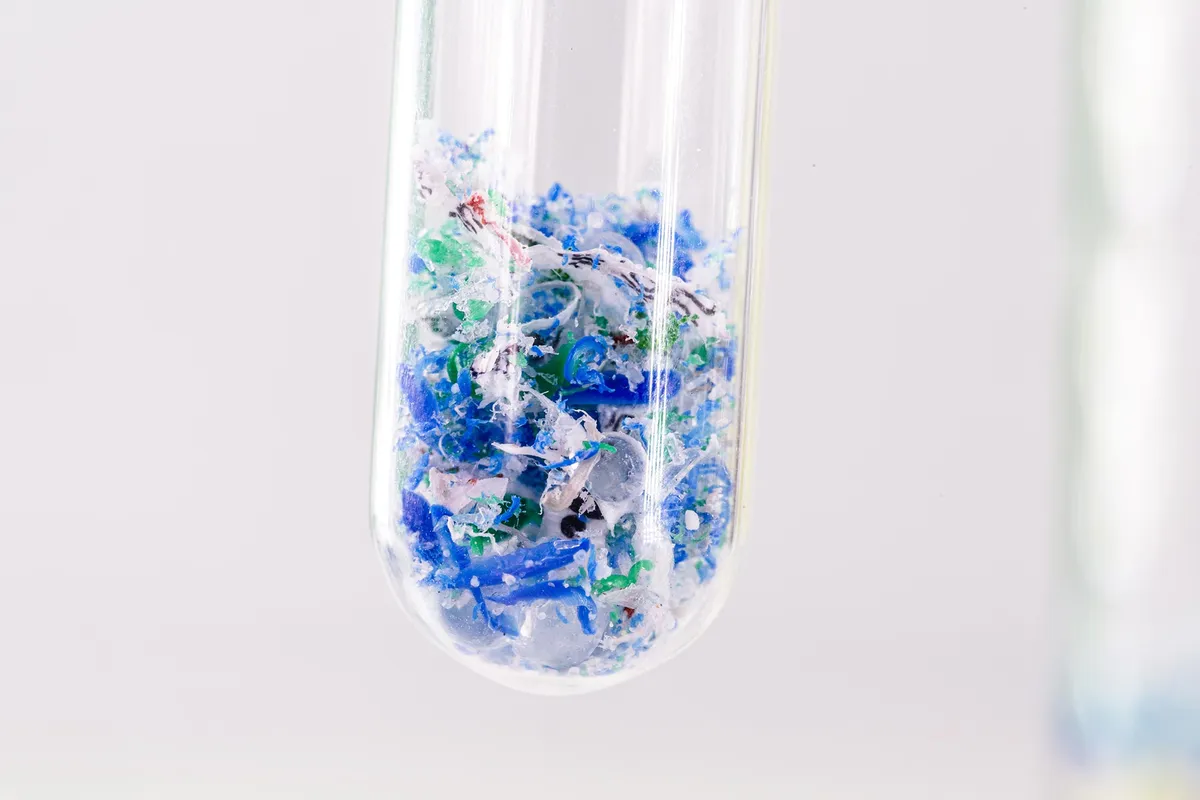
Good news, everyone: the tiny plastic bits infiltrating everything from our drinking water to our dinner plates might soon meet their match. Scientists have engineered a new strain of algae that doesn't just pull microplastics out of water, but then helps turn them into something useful. Because apparently, that’s where we are now.
Susie Dai, a professor at the University of Missouri, is leading the charge against these microscopic invaders. She's developed a special algae strain that acts like a tiny, green magnet for microplastics. The goal? Clean water, and then a second act for the plastics themselves, reborn as bioplastic films. It’s the circle of life, but with less Hakuna Matata and more advanced chemistry.
Microplastics, as Dai points out, are everywhere. Ponds, lakes, rivers, even the fish we're trying to eat for dinner. Most wastewater treatment plants are great at catching the big stuff, but these microscopic menaces just waltz right through, ending up in our tap water and, you know, the entire ecosystem.
We're a new kind of news feed.
Regular news is designed to drain you. We're a non-profit built to restore you. Every story we publish is scored for impact, progress, and hope.
Start Your News DetoxHow These Algae Became Plastic-Eating Superheroes
Dai’s team gave the algae a little genetic tweak, nudging them to produce limonene. If that sounds familiar, it’s the natural oil that gives oranges their distinct, zesty smell. This limonene makes the algae hydrophobic — water-repelling. And guess what else repels water? Microplastics. It’s a match made in environmental heaven.
When the water-fearing plastics encounter the water-fearing algae, they cling together like a bad rumor. These plastic particles clump up, get heavier, and then politely sink to the bottom, where they can be easily scooped out. Convenient, right?
As if that wasn't enough, these super-algae also thrive in wastewater, happily munching on excess nutrients, giving the water an extra scrub. So, in one fell swoop, you're removing microplastics, cleaning wastewater, and collecting the plastic bits for a glow-up into new bioplastic products. Dai hopes this clever process can be integrated into existing treatment plants, turning a pollution problem into a resource.
Dai’s team is already growing the algae in large bioreactors. One 100-liter system, affectionately (or perhaps ironically) nicknamed "Shrek," is currently busy cleaning industrial air pollution. Next up: even bigger bioreactors, ready to tackle wastewater on a larger scale and pull out a whole host of other pollutants. Because who doesn't love a good multi-tasker?