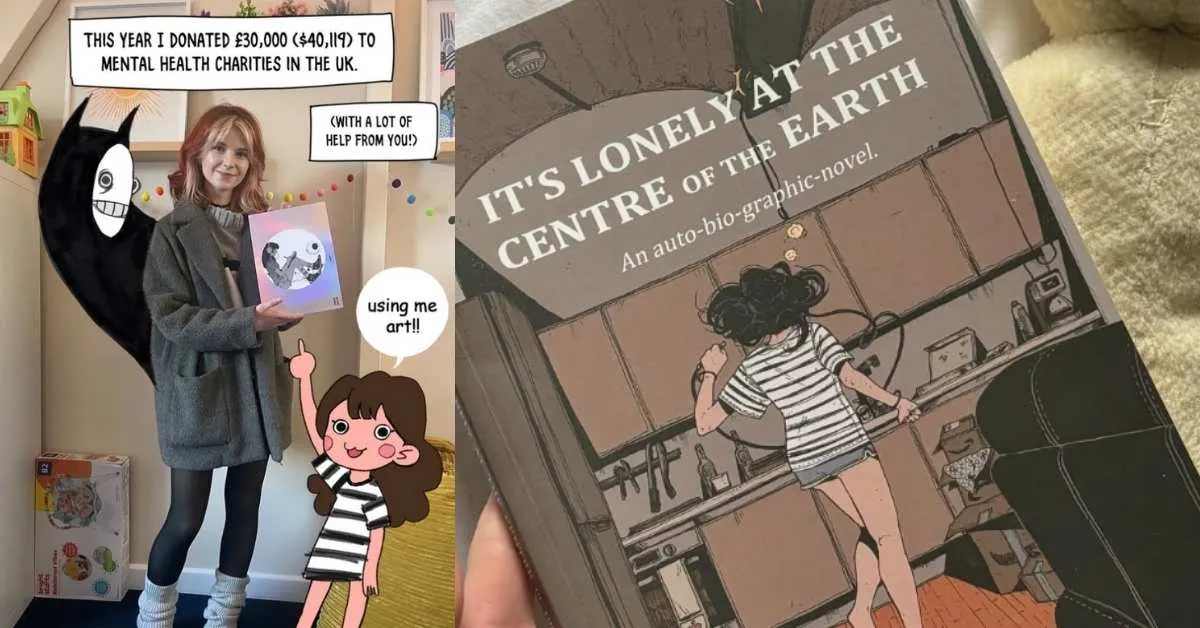
Zoe Thorogood's breakthrough graphic novel "It's Lonely at the Centre of the Earth" was already being called a masterpiece — a semi-autobiographical exploration of depression rendered in layered illustrations and shifting color palettes that only comics could achieve. Then, in October 2024, her younger brother James died by suicide at 23.
In the months that followed, Thorogood made a decision: she would donate all profits from her graphic novel to mental health charities. Publishers of the Italian, French, and Spanish editions pledged to match the donations. By December 2025, she had raised $40,119.
Turning Pain Into Action
Thorogood didn't frame this as a solution. "Mental health is so underfunded and misunderstood, and I'm not going to pretend this will make much of a difference," she wrote on Instagram, "but while I am still in deep grief and pain it is a start." The money went to organizations like Mindcharity, which runs housing, crisis helplines, and drop-in centers across England and Wales — the kind of infrastructure that might have caught someone like James.
We're a new kind of news feed.
Regular news is designed to drain you. We're a non-profit built to restore you. Every story we publish is scored for impact, progress, and hope.
Start Your News DetoxWhat makes her decision particularly poignant is that James appears in her graphic novel. His memory lives in the pages she created before his death, and now his absence shapes what those pages fund. "I don't have any answers right now, I can't bring my brother back or fix the system," she admitted. "I am — as they say — just a girl, but now more than ever I know how strongly I feel about this."
A year later, reflecting on the donation, Thorogood was honest about where it came from. "I'm proud of myself," she wrote. "But I can't pretend it hasn't come from a place of deep personal regret and sadness."
She described James as the most considerate person she knew — someone who would help anyone with anything. "A gentle and caring soul in a cruel world that didn't care for him," she wrote. "I know there's many James' out there, and the world needs as many James' as it can get." Her hope now is simpler and harder: that more of us could learn to be like her brother, even as the systems meant to protect people like him remain starved of resources.
The book continues to sell, and the donations continue. What started as a grief response has become an ongoing commitment — not a fix, but a witness.