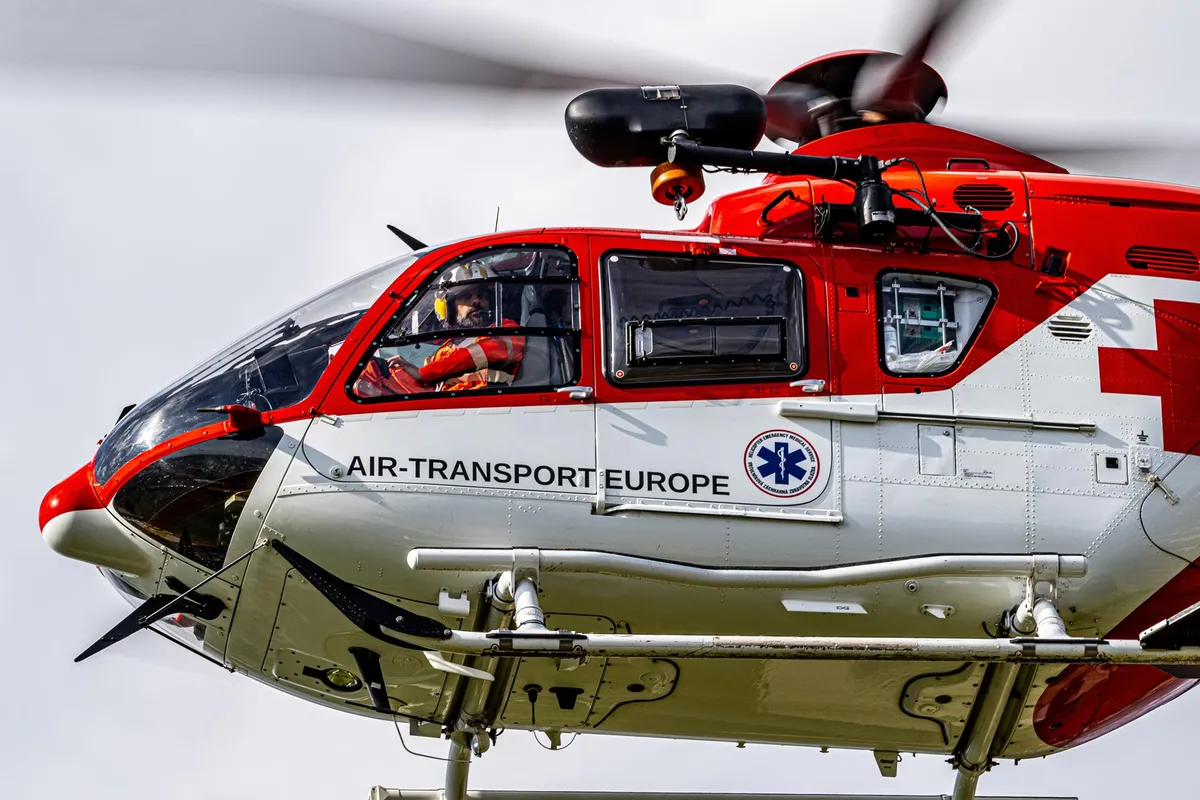
A decade of data from Southeast England suggests helicopter emergency medical services are pulling people back from the edge in ways standard statistics didn't predict.
When a trauma patient arrives at hospital, doctors have models that estimate their odds of survival based on injury severity, age, and other factors. These models are usually pretty good. But researchers reviewing nearly 3,200 trauma cases treated by a single air ambulance service between 2013 and 2022 found something unexpected: five more patients per hundred survived than the models said should have.
That's not a rounding error. For this one service covering Kent, Surrey, and Sussex, it translates to roughly 115 extra lives saved each year.
We're a new kind of news feed.
Regular news is designed to drain you. We're a non-profit built to restore you. Every story we publish is scored for impact, progress, and hope.
Start Your News DetoxThe Patients Who Beat the Odds
The survival gap wasn't random. Patients who benefited most were those caught in the middle—badly injured but not so catastrophically that survival seemed impossible. In the group with a predicted 25 to 45% chance of making it, 35% actually did. Even among those with less than a 50% predicted survival rate, 39% lived past 30 days.
Two things stood out in the survivors. They tended to be younger, and they had higher consciousness scores when help arrived. But there was a third factor: emergency anesthesia given before reaching hospital. This induced coma procedure can only be done by advanced medical teams—the kind that arrive by helicopter.
The data on traumatic cardiac arrest tells a similar story. Of 1,316 patients whose hearts stopped after severe injury, 27% regained a heartbeat during transport. Among those who did, one in four survived to 30 days. That survival rate improved by about 6% each year across the decade studied.
Why This Matters (and Why It's Hard to Prove)
The researchers are careful here. They're not claiming they've proven air ambulances caused these extra survivors—just that the outcomes were better than predicted. Patient mix could have changed. The service could have gotten better at what it does. The statistics themselves might not capture something important about who gets transported by helicopter versus who doesn't.
But the pattern is consistent with what smaller, messier studies have hinted at for years: that getting advanced medical care to someone in the first minutes after catastrophic injury, before they reach hospital, matters. A lot.
The team concludes their findings support "continued investment in HEMS, particularly for severely injured patients," though they note that head-to-head comparisons with other emergency response models would help nail down exactly how much of the benefit comes from the helicopter itself versus the expertise on board.
What happens next is less about the data and more about resources. Air ambulances are expensive. Every health system has to weigh whether those five extra survivors per hundred are worth the cost—and whether that math holds up in different regions with different injury patterns and geography.