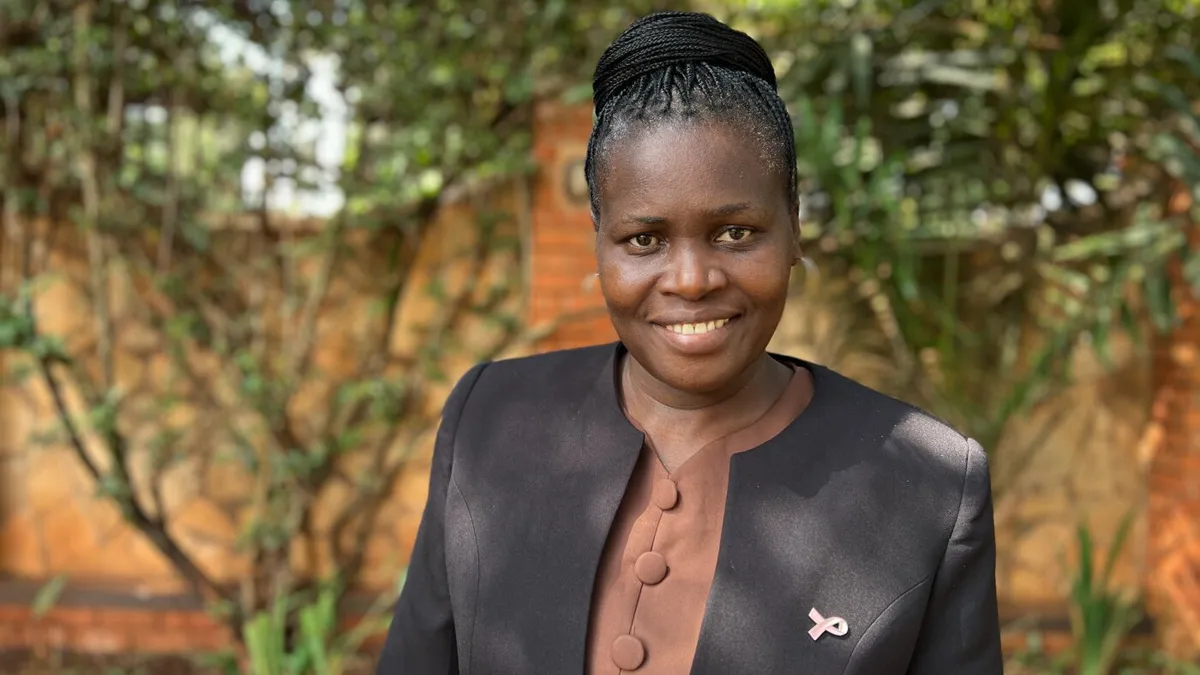
Deborah Nantenza was terrified of cervical cancer screening. She'd watched women die from the disease in her rural eastern Uganda community, seen the suffering that came before the end. But when health workers at a local clinic encouraged her to get tested in June 2022, she went.
They found precancerous cells. She was treated. Today, at 46 and a mother of six, she has no cancer. Now she tells other women what she learned: "I found that at least you'd rather get treated than get cancer."
Nantenza's story is the kind that usually stays quiet in rural Uganda—a quiet victory in a region where early diagnosis is rare. But it's also become the blueprint for something larger. The organization that screened her, Rays of Hope Hospice Jinja, has spent the last seven years asking a question that breaks the traditional rules of hospice care: What if we stopped only easing death and started preventing it?
We're a new kind of news feed.
Regular news is designed to drain you. We're a non-profit built to restore you. Every story we publish is scored for impact, progress, and hope.
Start Your News DetoxFrom End-of-Life to Prevention
Hospices exist to comfort the dying. Rays of Hope did that work well. But Sylvia Nakami, the organization's executive director, watched women with cervical cancer suffer in ways that morphine alone couldn't fix. In 2017, she pulled data on 700 patients and found something stark: more than 60 percent of cancer cases among women were cervical or breast cancer—both treatable if caught early.
So in 2018, the hospice pivoted. They began offering cancer screenings alongside their palliative care. Some in Africa's palliative care community worried they were abandoning their core mission. Instead, something different happened. The hospice doubled its palliative care patients from about 750 in 2018 to over 1,500 by 2025, growing their staff from 16 to 34 people to meet the need.
The numbers on the prevention side are striking. Since 2018, Rays of Hope has screened nearly 29,000 women for cervical and breast cancer. When they held their first mass screening in 2019, almost 700 women showed up. Fewer than one in 20 had ever been screened before. The hospice also partnered with the district health department to vaccinate more than 47,000 girls against HPV, the virus that causes cervical cancer—while simultaneously countering myths about vaccine safety that circulate in rural communities.
What Rays of Hope started is beginning to ripple across the continent. Island Hospice in Zimbabwe, Africa's first hospice founded in 1979, began offering breast cancer screening about a decade ago. In rural India, a 2025 study found that household visits combining cancer screening and counseling could deliver effective cancer control in regions with limited health infrastructure. Emmanuel Luyirika, recently retired executive director of the African Palliative Care Association, which represents over 500 members across 52 African countries, sees this as a necessary evolution. "If we teach people how to prevent it, there will be less demand for palliative care," he says.
The work is underfunded and fragile. Rays of Hope's $600,000 annual budget depends on donors. Global health funding dropped by an estimated $10.5 billion between 2024 and 2025—a 21 percent decline that's squeezed nonprofits trying to fill gaps in places like Uganda. Last year, the hospice saw a surge in patients as HIV clinics closed, pushing their caseload beyond what they'd planned for.
But there's something quieter happening too. Nantenza, the woman who was terrified of screening, now talks to two or three women every week about getting tested. She's become what researchers call peer advocacy—people who've been helped becoming the messengers. In a region where trust in health care is hard-won, that matters as much as any statistic.
As more hospices in Africa and Asia explore prevention alongside palliative care, they're learning that these aren't competing missions. They're two sides of the same belief: that people deserve both the chance to live longer and the dignity of a gentle death when that time comes.