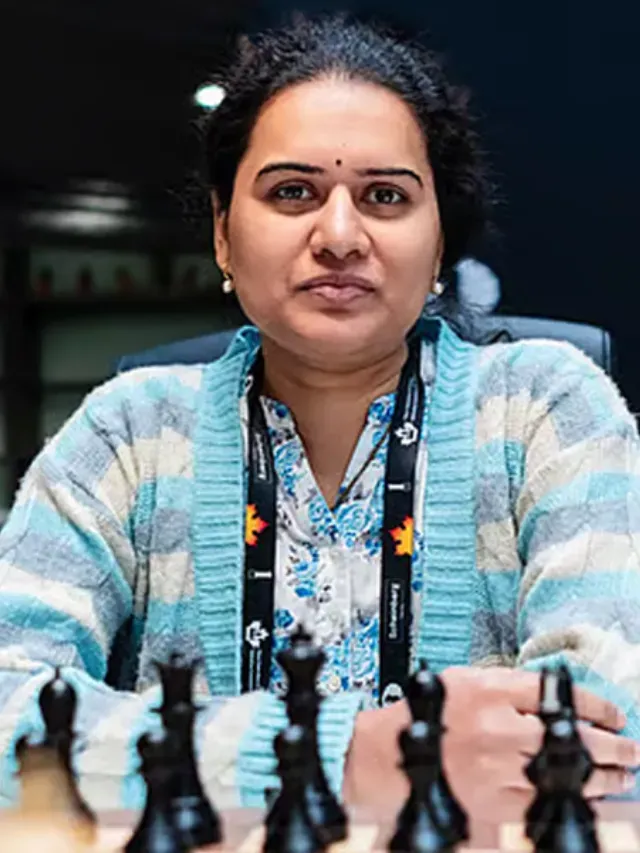
Koneru Humpy was 15 when she became the youngest woman Grandmaster in the world. She was also usually the only woman in the room.
Some opponents back then wouldn't shake her hand after losing. Others assumed she'd gotten lucky. She let her wins answer for her — seven consecutive victories against top male players at one national championship, a stretch that made it harder for anyone to dismiss what she was doing.
By her early 20s, Humpy had crossed the 2600 Elo rating barrier, joining Judit Polgár as only the second woman ever to reach that threshold. The recognition came with a cost. Each near-miss at a world title brought fresh scrutiny. To compete internationally, she pieced together sponsorships from private backers while taking on the world's elite players.
We're a new kind of news feed.
Regular news is designed to drain you. We're a non-profit built to restore you. Every story we publish is scored for impact, progress, and hope.
Start Your News DetoxThen, in 2017, she stepped away. Marriage and motherhood meant the board went quiet for the first time in her adult life. Most people assumed that was the end of her story.
The Return
She came back to the 2018 Chess Olympiad feeling like a stranger in a familiar place. The board was the same. The rules hadn't changed. But the faces around her had. At 32, competing in Moscow's World Rapid Championship in 2019, she played as an underdog — a mother returning to elite chess after years away. In the tense tie breaks that decided the tournament, her calculations held steady. She won her first Women's World Rapid title.
Five years later, at 37, Humpy won the championship again. With a bronze medal at the 2025 World Rapid Championship, she now holds five World Rapid medals — a record no other woman has achieved.
She's not done. Humpy is working to improve her classical chess ranking and taking on each new challenge with the same focus that defined her rise. She's racing against her younger self, refusing to let anything — not prejudice, not motherhood, not time — push her toward mediocrity.
What makes her story unusual isn't just the medals. It's that she came back.