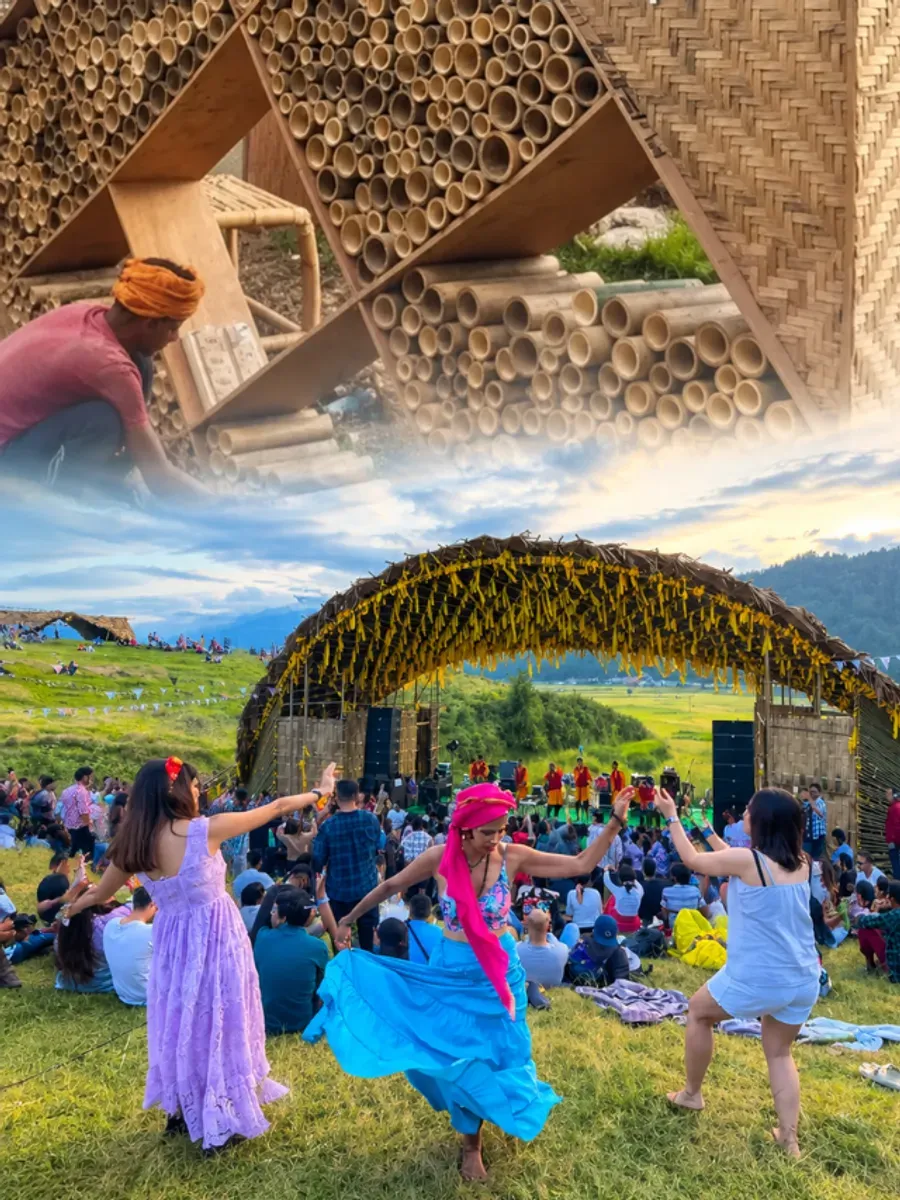
Every September, Ziro Valley in India's remote northeast does something truly spectacular. Its quiet paddy fields, usually dedicated to rice, transform into a four-day music festival built almost entirely from bamboo. Because apparently, that's where we are now: turning farmland into a sustainable, temporary concert venue.
It all started in 2012 when musicians Bobby Hano and Anup Kutty, a guitarist from the band Menwhopause (yes, really), decided independent artists needed a stage. They partnered with the local Apatani tribe, who live in Ziro, and the rest, as they say, is a very green history.
The Bamboo Blueprint
Local artisans construct three distinct stages — Danyi, Pwlo, and Takvr — using only bamboo harvested from nearby areas. No cement, no steel, no permanent structures. This means that after the last guitar chord fades, the valley quickly reverts to its original purpose: growing rice. It's the ultimate pop-up, leaving barely a trace.
We're a new kind of news feed.
Regular news is designed to drain you. We're a non-profit built to restore you. Every story we publish is scored for impact, progress, and hope.
Start Your News DetoxAnd it's not just the stages. The festival bans single-use plastic, offers free water refill stations, and serves local rice beer (called Apong) in handwoven bamboo cups. Every bit of waste is meticulously sorted and managed. Because if you're going to build a festival out of nature, you might as well respect it.
Despite having no direct highway or railway, Ziro pulls in over 10,000 visitors annually. That makes it Arunachal Pradesh's largest non-pilgrimage tourism event, outdrawing places that are, you know, actually easy to get to. Let that satisfyingly inconvenient number sink in.
Each year, more than 40 independent acts grace the bamboo stages, from Indian folk artists to rock bands and international talent, often sharing the spotlight with emerging artists from the northeast. The focus isn't on celebrity headliners, but on discovering your next favorite band. Which, if you think about it, is both refreshing and slightly terrifying for anyone who prefers their festivals pre-packaged.
Visitors camp in tents, waking up to misty rice terraces and pine-covered ridges. Evenings often devolve into spontaneous bonfire jam sessions, turning strangers into fast friends within days. Because nothing says bonding like shared music and the mild discomfort of a tent.
Indian visitors need an Inner Line Permit, and foreign nationals require a Protected Area Permit. Both can be applied for online. Apatani families open their homes for traditional meals cooked over open fires, and the artisans who built the stages? They're trained through festival programs, ensuring the bamboo magic continues year after year.
This September, the paddy fields will once again become a stage. Musicians and travelers will return for four days of independent music, sustainable construction, and the unique, slightly absurd spirit of Ziro Valley. You know, just a regular Tuesday in paradise.