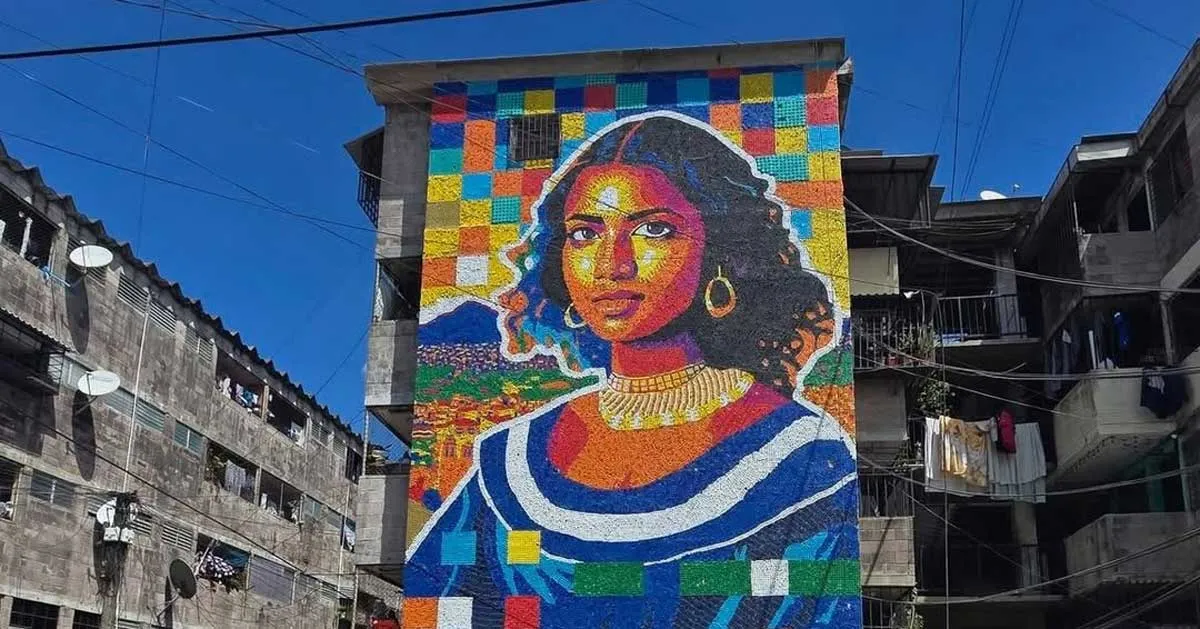
A 13-meter-high portrait now covers the side of Building 88 in San Salvador's Zacamil neighborhood—and it's made entirely from discarded plastic bottle caps. The mural depicts a woman with dark curly hair dressed in the colors of the Salvadoran flag, a deliberate reimagining of da Vinci's Mona Lisa as an ordinary Central American face.
Venezuelan artist Óscar Olivares, 29, spent three weeks installing over 100,000 bottle caps one by one, each adhered by hand. It's his largest work to date, though he's already completed 46 pieces from recycled materials across the globe. But scale isn't what makes this project significant. It's what it represents in Zacamil.
Art as a Shift in Narrative
The neighborhood has a complicated history with public art. For years, gangs used graffiti to mark territory and assert control. Olivares saw an opportunity to reclaim that visual language. "In the past, gangs used graffiti and urban art to mark territory," he told AFP. "Now, it has a different meaning—one that is accessible to the people who live in the neighborhood. We're not experiencing it in a museum. We're experiencing it in a working-class community."
We're a new kind of news feed.
Regular news is designed to drain you. We're a non-profit built to restore you. Every story we publish is scored for impact, progress, and hope.
Start Your News Detox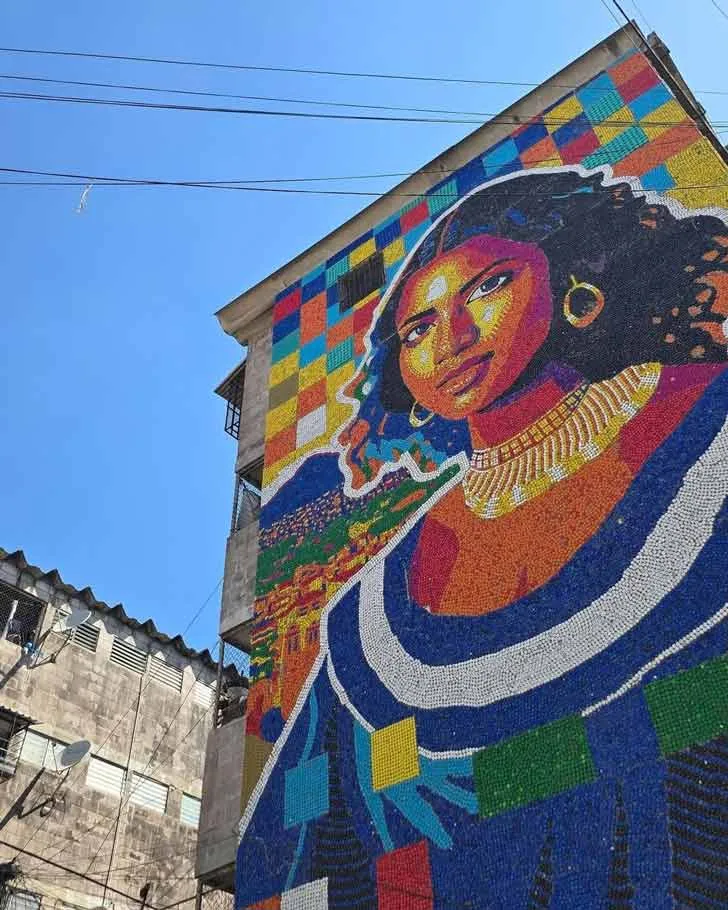
The woman in the mural isn't a specific person. She's meant to represent anyone—a symbol of what Olivares calls the "renaissance" emerging from everyday people across El Salvador and Latin America. That shift matters. When a neighborhood's most visible art changes from territorial marking to collective creation, something deeper shifts too.
Photo courtesy of Full Painting/Instagram
Residents of Zacamil collected the bottle caps themselves, working with the National Association of Collectors and Recyclers of El Salvador over several months. The caps came in their original colors—no painting required—which meant the entire visual weight of the piece depends on sorting, arrangement, and placement. Washing and organizing 100,000 pieces of plastic takes time. Installation took three weeks of Olivares standing on lifts, positioning each cap with precision.
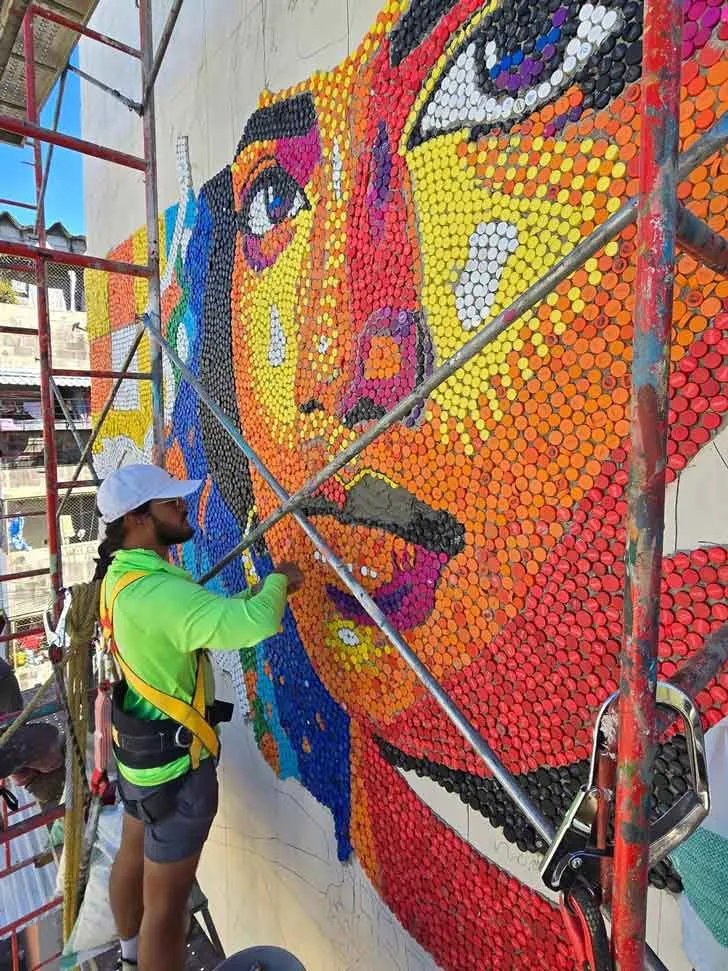
Photo courtesy of Óscar Olivares/Instagram
The project was funded by Full Painting and Custom Made Stories Foundation, organizations focused on revitalizing Zacamil through sustainable, culturally significant art. That's the infrastructure that made this possible—not just an artist with a vision, but institutions willing to invest in neighborhood transformation.
For Olivares, the real work wasn't the mural itself. "The impact it has on every viewer and every person who took part," he said, "gives them a totally different view of plastic waste." In his Instagram reflection after finishing, he wrote about what El Salvador taught him: "the great role that art plays in the transformation of a nation. But also it has taught me about friendship, teamwork, kindness, and about the light that is in each person, even when darkness surrounds him."
Zacamil is now positioned as a model for other neighborhoods looking to reclaim their public spaces. The mural will keep standing, a reminder that what gets built in a place shapes what people believe is possible there.