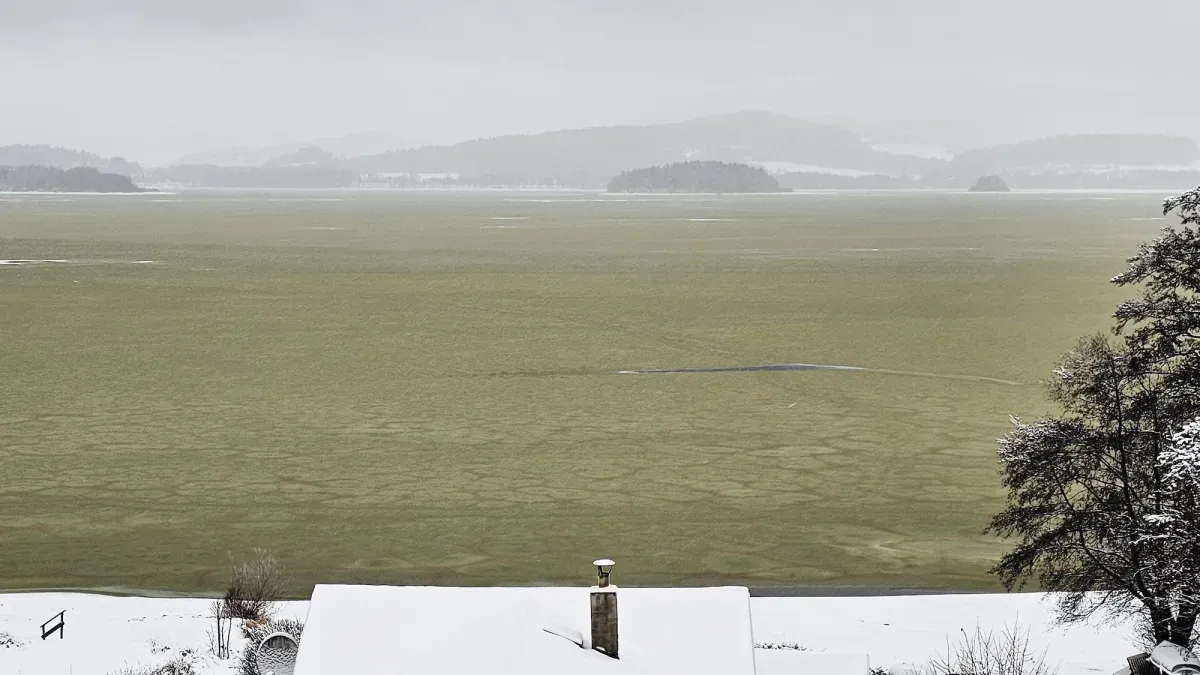
At the end of 2025, researchers at the Czech Academy of Sciences found something they hadn't expected to see: Lake Lipno in South Bohemia frozen solid, but glowing an eerie emerald green beneath the ice.
The culprit was cyanobacteria—also called blue-green algae—a microorganism that typically dies off as temperatures drop in autumn. But warmer weather, calmer conditions, and excess nutrients in the water allowed a massive bloom to linger near the surface long enough to get locked in place when the lake froze. When a warm spell near Christmas melted patches of ice and they refroze, the result was what researchers call "cyanobacterial eyes"—clear ice windows over darker algae-filled zones, visible from shore and overhead.
A sign of shifting seasons
This isn't just a curious natural phenomenon. Cyanobacteria produce toxins that poison aquatic life and can contaminate drinking water supplies. They've always thrived in summer and autumn, fed by excess nutrients—mainly phosphorus from agricultural and industrial runoff. But Lake Lipno has been pushing the boundaries for years, with substantial blooms recorded through November and occasionally into December.
We're a new kind of news feed.
Regular news is designed to drain you. We're a non-profit built to restore you. Every story we publish is scored for impact, progress, and hope.
Start Your News DetoxWhat's changed is the climate. Warmer winters mean algae can survive longer. Calmer weather patterns let blooms stay near the surface instead of sinking. And the pollution that feeds them hasn't stopped. Hydrobiologist Petr Znachor, who studied the green ice, put it plainly: "We may witness similar surprises more frequently in the future."
The concern isn't just Lake Lipno. Similar winter blooms are already appearing in other European lakes, and scientists predict the pattern could spread to North America within the next few years. In the United States, cyanobacteria sightings could soon stretch into January—months earlier than the current norm.
What these winter blooms will mean for ecosystems is still unclear. Fish and other aquatic organisms evolved around predictable seasonal patterns. A toxin-producing algae bloom in winter, when life cycles are supposed to be dormant, introduces a variable that scientists are only beginning to understand. The immediate risk is clearer: more blooms mean more contaminated water supplies, more warnings for swimmers and fishermen, and more work for municipalities trying to keep drinking water safe.
The bloom at Lake Lipno finally dissipated only after heavy snowfall blocked enough light to stop the algae's growth. But next winter, or the one after that, the same conditions could return—warmer air, calmer water, the same excess nutrients still flowing in. What once seemed like a rare event is starting to look like the new normal.