Toyota just invested in California's largest hydrogen fueling network. It's a signal that the automaker is serious about hydrogen as the answer to a problem that's plagued electric vehicles for years: refueling time.
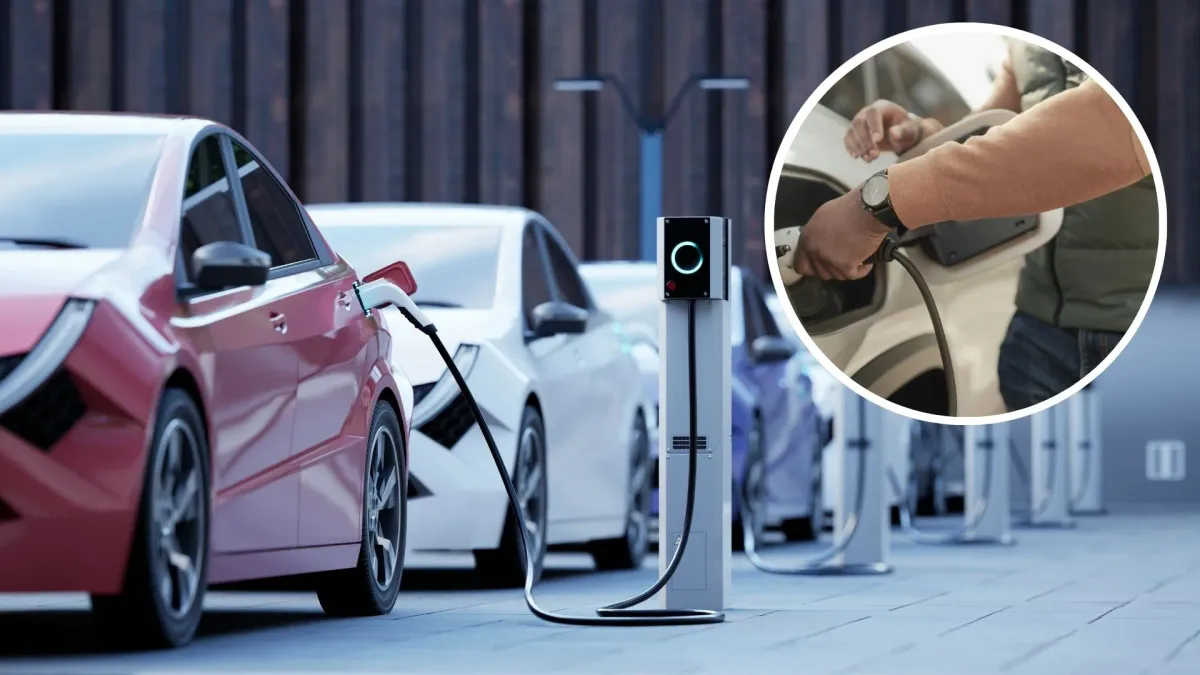
Filling a hydrogen tank takes about as long as filling a gas tank. That's the whole appeal. While battery electric vehicles need 20 minutes or more to recharge on a road trip, hydrogen refueling is quick—the same friction-free experience drivers already expect. Yet hydrogen has barely moved beyond niche status, mostly because the infrastructure and funding simply haven't materialized at scale.
Toyota has been betting on this technology for three decades. The company has spent the last 24 years refining hydrogen fuel-cell systems, and in 2024 it renamed its entire California research campus the Toyota North American Hydrogen Headquarters. The Mirai sedan launched in 2015, but it remains available only in California—the only state with a hydrogen pump network for passenger cars. At Toyota's 12,000-acre Arizona proving grounds, engineers test heavy-duty class 8 hydrogen trucks in drag races against diesel versions. The hydrogen truck is faster, vastly cleaner, and exhausts water instead of noxious fumes.
We're a new kind of news feed.
Regular news is designed to drain you. We're a non-profit built to restore you. Every story we publish is scored for impact, progress, and hope.
Start Your News DetoxHow it actually works
A hydrogen fuel cell isn't as complicated as it sounds. Hydrogen enters one side of the cell, oxygen enters the other. A catalyst strips electrons from hydrogen atoms, forcing those electrons through a circuit—that's your electricity. The electrons then recombine with protons and oxygen to create the only byproduct: water and heat. No combustion. No moving parts. No oil changes.
"It's just a battery with an anode and cathode," says Debby Byrne, an executive program manager at Toyota North America. "The chemical reaction happens silently as you add hydrogen to the system."
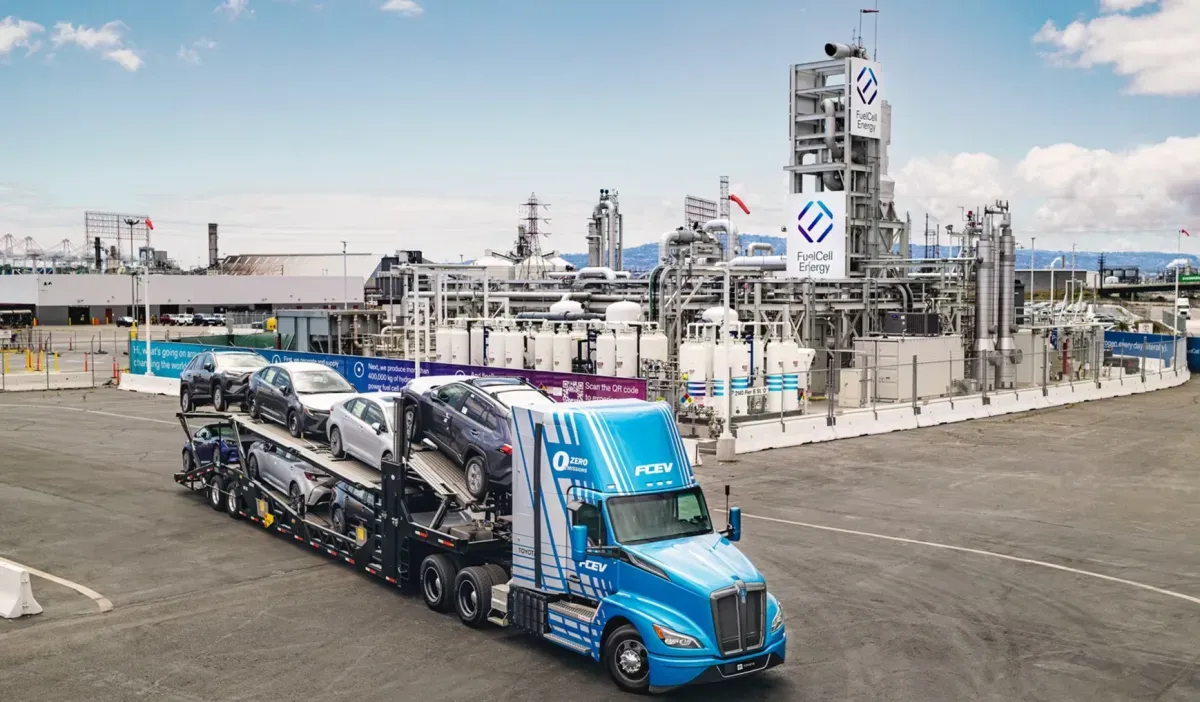
The real proof point came in 2023, when Toyota and FuelCell Energy opened a "Tri-gen" facility at the Port of Long Beach. It converts biogas from a nearby wastewater treatment plant into renewable electricity, hydrogen, and usable water. The facility produces up to 1,200 kilograms of hydrogen daily—enough to fuel class 8 semi trucks and other vehicles—while recycling 1,400 gallons of water every day. That recycled water washes vehicles arriving from Japan before delivery, cutting water waste from the local plant. The system is projected to eliminate more than 9,000 tons of CO2 emissions annually. In May, the U.S. Department of Energy recognized it with the 2025 Better Project Award.
The skepticism is real. Hydrogen has failed to gain traction before, and infrastructure remains the bottleneck. But Toyota's infrastructure investment in California, combined with working hydrogen facilities already operational, suggests the company sees a path forward that others don't yet see clearly. The question isn't whether hydrogen works—it does. It's whether the rest of the country will build the network to make it accessible.