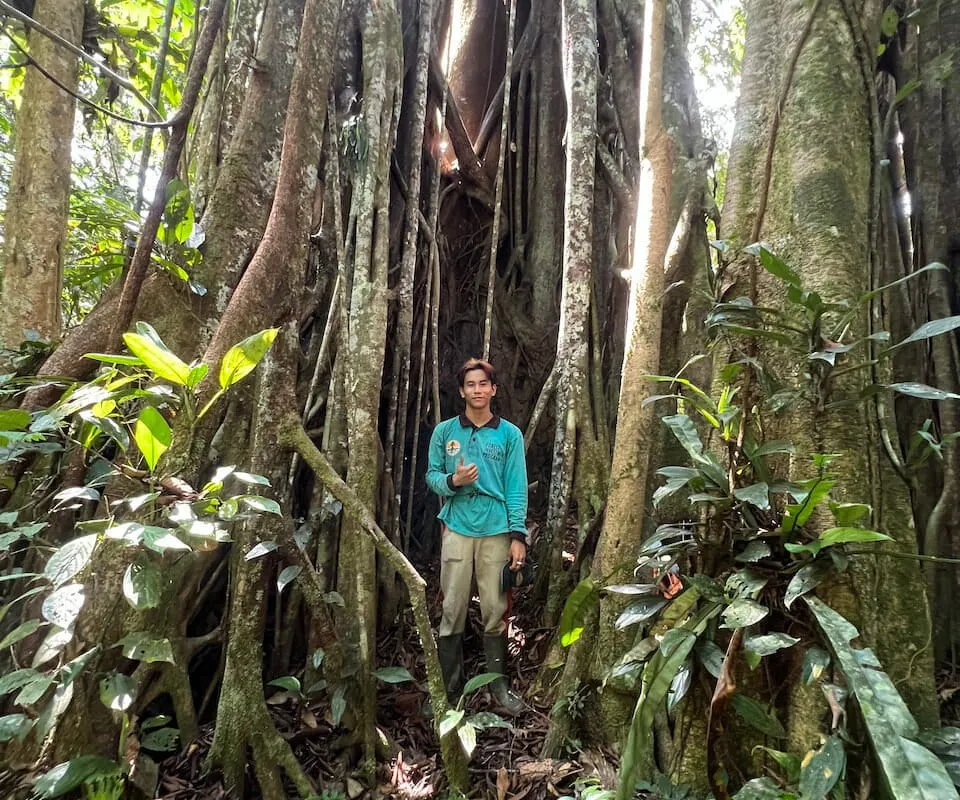
In Indonesian Borneo, a boy vanished near a rice field. Hours later, his family found him by a towering strangler fig tree. He said spirits had called to him, hidden him in plain sight. His name was changed by a shaman to sever their hold. The tree remained standing.
This is not folklore preserved in amber. It is ecology written into land management.
Among the Indigenous Iban people of Sungai Utik, large strangler figs are believed to house spirits capable of misleading, sickening, or killing those who disturb them. The belief is anchored in stories, warnings, and remembered loss—real enough to shape how people use their land. When the Iban clear fields for farming, they leave these trees standing. They also preserve a buffer of forest around them, creating scattered islands of vegetation threaded through farmland.
We're a new kind of news feed.
Regular news is designed to drain you. We're a non-profit built to restore you. Every story we publish is scored for impact, progress, and hope.
Start Your News DetoxThe practice has a name: dipulau, which simply means "island."
Where belief becomes measurable
These islands occupy only 1 or 2% of the cultivated landscape. But fieldwork now shows their ecological weight. Different strangler fig species fruit at different times of year, drawing birds, primates, and wild pigs when other food runs scarce. Wildlife moves between forest and field along these living stepping stones. Hunters once waited beneath them. The animals still navigate by them.
Measurements from Sungai Utik reveal that these dipulau islands harbor more tree species than surrounding farmland, support larger individual trees, and store more aboveground carbon. The spiritual beliefs of the Iban have unintentionally preserved important ecological functions within their agricultural landscape—not through conservation policy or fencing, but through fear and reverence.
This matters because it shows how conservation works in practice across much of the world. In Indonesian Borneo and beyond, many forests persist not because governments protect them, but because communities do. The reasons vary: sacred groves in India, taboos against cutting certain trees in West Africa, ancestral burial grounds in the Pacific. The mechanism is consistent. Belief creates boundaries. Boundaries create refuges.
The strangler figs of Sungai Utik are not unique. Similar sacred trees anchor similar practices across Southeast Asia and beyond. What makes this research significant is the measurement—the translation of spiritual practice into ecological data. It offers a language that bridges two ways of knowing: the Iban's understanding of their land, and the metrics by which conservation science measures success.
As agricultural pressure intensifies across the tropics, these islands of belief-protected forest may become increasingly valuable. They are not wilderness. They are working landscapes shaped by people who have lived in them for generations. The spirits may or may not be real. The ecological function is.