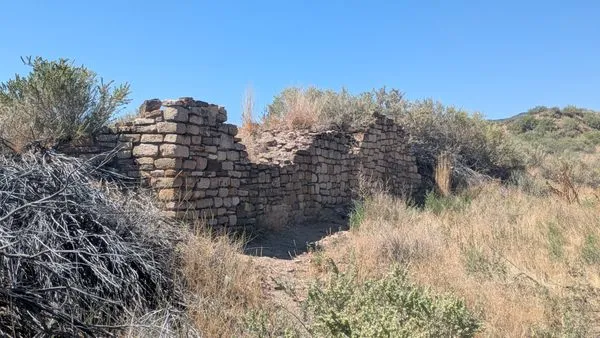
A single weathered wall rises from a Colorado hillside, unremarkable at first glance. But beneath that modest surface lies the remains of a thriving town: 600 rooms, 100 kivas, towers, plazas, and a great kiva that once sheltered around 13,000 people between 1100 and 1300 CE. Yucca House National Monument, tucked behind dirt roads and private farmland in southwestern Colorado, is one of the largest ancestral Puebloan sites in the region—and one of the least visited, with fewer than 1,000 people making the journey each year.
The remoteness is partly by design. Unlike Mesa Verde or Bandelier, where partial reconstructions have drawn crowds and allowed closer study, Yucca House has been left almost entirely untouched since the monument was established in the 1920s. That decision, unusual for its time, now aligns with what many American Indian communities—particularly Puebloan nations—actively prefer: allowing ancestral homes to rest undisturbed, gradually returning to the earth as they would naturally.
This hands-off approach might seem to limit what archaeologists can learn. Instead, it's opened new possibilities. Without the need for excavation, researchers now use ground-penetrating radar and aerial LiDAR mapping to peer beneath the surface, mapping rooms and structures without disturbing them. The site becomes a kind of archaeological laboratory where the past can be read without being torn apart.
We're a new kind of news feed.
Regular news is designed to drain you. We're a non-profit built to restore you. Every story we publish is scored for impact, progress, and hope.
Start Your News DetoxA different kind of preservation
Plans are underway to add a parking lot and restroom facilities nearby—practical accommodations for the few visitors who do find their way here. But the village itself will remain as it has been for centuries, a deliberate choice that reflects a broader shift in how we think about preserving cultural heritage. The monument isn't a museum to be curated for maximum impact or accessibility. It's a home, held in high regard by thousands of indigenous people throughout the Southwest who trace their ancestry to its rooms and plazas.
For those who do make the drive down the overgrown trail, the experience is intimate and quiet—a reminder that some places matter most when they're left largely alone.