Scientists at the University of Southampton have figured out why cancer often slips past our immune system's defenses — and how to fix it.
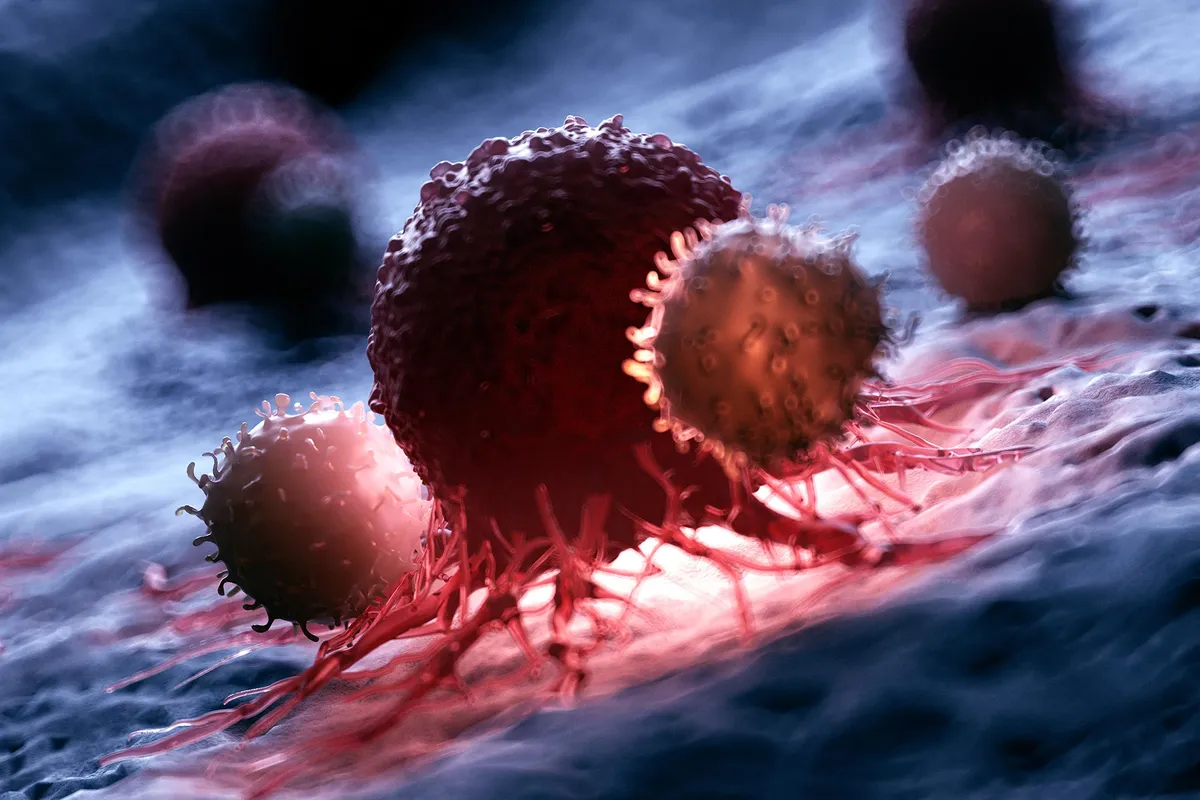
The problem is surprisingly straightforward: T cells, which are supposed to hunt down and destroy cancer, aren't getting the activation signal they need. The signal comes through a receptor called CD27, but in tumors, the matching trigger (called a ligand) is largely missing. So T cells show up to the fight half-asleep, unable to mount an effective response.
The current antibody treatments used in cancer care have a limitation that sounds almost architectural: they're Y-shaped, with only two binding points. Imagine trying to flip a light switch with two fingers when you actually need to use your whole hand. The T cells aren't getting enough of the signal to fully activate.
We're a new kind of news feed.
Regular news is designed to drain you. We're a non-profit built to restore you. Every story we publish is scored for impact, progress, and hope.
Start Your News DetoxA Stronger Signal
The Southampton team redesigned the antibodies with four binding points instead of two. More importantly, these new antibodies do something clever: they grab multiple CD27 receptors at once and cluster them together, which amplifies the activation signal. It's the difference between one quiet knock on a door and several people knocking in unison — the message gets through.
In lab tests using mice and human immune cells, the new antibodies woke up CD8⁺ T cells (the specialized killers of the immune system) far more effectively than standard antibodies. The T cells mounted a noticeably stronger response against tumors.
"This approach could help improve future cancer treatments by allowing the immune system to work closer to its full potential," said Professor Aymen Al-Shamkhani, who led the research.
This isn't a cure on its own. But it's a direct answer to a specific bottleneck in how immunotherapy works. The research, published in Nature Communications and funded by Cancer Research UK, points toward a next generation of cancer treatments that work with the body's natural defenses rather than fighting against their limitations. The next phase will be testing these antibodies in human clinical trials to see if the lab results translate to real patients.