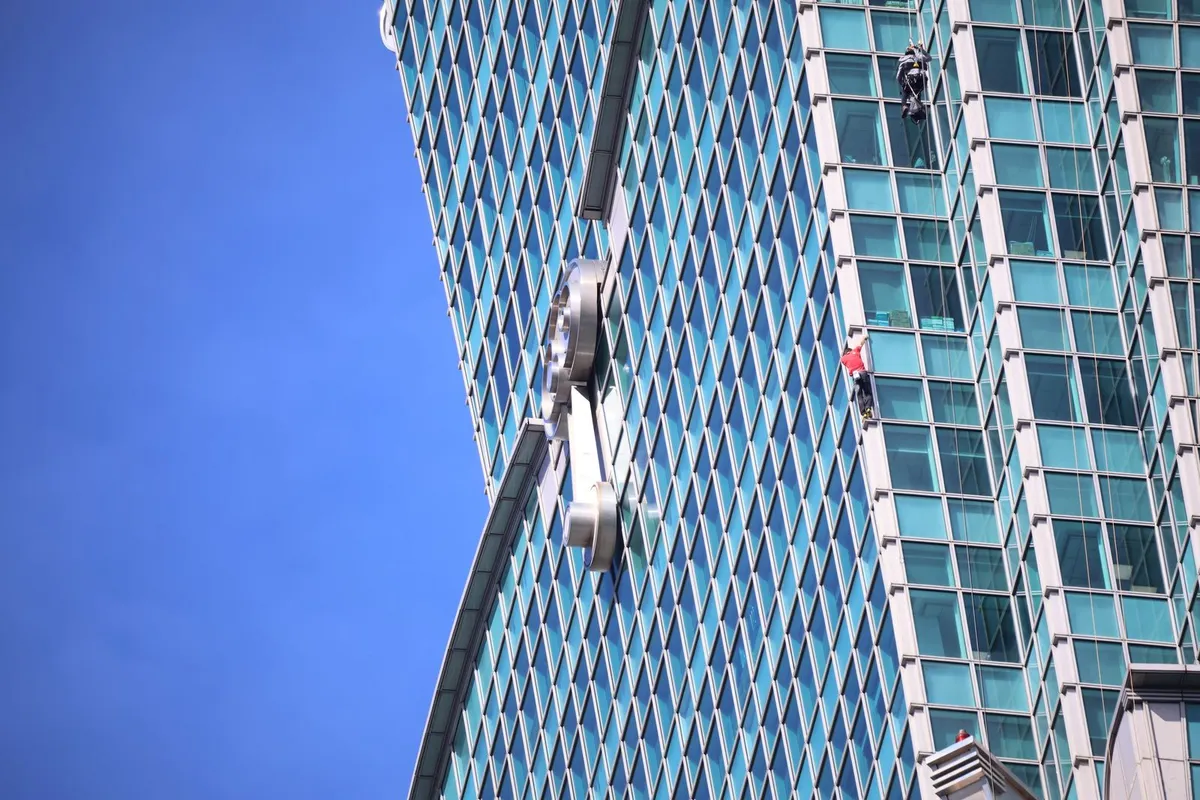
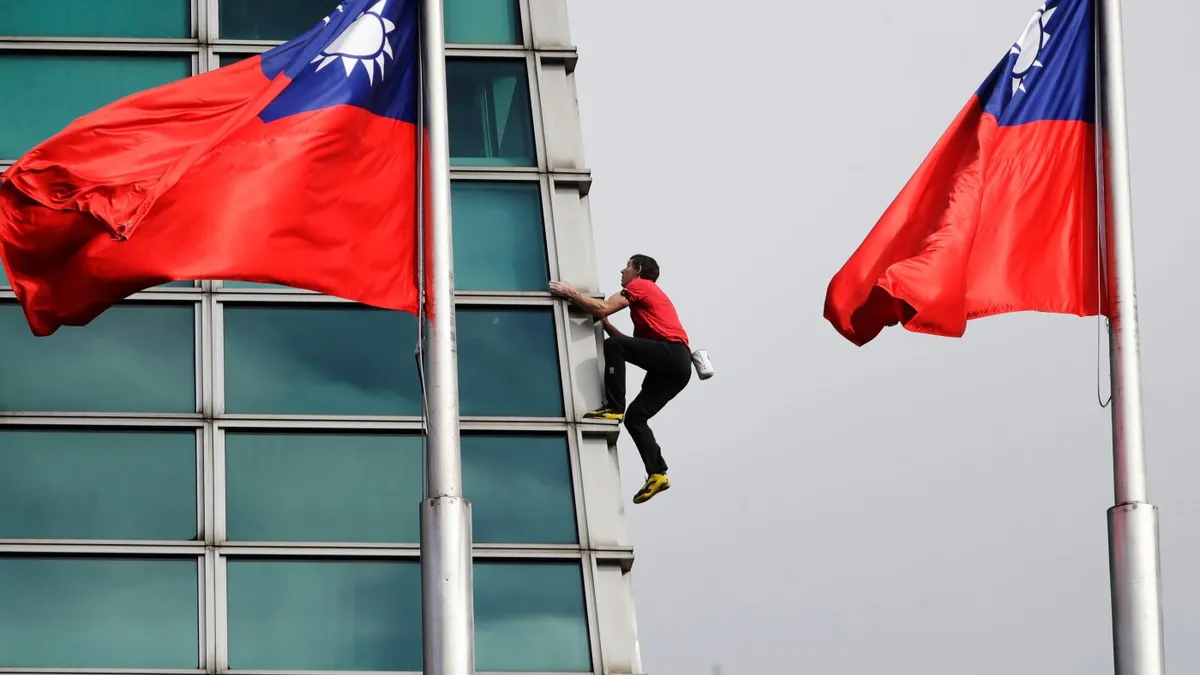
Alex Honnold reached the summit of Taipei 101 on Sunday without ropes, protective gear, or a safety net—just his hands, his feet, and 90 minutes of absolute focus. The 508-meter tower in Taiwan's capital city watched as the American climber worked his way up one corner, using small L-shaped outcroppings as footholds and pulling himself across the building's signature ornamental structures with his bare hands.
Honnold, already famous for his ropeless ascent of Yosemite's El Capitan, tackled what makes Taipei 101 uniquely difficult: the 64 floors of the middle section. These "bamboo boxes"—eight segments stacked with steep, overhanging climbing followed by narrow balconies—demanded constant problem-solving. He'd climb eight floors of near-vertical wall, rest briefly on a balcony, then repeat. The hardest part wasn't the height. It was the geometry.
What made this climb different from Honnold's usual work in remote wilderness was the crowd. Street-level spectators gathered to watch. Netflix broadcast it live with a 10-second delay. The original plan for Saturday got pushed to Sunday due to rain—a reminder that even for someone of Honnold's caliber, conditions matter absolutely.
We're a new kind of news feed.
Regular news is designed to drain you. We're a non-profit built to restore you. Every story we publish is scored for impact, progress, and hope.
Start Your News Detox"When I was leaving the ground, you're like oh it's kind of intense, there's so many people watching," Honnold said afterward. "But then honestly, they're all wishing me well. I mean basically it just makes the whole experience feel almost more festive."
He wasn't the first to climb Taipei 101. French climber Alain Robert scaled it in 2004 during the building's grand opening—but Robert used ropes. Honnold is the first to do it free solo, which means the climb exists now in a different category entirely: the category of things that feel impossible until someone does them.
The ascent sparked conversation about the ethics of broadcasting extreme risk, and those concerns are worth taking seriously. But the climb itself stands as something simpler: proof that a person can look at a 1,667-foot building and see a problem worth solving, then solve it.