Georgia Power and other southeastern utilities are expanding power generation at a pace that has less than a 1% chance of matching actual demand. They're preparing for an AI boom that might not arrive — and regular customers could foot the bill for infrastructure that sits unused.
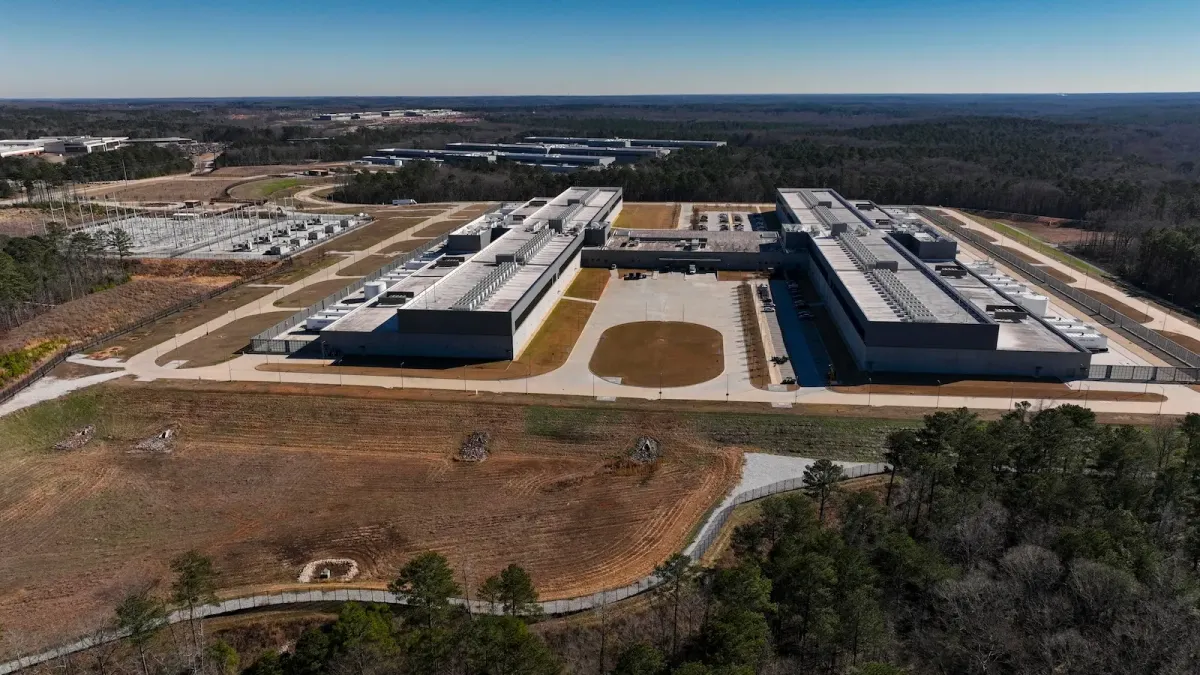
Data centers, particularly the massive facilities running generative AI models, do consume enormous amounts of electricity. Georgia Power got approval last year to expand capacity by 10 gigawatts, mostly banking on data center growth. It's a reasonable bet on its surface. The problem is the math.
A new analysis from Greenlink Analytics found that the utilities' projections have only a 0.2% probability of occurring. The report estimates regional data center energy use could grow anywhere from 2.2 to 8.7 gigawatts by 2031 — a wide range that reflects genuine uncertainty. But utilities are planning for the extreme upper bound, essentially betting the house on the worst-case scenario.
We're a new kind of news feed.
Regular news is designed to drain you. We're a non-profit built to restore you. Every story we publish is scored for impact, progress, and hope.
Start Your News Detox"We believe that this is a very aggressive forecast coming from the utilities," said Etan Gumerman, Greenlink's director of analytics. The gap matters because AI efficiency is improving rapidly. As chips get smarter and algorithms get leaner, the same computational work requires less electricity. That trend is likely to compress overall energy demand growth significantly.
The risk is straightforward: utilities build expensive infrastructure, data centers don't materialize in the numbers projected, and someone has to absorb those costs. "Who's going to pay for that?" Gumerman asked. "Not the data centers that never came. Regular customers will likely end up paying those costs."
Georgia's Public Service Commission has installed some guardrails. Large power users like data centers now need to commit to 15-year contracts, and utilities backstop costs if demand falls short. But clean energy advocates and consumer groups argue these protections don't go far enough.
There's another layer to this problem. Much of the new generation capacity being built is natural gas — a fossil fuel that emits significant greenhouse gases. "The idea that we're going to add this additional capacity with gas-fired turbines is horribly depressing," said Amy Sharma of Science for Georgia. It's a particular irony: utilities are potentially overbuilding fossil fuel infrastructure based on inflated projections of future demand, locking in emissions for decades.
The Georgia legislature is considering bills to prevent regular customers from subsidizing data center infrastructure and to eliminate data center tax breaks. Governor Brian Kemp has previously blocked efforts to suspend those exemptions, but the conversation is shifting. As the gap between projections and reality becomes harder to ignore, the pressure to recalibrate is building.