A Munich startup has built a humanoid robot that can handle the precise, repetitive work that fills factory floors—and it learned how by watching people do it first.
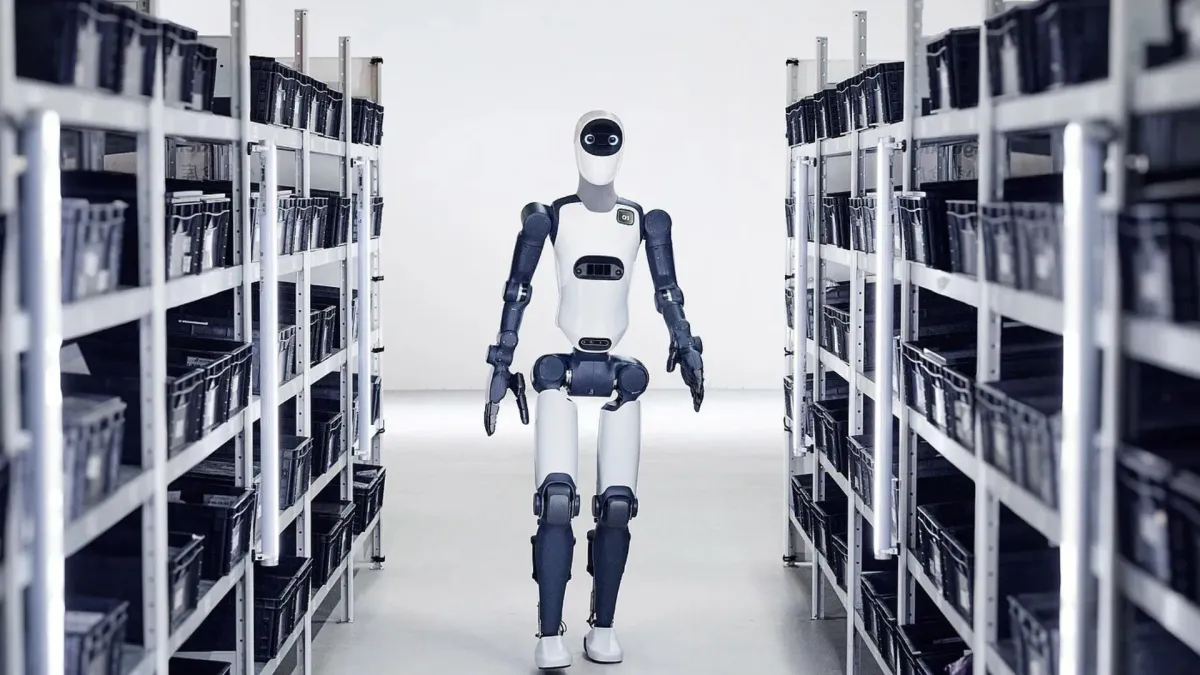
Agile One, made by Agile Robots, has hands that work like yours. Each finger has sensors that feel pressure and texture. It can pick up a fragile component or grip a wrench with equal confidence. The robot stands 174 centimeters tall, weighs 69 kilograms, and can work for up to eight hours on a single charge—long enough to cover a full shift without stopping to recharge.
What makes this different from earlier industrial robots is how it learned. The AI powering Agile One was trained on one of Europe's largest real-world factory datasets, combined with simulated environments and video of human workers doing their jobs. The robot doesn't just follow rigid programming. It transfers those learned skills directly to new situations, adapting when something unexpected happens on the factory floor.
We're a new kind of news feed.
Regular news is designed to drain you. We're a non-profit built to restore you. Every story we publish is scored for impact, progress, and hope.
Start Your News DetoxBuilt to work alongside people
The design choices matter as much as the mechanics. Agile One has bright colors, expressive eyes, and proximity sensors—not because it needs to look friendly, but because workers need to trust it. A chest-mounted display shows what the robot is thinking about doing next. These aren't cosmetic touches. They're how you get humans and machines to collaborate safely in tight spaces.
The robot's 71 degrees of freedom—including 21 in each hand—give it human-like dexterity. Each joint has force-torque sensing, meaning the robot feels what it's holding and adjusts its grip in real time. This matters for tasks that require both strength and sensitivity: handling delicate electronics, assembling precision components, or moving materials without dropping them.
Agile Robots uses a layered AI architecture that separates thinking from doing. Higher layers handle strategy and planning. Lower layers manage the rapid, precise reactions that come from actually touching things. This split allows the robot to make decisions and execute them smoothly, without the lag that slows down simpler systems.
The company plans to start full production in early 2026 at a new facility in Bavaria, keeping hardware manufacturing in-house. That timeline matters—it suggests the technology has moved past prototype stage. The robot isn't theoretical anymore. It's ready for real factories with real deadlines.
What happens next depends partly on whether Agile One can do what the company claims: slip into existing operations without requiring massive retooling or retraining. If it can, you'll see these robots handling the work that wears people out—the repetitive precision tasks that demand focus but not creativity. That could reshape what factory work looks like.