A Korean-built robot just solved one of robotics' trickiest problems: how to be strong enough to be useful, but gentle enough that you'd actually want it near you.
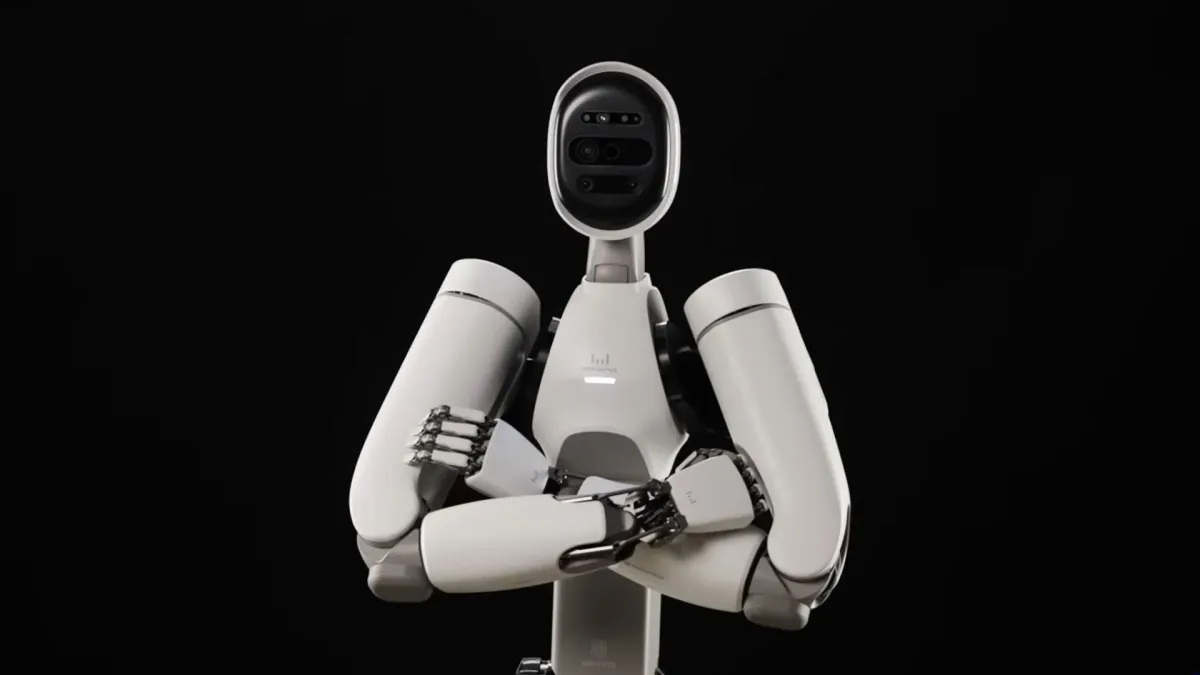
At CES 2026, WIRobotics unveiled ALLEX—short for "ALL-EXperience"—a humanoid robot that can detect forces as light as a 100-gram weight and adjust its grip in real time. Watch it shake a hand, and it feels controlled, natural. The handshake doesn't feel like gripping a vise.
This matters because most robots are binary: they're either rigid industrial machines that move in fixed patterns, or they're so cautious they're nearly useless. ALLEX splits the difference. It has 15 degrees of freedom—meaning joints and articulation points throughout its body—that let it move like a person does. But the real breakthrough is in the hands.
We're a new kind of news feed.
Regular news is designed to drain you. We're a non-profit built to restore you. Every story we publish is scored for impact, progress, and hope.
Start Your News DetoxEach finger can sense subtle pressure, generate up to 40 newtons of fingertip force (enough to grip securely), and stay responsive to what it's touching. The motors in the hands are "back-drivable," meaning you can physically push or guide them. There are no rigid locks. This is the opposite of industrial robot arms, which resist being moved once they've locked into position.
The engineering is surprisingly elegant for something so small. ALLEX's hand weighs just 700 grams—about 1.5 pounds. The shoulder-down assembly is 5 kilograms. Yet with one hand, it can lift more than 3 kilograms. That strength-to-weight ratio outperforms many larger robots, and it's achieved partly because the arm has more than ten times lower friction and rotational inertia than typical collaborative robots.
WIRobotics, the company behind it, sees ALLEX as a bridge between the rigid world of factory automation and the messy, tactile reality of human spaces. That means healthcare, eldercare, manufacturing, household tasks—anywhere you need precision without the risk of being crushed.
It's not ready for your living room yet. But ALLEX represents a shift in how robots are being designed: not as replacements for human strength, but as tools that can work alongside humans safely. The future of automation might not be about robots that are more powerful, but robots that understand the difference between a handshake and a grip.