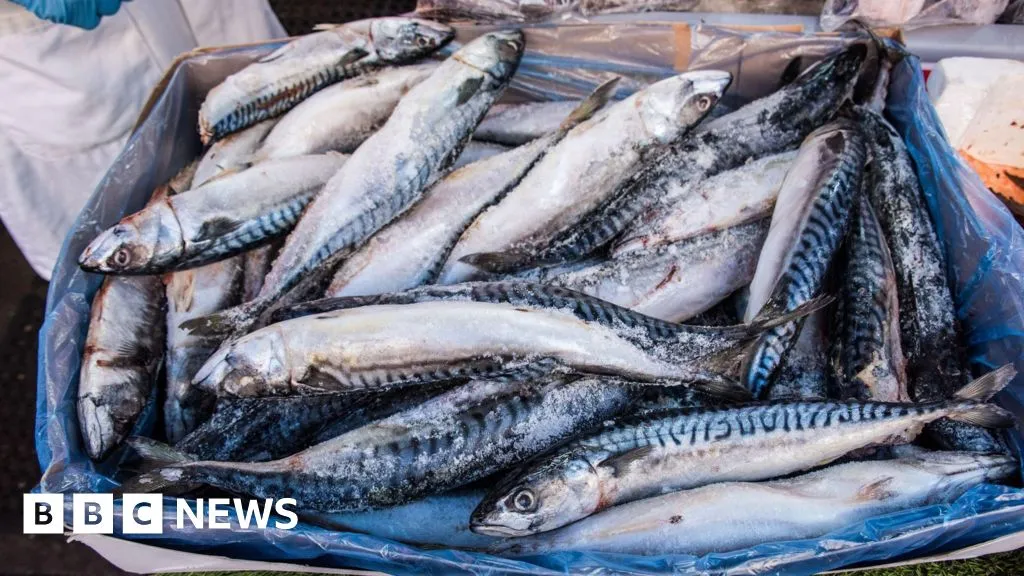
Waitrose has decided to stop sourcing mackerel, becoming the first major UK supermarket to suspend sales of a fish that scientists say is being caught faster than it can reproduce. Fresh, chilled and frozen mackerel will disappear from shelves by the end of April, with tinned stock phased out as it sells through.
The decision hinges on a gap between what governments agreed to do and what the science actually demands. In September, the International Council for the Exploration of the Sea warned that North East Atlantic mackerel stocks had fallen into a danger zone, recommending a 70% cut in catches to let populations recover. In December, the UK, Norway, the Faroe Islands and Iceland negotiated a 48% reduction instead — a meaningful step, but not enough by Waitrose's own sustainability standards.
All the mackerel Waitrose sells comes from Scottish waters, but the stock itself spans international boundaries, which is why one country's restraint can be undone by others' fishing pressure. The supermarket's head of agriculture, aquaculture and fisheries, Jake Pickering, framed the move as a practical commitment: "By suspending sourcing of mackerel at Waitrose we are reinforcing our ethical and sustainable business commitments, acting to tackle overfishing and protect the long-term health of our oceans."
We're a new kind of news feed.
Regular news is designed to drain you. We're a non-profit built to restore you. Every story we publish is scored for impact, progress, and hope.
Start Your News DetoxWhat happens next
Waitrose isn't leaving customers without options. The supermarket will replace mackerel products with alternatives that carry Marine Stewardship Council (MSC) certification, a third-party verification of sustainable fishing practices. The Marine Conservation Society, which tracks fish stocks and fishing pressure, welcomed the move. Its Good Fish Guide manager, Kerry Lyne, noted that keeping mackerel on menus long-term requires "support right across the supply chain with fishing kept within sustainable limits." Last year, the society described mackerel as facing pressure "from fishing activities across multiple nations," with the stock approaching a point where it cannot sustain itself.
Charles Clover, co-founder of the Blue Marine Foundation, called overfishing a "crisis" that has been "ignored for too long." He pointed out that last year, more than half of UK catch limits were set above what science recommended as sustainable. A single supermarket's decision won't reverse decades of overfishing, but Clover hopes it signals that the issue is moving toward the top of the political agenda.
The mackerel story illustrates a wider tension: fishing agreements are often political compromises between what governments think they can enforce and what fish populations can actually withstand. When one retailer decides the compromise isn't good enough, it creates pressure on the system to tighten. That pressure, repeated across enough supply chains, is how markets shift.