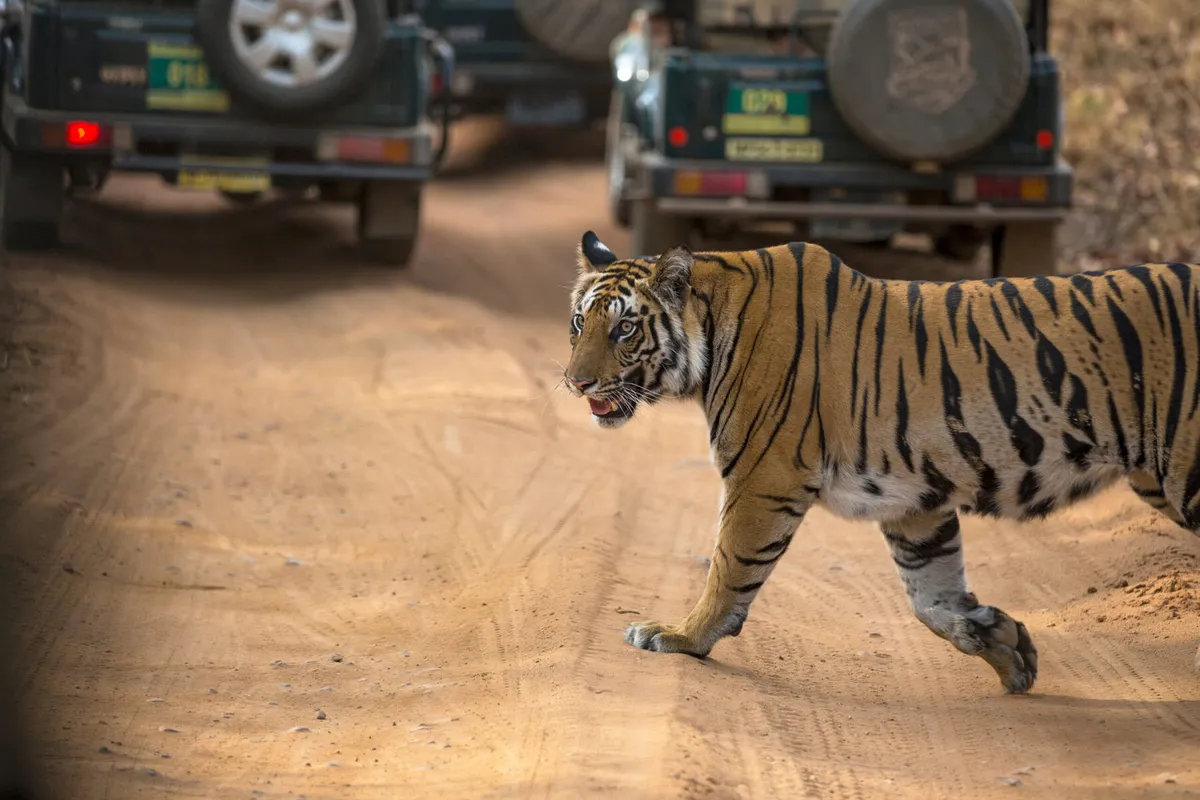
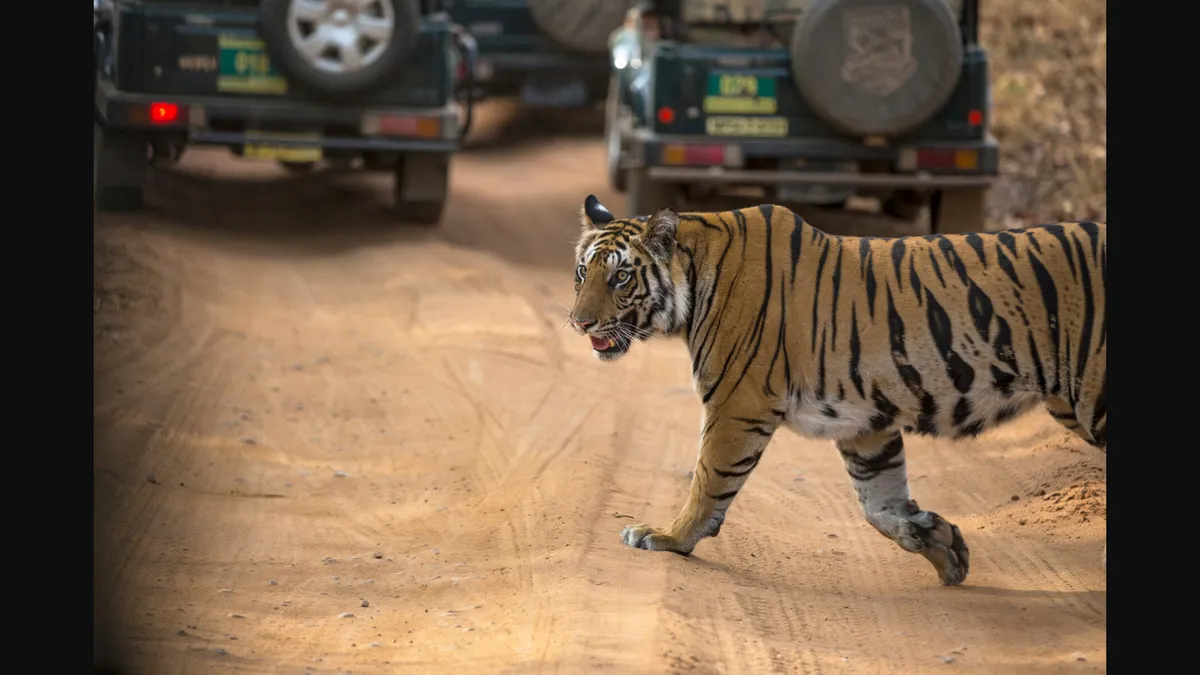
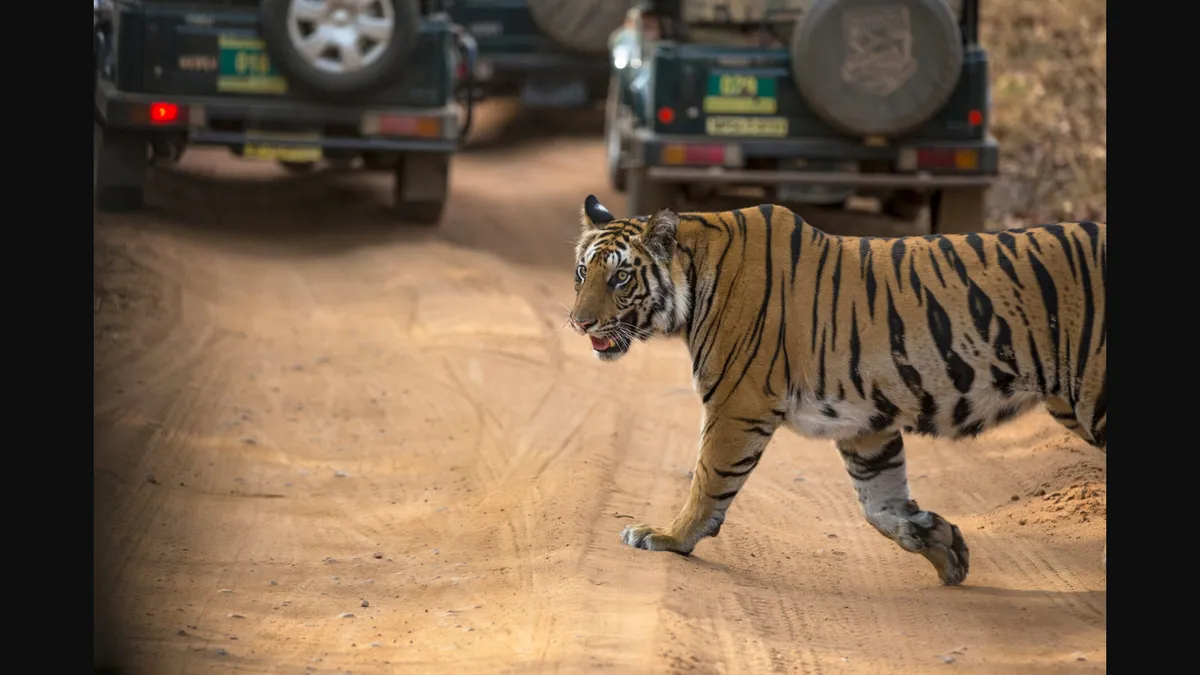
It's dawn in Tadoba-Andhari Tiger Reserve in India. Tourists are ready for their safari, hoping to see a tiger. But they often notice something else first: women in khaki uniforms getting into the jeeps.
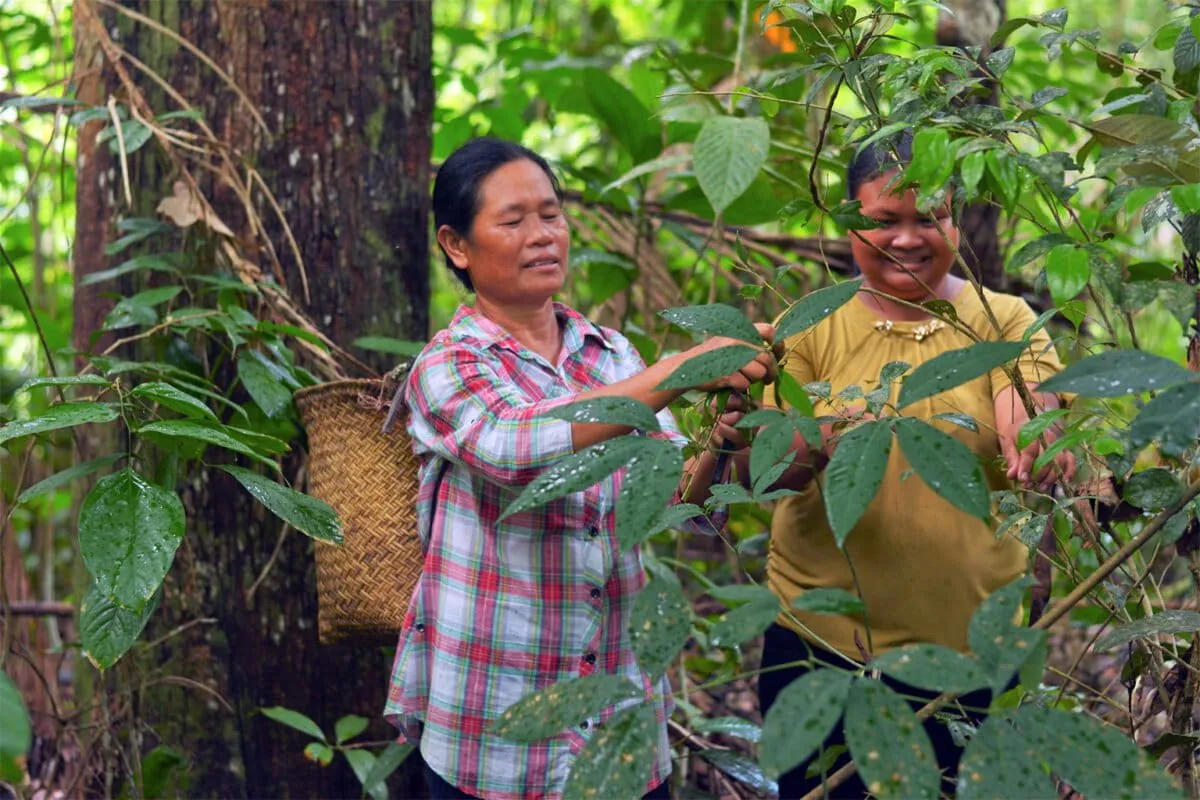
Shahnaz Suleman Baig, one of Tadoba’s first female forest guides, feels proud when people stare. She started in 2015.
When Baig and five other women became guides, many doubted them. Maya Jengathe, another early guide, remembers male guides being against them. Their community had never seen women work outside the home.
We're a new kind of news feed.
Regular news is designed to drain you. We're a non-profit built to restore you. Every story we publish is scored for impact, progress, and hope.
Start Your News DetoxWomen Guides Bring New Strengths
Prabhu Nath Shukla, Tadoba’s field director, says these women solved a hidden problem. Excluding women from safari jobs meant losing talented local people. It also meant missing out on their unique energy, warmth, and communication styles.
Tadoba was a pioneer in hiring women guides in central India. Today, 52 women work there, and dozens more guide safaris across the region.
In 2018, Pugdundee Safaris, a major safari company, started ProNat. This program trains people for wildlife and conservation careers. Unlike other programs, ProNat is open to all young women and men who want leadership roles in the jungle. Before ProNat, wildlife jobs were informal, and many thought they were only for men.
Now, over 270 ProNat alumni work in national parks and tiger reserves. Thirty-five of them are women. Manav Khanduja, co-founder of Pugdundee Safaris, says this program created a clear path for women into the wildlife sector. Alumni become naturalists, make wildlife films, work in conservation, and even start their own travel companies.
Baig says it was once easier to spot a tiger than a woman leading a safari. Now, things are changing.
Baig, 44, runs a homestay with her husband and is a forest-appointed guide. She says she has loved the jungle her whole life. Around 2010, a foreign visitor praised her wildlife knowledge, inspiring her to become a guide. Five years later, she and five other women were hired.
Gayatri Whadai, one of the first women guides, remembers her first safari with Baig. They had rarely spoken to strangers before. Whadai also recalls facing a tigress while picking up trash. She stood still until the tigress left, focused on keeping her guests safe.
Today, Baig, Jengathe, and Whadai encourage more women to join their field. They see a lot of interest.
Expanding Opportunities and Impact
About 270 miles away in Bandhavgarh, Ratna Singh, an early safari naturalist, also saw this interest. Since 2010, she has trained over 2,500 people, including 250 women. She focused on local women with primary education who lacked stable jobs.
Singh says jungle life is tough. She has faced a tiger while fixing a flat tire and lived with snakes. But she believes a fit woman can handle it.
Suryanshi Thakur, 26, drives a safari jeep in Bandhavgarh. People stare at a small woman driving a large vehicle. She is one of only two women naturalists there. Thakur, a ProNat 2023 alumna, says gender doesn't matter in the forest. What matters is how well you explain nature to guests and make it exciting.
About 100 miles away in Pench Tiger Reserve, Mokshada Mahajan takes guests to a hidden shelter. A ProNat 2025 alumna, she learned that knowing a lot about the jungle isn't enough. You must present that knowledge in an interesting way.
Research shows good storytelling helps people connect emotionally and remember information. Khanduja tells students every safari is a chance to turn a guest into a conservation ambassador. He finds that Pugdundee’s women naturalists make guests more comfortable. Solo women travelers and families often ask for women guides on return visits.
Mahajan enjoys teaching younger visitors. She helps children understand how insects, birds, plants, and predators connect in an ecosystem, rather than just focusing on tigers.
The idea of more women on safaris is spreading. In Botswana, Chobe Game Lodge has had Africa’s first all-female guiding team, the Chobe Angels, since 2010. Their success inspired programs like Tanzania’s women-run Dunia Camp. Other companies, like African Bush Camps, aim for 25% women guides. Chobe Lodge has helped over half of Botswana's 100 female guides start their careers.
Singh notes that women guides have other benefits. They are better at following rules, like staying on designated paths. Shukla agrees, adding that their presence makes men behave better, be more polite, and use cleaner language.
Financial Independence and Future Growth
For local women, guiding offers a needed income close to home. In Maharashtra, only 32.6% of women have jobs. Baig, Jengathe, and Whadai earn up to $14 USD a day, often doubling that with tips. Jengathe says her income helped send her children to a better school and build a house. Whadai did the same, and Baig invested in her homestay.
Shukla says when women earn, their families thrive. This has changed local views about women working. When Singh ran a leadership program, some women brought their children, and their husbands came to babysit. Singh says financial independence is true freedom. When men see their wives can earn over $500 USD a month, plus tips, they become strong supporters.
Bringing women to the forefront of the wildlife sector, especially in leadership, needs systemic change. The government guide training is free, but the ProNat program costs about $1,200 USD, making it inaccessible to some. Also, the Pugdundee program can only run during the low season when lodges have no guests.
In 2025, Baig won the Best Wildlife Guide (West India) award. She accepted it for her "five sisters" who started with her in 2015. She believes they have started a revolution. Many young girls in their village now want to be like them, and young women seek their advice. Baig says, "It feels good."