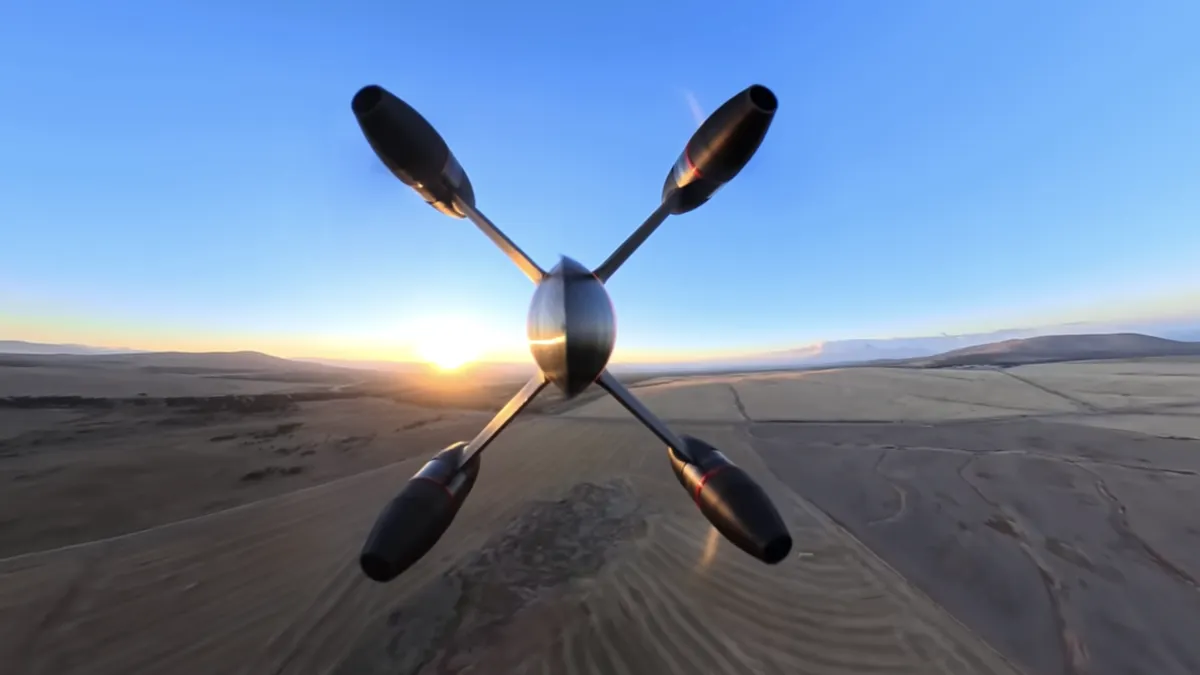
Luke and Mike Bell just reclaimed the Guinness World Record for the fastest quadcopter drone—and they did it by printing the thing themselves.
Their Peregreen V4, built with a 3D printer in Cape Town, South Africa, hit 657.59 km/h (408 mph) in controlled testing. That's fast enough to outrun a Formula 1 car on a straightaway. A month earlier, Australian engineer Benjamin Biggs had pushed the record to 389 mph, but the Bells' latest iteration brought it back home.
This isn't their first dance with the record books. Luke, an aerial videographer, and his father Mike have been iterating on the Peregreen design since June 2024, when they first clocked 298 mph with the Peregreen 2. They hit 363.5 mph with version 3 in October 2025, then leapfrogged the competition entirely with version 4.
We're a new kind of news feed.
Regular news is designed to drain you. We're a non-profit built to restore you. Every story we publish is scored for impact, progress, and hope.
Start Your News DetoxThe Design Sprint
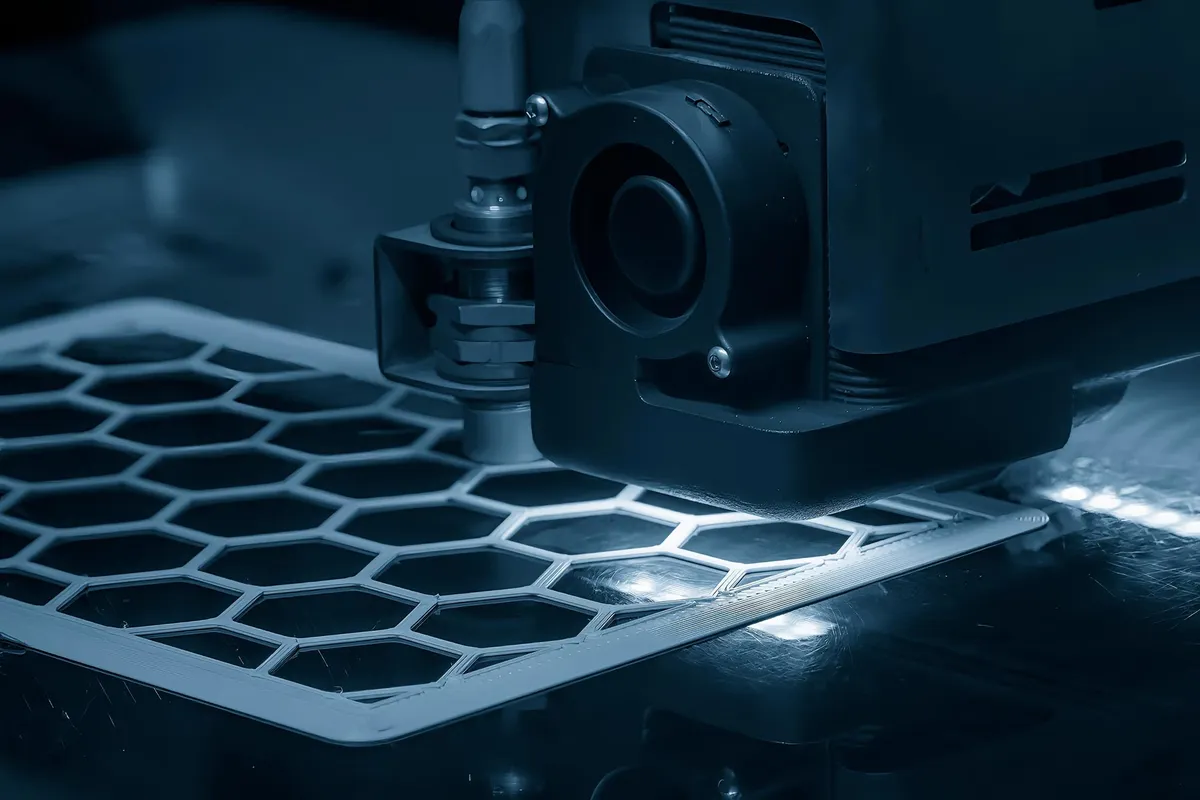
The secret to rapid improvement: 3D printing. Instead of waiting weeks for custom parts, the Bells could iterate in days. They used a Bambu Lab H2D printer with dual nozzles, letting them combine different materials in a single print—lighter in some sections, stronger in others.
Every component mattered at this speed. They upgraded to T-Motor 3120 brushless motors with 900-kV windings (up from 800-kV), squeezing more rotational speed from the same power budget. The drone's body was aerodynamically refined using AirShaper's 3D modeling platform, smoothing away drag. Even the propeller blades were shortened to 6 inches to optimize for top speed over lift.
The power source was equally critical: lithium-ion polymer batteries tuned to deliver maximum energy in the shortest possible window. At 408 mph, every millisecond of efficiency counts.
Capturing the record attempt itself posed a problem: the drone was too small and too fast for conventional cameras to track. The Bells solved it by repurposing the Peregreen 3's onboard camera as a chase camera, filming the V4 in flight. During testing, they flew in opposite directions to account for wind effects—standard practice for speed records, but crucial when the margin between records is measured in single-digit mph.
The Peregreen V4's 408 mph record is official. But in this space, records have a short shelf life. Benjamin Biggs proved that just a month ago. The Bells themselves might break it again, or someone else will. What's clear is that the intersection of 3D printing, custom electronics, and obsessive optimization is creating a competitive space where the impossible becomes routine.