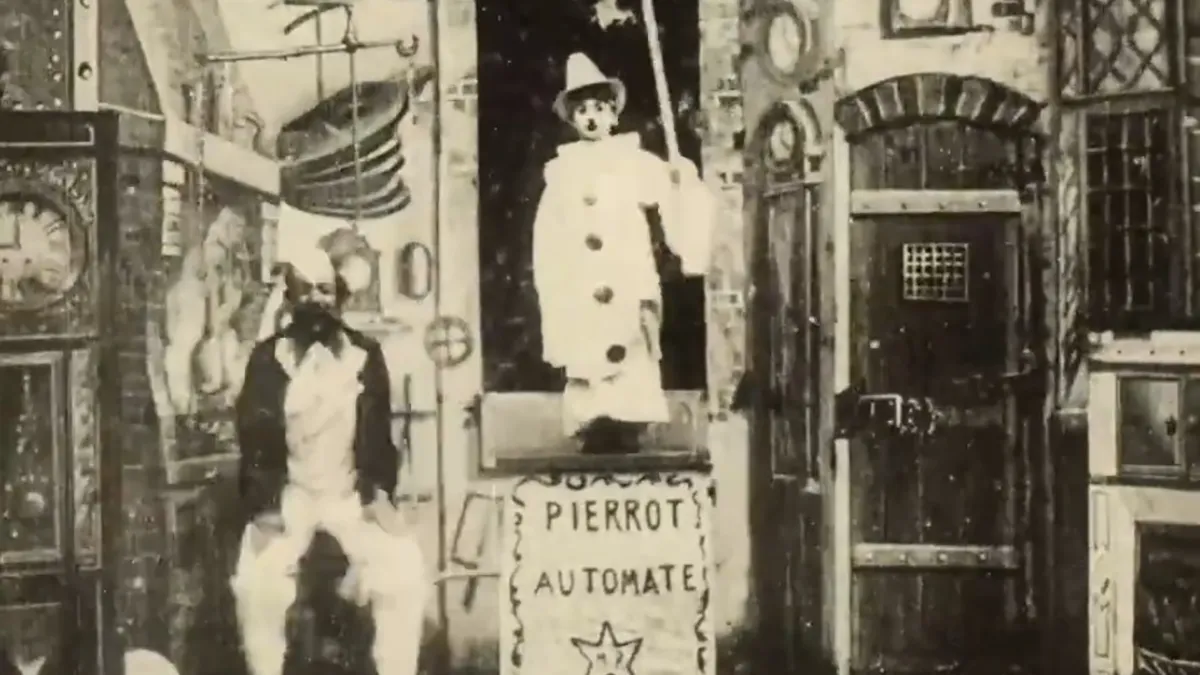
A film thought destroyed for over 100 years has just been restored and released by the US Library of Congress. Gugusse et l'Automate, made by French filmmaker George Méliès in 1897, is now the oldest known movie to feature a robot—a small mechanical boy that grows and shrinks on screen through pure cinematic trickery.
The discovery happened almost by accident. In 2025, conservators found the film deteriorating on 10 rusted reels of nitrate stock in the Library of Congress's William DeLyle Frisbee Collection in Culpeper, Virginia. The reels had spent decades in basements and garages before being donated by Bill McFarland of Michigan, who had no idea what he was sitting on.
How a Camera Jam Changed Cinema
Méliès was already legendary by 1897, but not for the reasons you might expect. He didn't invent narrative filmmaking or special effects in some grand, planned way. In 1896, his camera jammed while filming at Place de l'Opéra in Paris, and when he developed the footage, a bus had mysteriously transformed into a hearse. Rather than curse the malfunction, he became obsessed with it.
We're a new kind of news feed.
Regular news is designed to drain you. We're a non-profit built to restore you. Every story we publish is scored for impact, progress, and hope.
Start Your News DetoxThat accident unlocked something. Méliès began treating cinema like stage magic—layering tricks on top of tricks. He experimented with double exposure, hand coloring individual frames, dissolves, and matte shots. The remarkable part: he achieved most of these effects inside the camera itself, before the film was even developed. This was cinema at its most constrained and most creative at once.
The result was a string of films that still astonish today: Le Manoir du Diable, Cendrillon, Le Voyage dans la Lune. But many of his works simply vanished. In the early 1900s, films were treated as temporary entertainment—one theatrical run, then disposal. Archives didn't exist. Studios didn't preserve. History was lost to landfills and basement floods.
Gugusse et l'Automate was thought gone for good. The restored version runs less than a minute. A clown shows off a small mechanical boy, turning a crank to make it wave a stick. The figure grows larger. Then larger still—now man-sized and hitting the clown on the head. Enraged, the clown smashes the automaton with an enormous hammer, shrinking it with each blow until it becomes a puppet, which he destroys.
It's slapstick, yes. But it's also something more: evidence that filmmakers were imagining mechanical beings and the impossible transformation of matter on screen decades before robots became science fiction cliché. Méliès was showing audiences that cinema could bend reality itself—not through special effects as we know them now, but through the raw magic of the medium.
The restoration took months of stabilizing and scanning brittle, crumbling stock. What emerges is a window into how people first learned to see cinema not as a recording device, but as a tool for conjuring worlds that don't exist. That insight—that the camera can lie in beautiful ways—is still the foundation of filmmaking today.