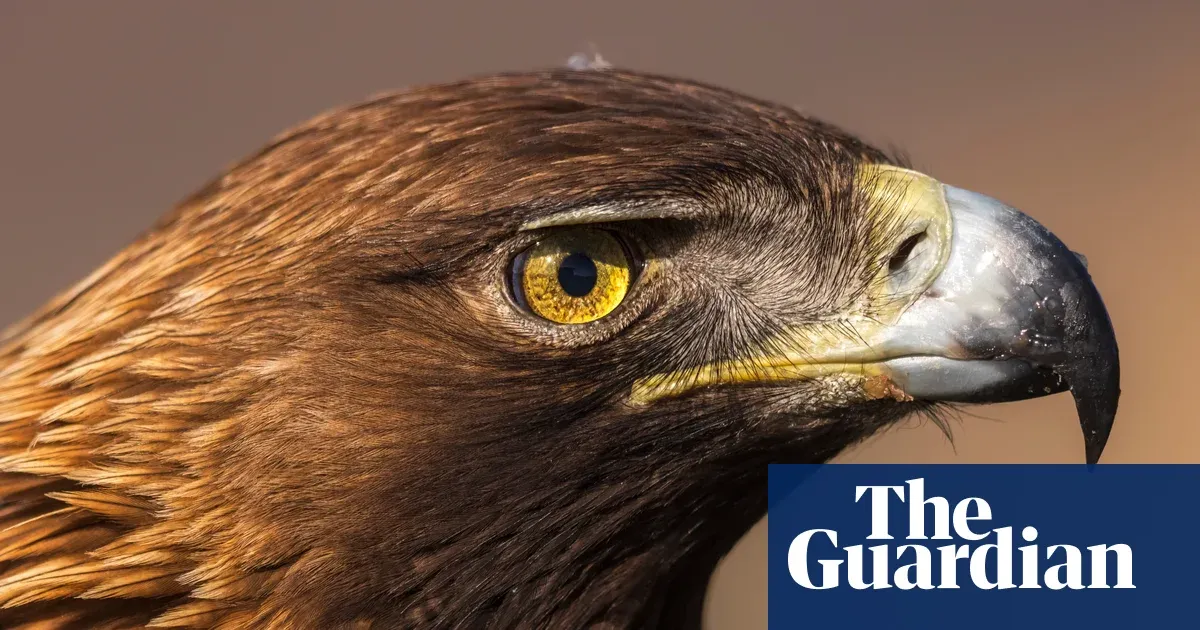
For decades, researchers assumed raptors treated human presence like background noise—something to work around but not really react to. GPS tracking data is proving that assumption wrong. Eagles are actively responding to us, shifting their behavior in ways that ripple across entire landscapes.
Dr Pascual López-López from the University of Valencia has spent years attaching tiny GPS devices to birds of prey, collecting millions of data points on where they hunt, rest, and die. What emerged surprised him: "We thought before that eagles would just ignore people in the forest," he says. They don't.
The data reveals something researchers call the "weekend and holiday effect." On public holidays, when forests fill with people, eagles expand their range—traveling much further to find food. It's not just inconvenience. When human disturbance gets too intense, birds abandon breeding altogether. The prey species scatter too, spooked by activity, forcing the eagles into exhausting longer flights just to eat.
We're a new kind of news feed.
Regular news is designed to drain you. We're a non-profit built to restore you. Every story we publish is scored for impact, progress, and hope.
Start Your News Detox
The infrastructure problem
But human presence is only part of the story. The GPS data also maps a quieter, deadlier threat: the power lines crisscrossing continents. In Spain alone, at least 33,000 raptors die each year from electrocution on overhead cables. For Bonelli's eagles in the Valencia region—already endangered—collision and electrocution with power lines ranks among the leading causes of death. Deforestation compounds the pressure, destroying habitats that most raptor species depend on.
Yet the tracking data has also revealed something else: a path forward. In Doñana national park in southern Spain, conservationists worked with power companies to retrofit pylons with insulators and wider spacing. The result: electrocutions of Spanish imperial eagles dropped by 97%. It's not a complete solution, but it shows that retrofitting works.
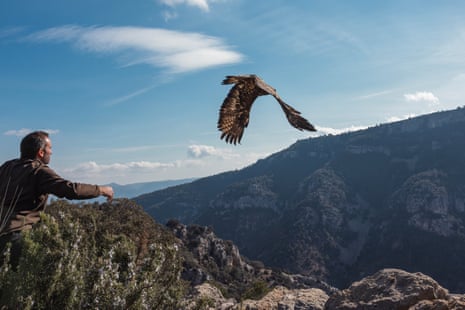
Some species are already adapting faster than we expected. Peregrine falcon populations are climbing in cities. Barn owls thrive in agricultural landscapes. These birds are finding niches in the human-dominated world—though not all raptors have that flexibility.
The GPS data is now shaping decisions about renewable energy expansion too. Wind turbines pose real risks to some raptor species, and experts are working to balance clean energy growth with bird protection. It's a complicated equation, but at least now we're working with actual knowledge rather than assumptions.
What López-López's tracking devices have revealed is that raptors aren't passive observers of our world. They're actively navigating it, adjusting routes and breeding decisions in real time based on what we do. The question now is whether we adjust ours in response.