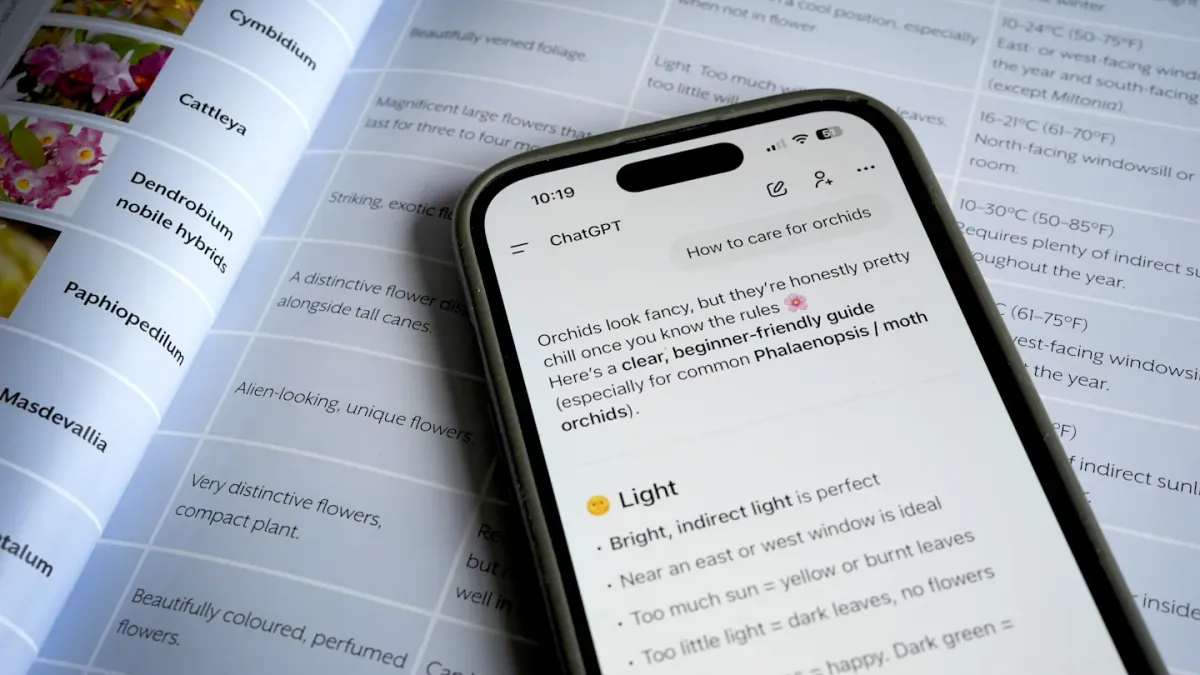
ChatGPT has become impossible to ignore. It's sparked real conversations about the future of work, the reliability of AI, and what happens when millions of people start outsourcing their thinking to a machine. But if you've used it regularly—or even just scrolled past the hype—you might have noticed something: most people don't actually know what GPT stands for.
Turns out, those three letters tell you almost everything about how this thing works.
Breaking down the letters
Start with the "G": generative. This is the core distinction. ChatGPT doesn't analyze text the way a search engine does. It creates new text in response to what you ask. It's pulling from patterns it learned during training, then assembling something novel on the fly. That's different from a system that just retrieves or summarizes existing information.
We're a new kind of news feed.
Regular news is designed to drain you. We're a non-profit built to restore you. Every story we publish is scored for impact, progress, and hope.
Start Your News DetoxThe "P" stands for pre-trained. Before ChatGPT ever answered your first question, it spent months learning from billions of webpages—sources like Wikipedia, news sites, forums, and other publicly available text collected since 2008 in a dataset called OpenCrawl. This wasn't learning in real time. It was deep preparation, followed by refinement based on human feedback. That pre-training is why it can sound coherent on almost any topic the moment you open it.
Then there's the "T": transformer. This is the architecture—the actual neural network structure that does the heavy lifting. Transformers work by breaking your question into pieces called tokens, converting those into numerical vectors, and then running them through a mechanism that figures out which parts matter most. It's how the system decides whether "bank" means a financial institution or the side of a river, based on context. Transformers are what allow the AI to transform your question into an answer.
Put it together, and you have a system that's been trained on vast amounts of text, uses a specific type of neural network to understand and generate language, and actually creates new content rather than just retrieving it.
How it got its name
Interestingly, "ChatGPT" almost didn't happen. In a recent OpenAI podcast episode, the company's Chief Research Officer Mark Chen and Head of ChatGPT Nick Turley revealed that the name was settled on the day before launch in November 2022. The team had been calling it "Chat with GPT-3.5"—clunky and forgettable. In a last-minute meeting, they realized they needed something simpler. ChatGPT stuck.
It's a reminder that even products that feel inevitable often arrive through small, almost accidental decisions. The technology was ready. The name just needed to be.