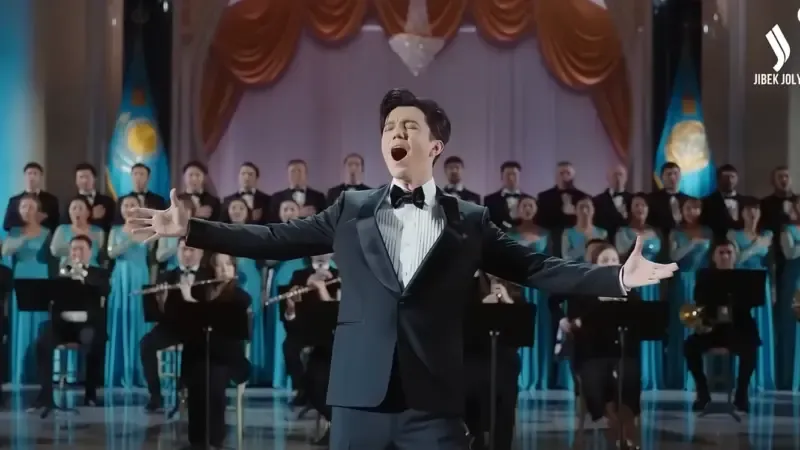
A young woman from California recently made quite the journey. She flew across the world, donned a traditional Kazakh robe, and conversed in Kazakh — a language she'd only started learning three months prior. Her destination? London, for a concert by Kazakh superstar Dimash Qudaibergen.
This isn't just a quirky anecdote; it's a peek into the kind of devotion Dimash inspires. Thousands of fans, affectionately known as "Dears," follow him across continents. They're not just drawn to his voice (though, we'll get to that). They're captivated by something deeper, making him Kazakhstan's most famous cultural export, ever.
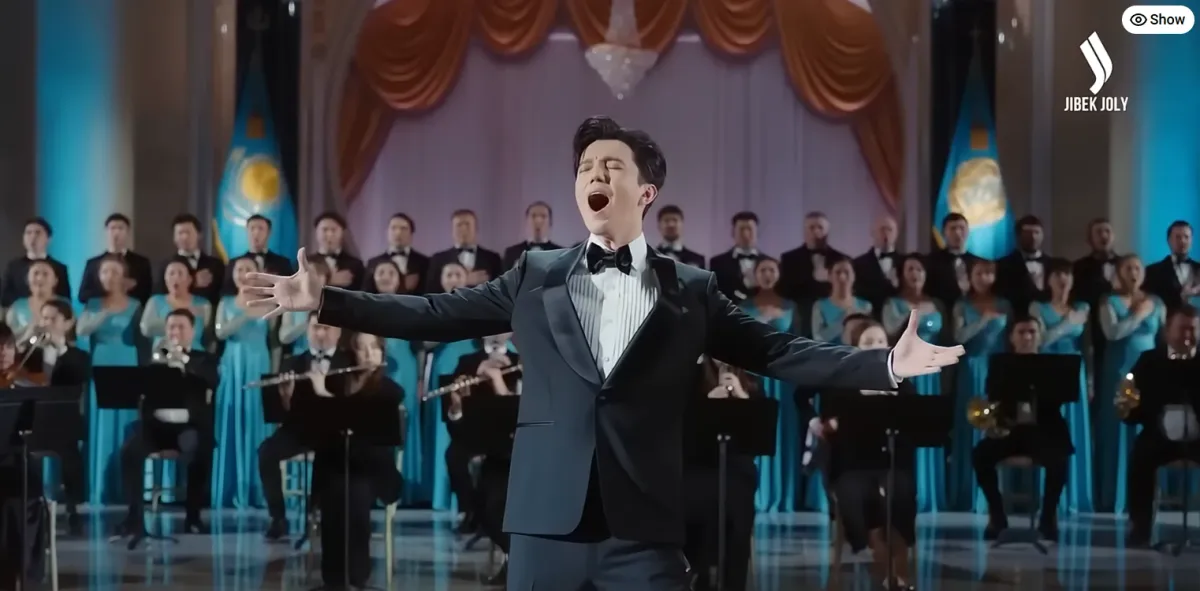
So, what's the secret sauce behind this global phenomenon?
The Voice That Launched a Thousand Flights
Born in Aktobe, Kazakhstan, in 1994, Dimash's rise to global recognition was swift. His parents, both celebrated figures in the Kazakh cultural scene, clearly passed on the musical genes. His father is a songwriter and composer, his mother a professional singer. They've both earned the title "Honored Worker of Kazakhstan." So, you could say the stage was set, literally.
We're a new kind of news feed.
Regular news is designed to drain you. We're a non-profit built to restore you. Every story we publish is scored for impact, progress, and hope.
Start Your News DetoxBut even with a musical pedigree, Dimash's primary gift is astonishing: a voice that glides through more than six octaves with a kind of effortless grace that makes mere mortals wonder if he's cheating. It's a vocal range that's more typically seen in a piano than a human being.
A major turning point arrived in 2016 when he was invited to audition for China's Singer competition. His performances in 2017 catapulted him into the Chinese public's consciousness, and finishing as runner-up was just the beginning. While he primarily sings in Kazakh, he's performed in at least 16 languages, including English, Mandarin, French, and Spanish. Because, why limit yourself to just one?

His second world tour, "Stranger" (2022–2025), sold out in record time across thirteen countries. In Mexico, two shows were gone in a mere eight minutes. That's the power of the "Dears" — a fanbase so dedicated, one from Switzerland even published a book about his music, written in both English and Kazakh. Dimash explains the name simply: "My fans treat me with great love and respect… so I chose this word — ‘Dears’."
And he earns that affection. Dimash is known for taking time with fans, signing autographs, posing for photos, and generally being the kind of celebrity who seems genuinely thrilled to meet the people who make his career possible. He even brought a young Kazakh girl in traditional dress on stage to sing with him, a moment that probably launched a thousand aspiring singers' dreams.
His supportive nature extends to his family too. His younger brother Mansur often plays guitar and dombra (Kazakhstan's national instrument) on stage with him. He even supports his sister Raushan's restaurant, performing at her traditional pre-wedding celebration. Journalist Akdidar Abdimaulen notes that Dimash has cultivated the image of a "true artist," not just a "commercial product." That kind of authenticity tends to resonate.

A Diplomat with a Microphone
Dimash's rise coincides with Kazakhstan's ongoing journey of building its national identity, having gained independence in 1991 after centuries of Tsarist and Soviet rule. His public image plays a significant role in this. He told Euronews his goal is to introduce "the country’s culture and traditional music to the world." And he does it with flair. His performance of the folk song Daididau, which tells the story of Kazakhs forced into labor in 1916, is a masterclass in sharing history through heartbreakingly beautiful music.
Kazakhstani officials have certainly noticed. President Kassym-Jomart Tokayev called him a "global star," and Dimash has received high state honors, even performing the national anthem at the presidential residence. Talk about a top-level endorsement.
Yet, for an artist operating in an authoritarian state, Dimash has made careful, yet notable, political statements. During the mass protests in Kazakhstan in January 2022, he posted on social media that "people are having a hard time" and asked "competent people in power" to "make appropriate decisions quickly." A bold move, subtly played.
He also quietly removed Russia from his tour schedule after the 2022 invasion of Ukraine, despite previous strong ties to the Russian music industry. Later that year, he debuted "The Story of One Sky," a strikingly anti-war song with echoes of John Lennon's "Imagine." He's since become a global Goodwill Ambassador for the International Organization for Migration, blending his art with serious humanitarian work.
Dimash Qudaibergen's stardom isn't simple. It's a potent mix of a truly once-in-a-generation voice, a blend of traditional and operatic styles that defies easy categorization, and a genuine, almost old-school connection with his audience. He's a cultural ambassador, a humanitarian, and a vocal marvel, all wrapped up in one surprisingly humble package. And if that doesn't make you want to go listen, we don't know what will.