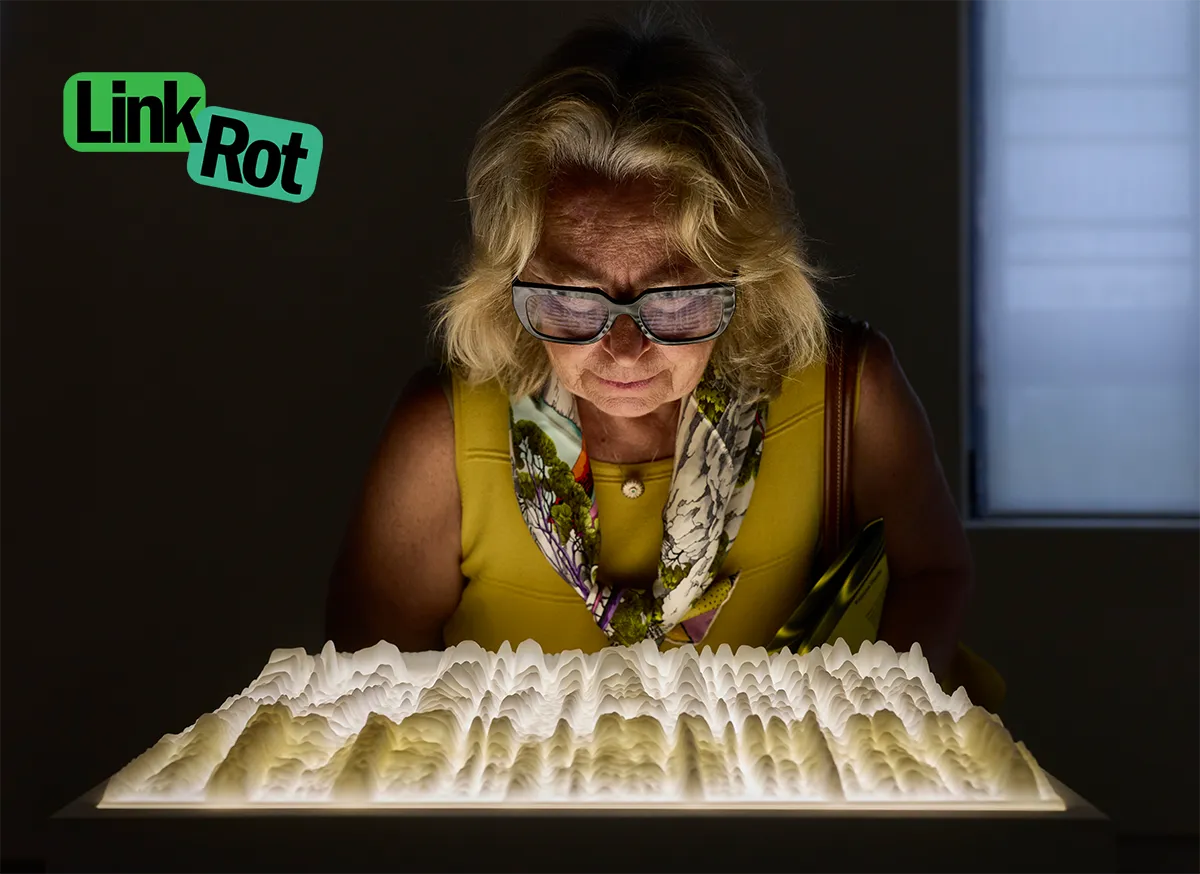
Step right up to the Palazzo Diedo in Venice, where a new exhibition called "Strange Rules" is throwing everything you thought you knew about art into a very expensive, very thought-provoking blender. Curated by a quartet of sharp minds, this show features everything from metal plants that moonlight as fortune tellers to brain scans of pre-verbal communication. And, naturally, a film made by AI over a thousand years.
Because apparently, that's where we are now. The exhibition dives headfirst into how AI and blockchain are not just changing art, but forcing us to redefine it. Is a website serious art, or just a glorified gimmick? Is using AI for a masterpiece lazy, or just a new brushstroke? Mostly, it all boils down to that age-old, slightly exasperated question: Is it art?
The Art of the Algorithm
For artists wrestling with tech, that "Is it art?" query is practically a greeting. The curators of "Strange Rules" offer a sleek new answer: "Protocol Art."
We're a new kind of news feed.
Regular news is designed to drain you. We're a non-profit built to restore you. Every story we publish is scored for impact, progress, and hope.
Start Your News Detox
This isn't just art using technology; it's art that is the technology. Protocol Art, they explain, "engages with the underlying rules that determine how culture is produced, distributed, and perceived in a digital age." Think algorithms, AI models, social norms – the invisible puppet masters of our digital lives. Protocol Art doesn't just observe these systems; it builds new ones. The protocol itself becomes the art, and suddenly, the scientists and researchers crafting these rules are wearing berets.
Naturally, the freshly renovated Palazzo Diedo is aiming to be the global HQ for this particular brand of artistry. More exhibitions and research are already on the books.
This definition is, shall we say, expansive. It covers everything from biologist Michael Levin genetically manipulating planaria (the "protocol" being the genetic code itself) to Trevor Paglen's "Voyager," where language conjures images in the viewer's mind. This isn't just someone using a tablet to draw or asking an AI to spit out a video. This is about investigating, intervening in, or even "hijacking" the underlying systems. It’s art that moves beyond being shaped by external tastes — like corporate commissions or the relentless pressure of algorithms.
Who's the Artist Here, Anyway?
Most of us think of art as the thing we see or hear. Protocol Art, however, argues the art resides in the work that generates those manifestations. The artist's authorship isn't in a fixed display, but in the underlying structure they designed. This is why art using blockchain or AI is often participatory and unique to each viewer – a truly bespoke experience.
Take Ken Stanley's "Picbreeder" (2008/2020), where users collectively evolved images by picking their favorites, or Dryhurst and Herndon's "Attention Guild" (2026), which involves audience participation. Stanley, an AI researcher, essentially created a system where human choices guided the evolution of images, giving us an early peek at "mass AI aesthetics" as models learned our preferences. So, the art isn't the final image, but the orchestration of all that participation.
A Shield in the AI Storm
Beyond just being a fascinating framework, Protocol Art acts as a kind of legal shield for artists using AI, especially as cultural institutions and legal systems squint suspiciously at some forms of AI-generated work. The push for differentiation is particularly clear in "Feral (Epoch 1)" (2025–3025) – a film shot and edited by AI, designed to unfold over a millennium, with interventions from 32 generations of artists. Epoch 1 is by Fabien Giraud, Epoch 2 by Pierre Huyghe. The artists for Epoch 32 might not even be born yet, which is a delightful thought.
The team behind "The Feral" has been front and center in the AI authorship debate. Grégory Chatonsky and Ida Soulard, both part of the team, famously critiqued France's National Center for Cinema for not funding AI films. Their argument: the problem isn't the tech, it's the absence of an author. They put it bluntly: "what a machine without an author produces has a name: slop." Someone just prompting a text-to-video AI without deeper engagement? Not an author.
For them, authorship in the age of generative AI means: "The author chooses their models, trains their corpus, configures their processes, works locally with open-source software, and accepts the material consequences of their choices." Authorship, they argue, "permeates the entire operational chain," not just the pretty picture at the end. Which, if you think about it, aligns perfectly with Protocol Art.
Right now, the US Copyright Office doesn't recognize AI-made work as having an author, which creates a strange legal void. Chatonsky and Soulard believe authorlessness is possible, but the concept is being applied far too broadly.
Beyond "Is It Art?"
Protocol Art offers a much-needed filter after the wild west days of NFTs, where some used the Duchamp/Warhol "anything can be art" argument to dismiss any criticism as elitist. "Strange Rules" takes a different path, focusing on obsessive labor and intense care rather than mischievous irreverence.
Philosopher Michel Foucault once mused whether the question "What difference does it make who is speaking?" would one day become irrelevant. Today, as AI cranks out "authorless" averages and the internet hums with language that might be bot-generated, the question has sharpened. We're not just obsessed with who or what is speaking, but with: Is it worth listening to? According to Protocol Art, the answer isn't in the machine itself, but in the mind manipulating it. And that, in itself, is a masterpiece.