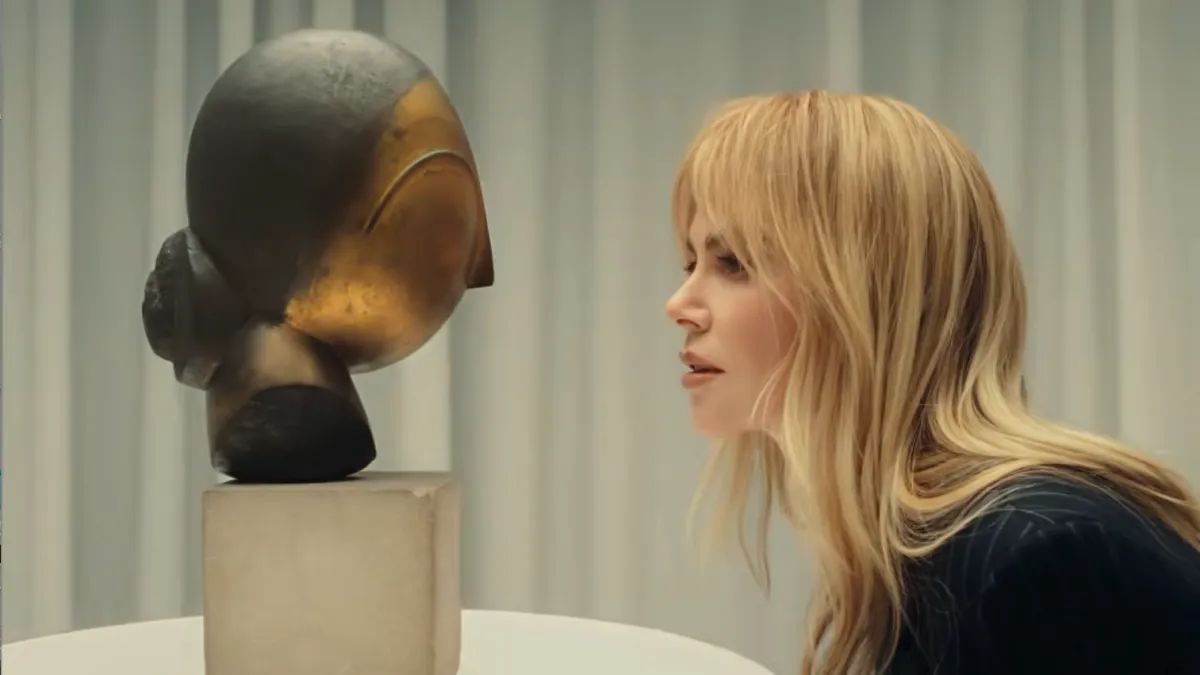
Nicole Kidman recently danced around a bronze sculpture for a Christie's promo, looking utterly captivated. The object of her affection? Constantin Brancusi's Danaïde (1913), which then promptly sold for a cool $107.6 million, making it the priciest sculpture ever auctioned. Because apparently, that's where we are now: an A-lister can single-handedly re-launch a dead artist's career. And honestly, it’s not hard to see why Brancusi still commands attention.
Brancusi (1876–1957), a Romanian-born sculptor, left his entire studio to the French government, with the very specific instruction that it be preserved. This "Atelier Brancusi" usually lives at the Centre Pompidou, but due to renovations, it packed its bags and headed to Berlin's Neue Nationalgalerie for a major summer exhibition. The Museum of Modern Art (MoMA) will host its own version this October, because everyone wants a piece of the Brancusi pie.
These shows feature over 150 sculptures, drawings, and photographs, offering a deep dive into one of the 20th century's most pivotal artists. The Neue Nationalgalerie, a minimalist masterpiece by Mies van der Rohe, seemed like a natural fit for Brancusi's sleek forms. Though, placing some of his works, like Bird in Space (1923), against walls did make it a bit hard to appreciate their full, three-dimensional glory. A minor quibble for an otherwise monumental display.
We're a new kind of news feed.
Regular news is designed to drain you. We're a non-profit built to restore you. Every story we publish is scored for impact, progress, and hope.
Start Your News DetoxThe "Brancusi Effect" on Culture
Brancusi's art has always been a magnet for the fashion and art worlds. There's a fantastic 1930 film by Man Ray showing model Lee Miller practically caressing Princess X, a sculpture that famously caused a scandal in 1920 due to its rather… phallic shape. Talk about blurring lines. It blends male and female forms, mythical figures like Leda and Zeus, and generally makes you wonder what exactly you're looking at. Which, if you think about it, is both impressive and slightly terrifying.
His direct carving method — no molds, just pure, repetitive labor on marble, wood, or limestone — resulted in pieces like Sleeping Muse and Bird in Space that look effortlessly simple but hide an incredible amount of work. It’s the kind of dedication that makes you want to lie down and take a nap just thinking about it.
This minimalist aesthetic has had a profound impact, sparking what one journalist called a "minimalism glut" in American culture. From appliance design to lifestyle gurus, everyone wants a piece of that less-is-more action. Kyle Chayka even wrote a book about it, The Longing for Less (2020). The "Brancusi Effect" is real, influencing everyone from architects to jewelry designers like Ambush.
And then there's the infamous 1926 court case. Brancusi's Bird in Space arrived in the US and was promptly taxed as a "manufactured metal object." An actual court had to decide if it was art. Spoiler: it was. MoMA's upcoming exhibition will explore these fascinating cultural connections a century later, proving that sometimes, you just need a good lawyer to get your art recognized. And maybe Nicole Kidman.