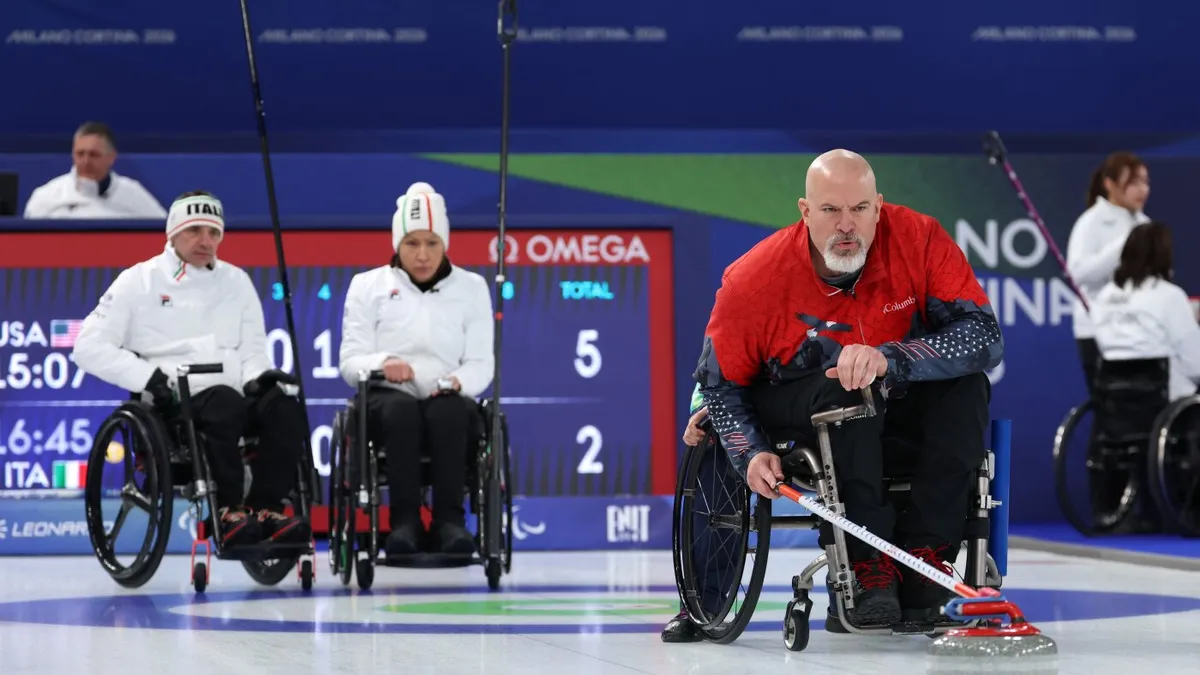
Steve Emt's voice carries across the ice—deep, commanding, impossible to miss. "Curl!" he shouts at the granite stones. "Sit!" His doubles partner Laura Dwyer hears the confidence in every word, the kind of presence that comes from someone who's always known how to fill a room. But 29 years ago, Emt wasn't thinking about filling rooms. He was lying in a hospital bed, paralyzed from the waist down, trying to figure out how to keep living.
That was 1995. Emt was 25, a former West Point cadet and UConn basketball walk-on, the kind of athlete who'd always won. He'd been behind the wheel drunk when his car crashed. He spent the first six months telling everyone a deer had run in front of him. He didn't want to be known as a drunk driver—he wanted to be the stud athlete, the great person, the guy who had it all figured out.
It took a newspaper reporter asking him to tell the truth before he could start forgiving himself.
We're a new kind of news feed.
Regular news is designed to drain you. We're a non-profit built to restore you. Every story we publish is scored for impact, progress, and hope.
Start Your News DetoxThe Stranger on the Hill
Seventeen years after his crash, Emt was working as a middle school math teacher and high school basketball coach. He'd also started speaking at schools, telling his story. But something was missing. He needed to compete again.
Then, in Cape Cod in 2013, a stranger approached him while he was pushing his wheelchair up a hill. The man had slicked-back hair and a wild proposition: "I train with the Paralympic rowing team. With your build, I could make you an Olympian in a year."
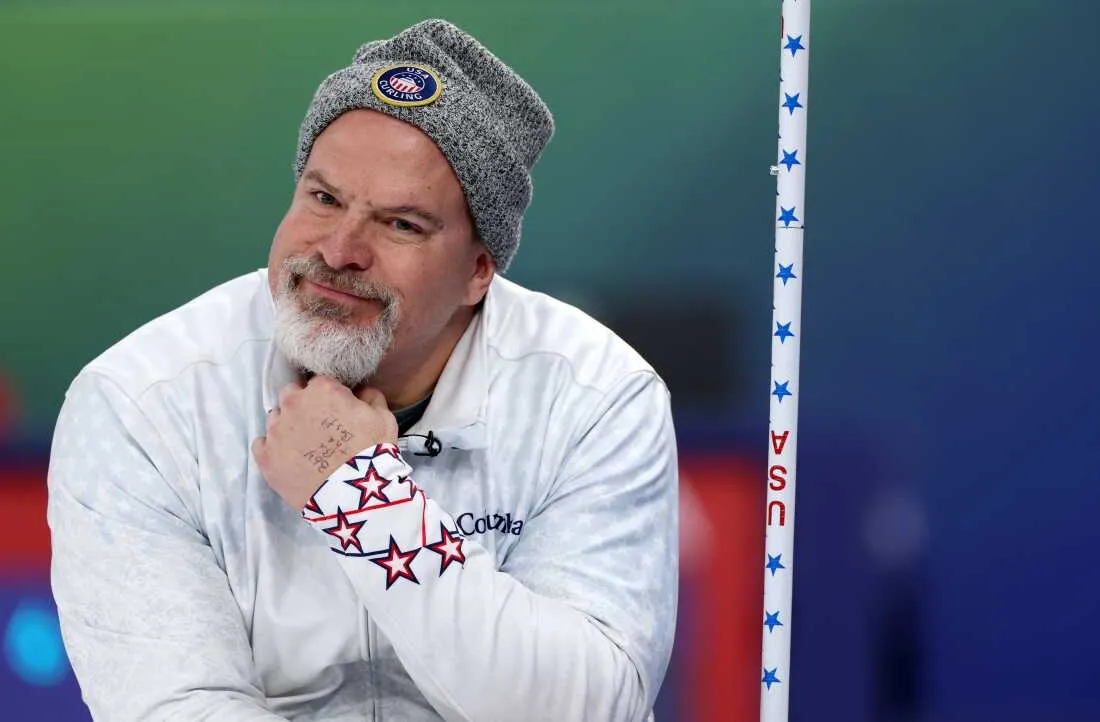
Emt heard "Olympics" and said yes before he even knew what curling was. (He thought it might be related to weightlifting.) Two weeks later, he threw his first stone, and something clicked. He made the U.S. wheelchair curling team in 2014. By 2018, he was competing in his first Paralympics in Pyeongchang.
That stranger, coach Tony Colacchio, had essentially stalked him into the sport. And it saved him.
"I'm a jock," Emt said. "I need to compete, and I didn't have anything going on in my life. Seventeen years after my crash, I had a hole, and then [Colacchio] came along."
Now, at 56, Emt is a 10-time national champion and the most decorated Paralympic curler in U.S. history. This is his third Paralympics, and he's competing in the sport's first-ever mixed doubles wheelchair curling event alongside Dwyer. The pair won three straight matches in the round-robin tournament to reach the semifinals—the first time Team USA has qualified for a medal round in wheelchair curling since 2010. After losing to Korea in the semis, they're competing for bronze against Latvia on Tuesday.
The Long Game
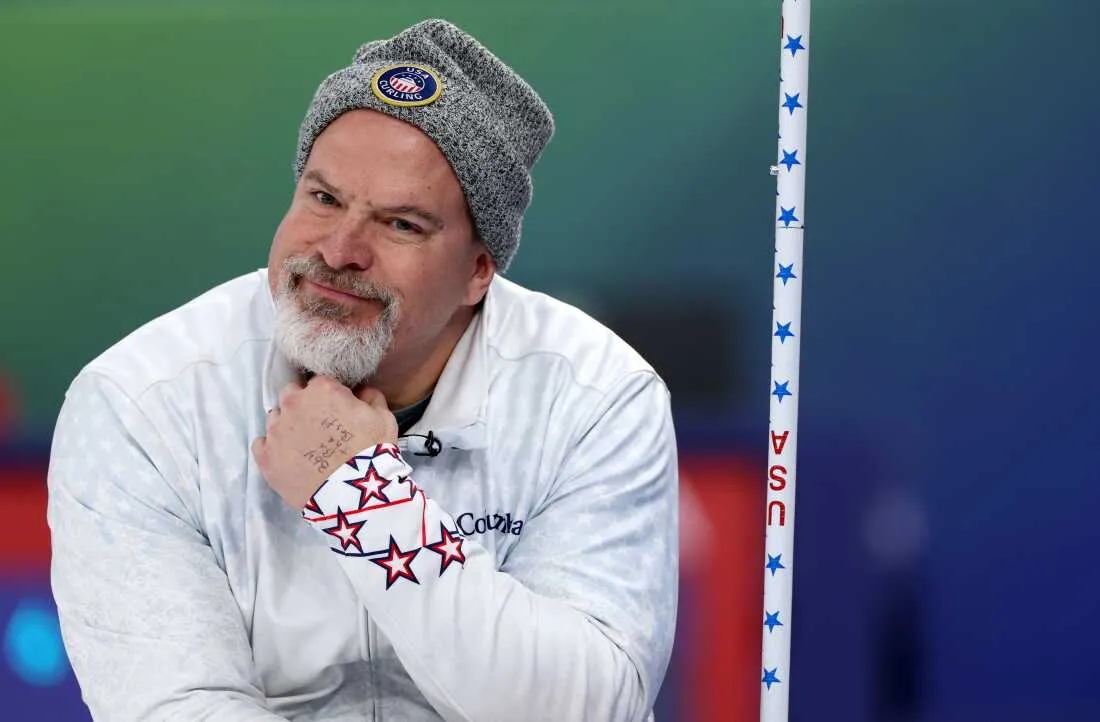
What makes Emt stand out isn't just his record—it's what he does with his platform. For almost a decade, he's been a full-time motivational speaker, visiting over 100 schools a year. He tells teenagers about the chance Colacchio took on him, and he asks them to "be a Tony." Sit with the kid eating alone at lunch. Smile at someone in the hallway. Put your phone down.
"We're all going through something," he tells them. "A simple 'hello' or 'good morning,' it could change somebody's day. It could change somebody's life."
Curling itself has changed him. The sport is built on handshakes with competitors, not trash-talk. It's forced him to slow down, to appreciate small moments. Moving to Wisconsin helped too—he says the Midwest pace suits him better.
But mostly, it's the fact that he stopped lying. He stopped hiding behind the athlete he used to be and started building something new.
"That's my label: Yeah I'm a curler, yeah I'm a speaker, yeah I'm a drunk driver," he said. "I'm in a wheelchair because of a drunk driving crash, and I want you to know it and I want you to learn from me."
Emt originally aimed to make it to three Paralympics. He's already there. Now he's eyeing Salt Lake City in 2034—two Games away. He'll be 90 years old, still pushing, still commanding rooms with that baritone voice. Still showing people that when you wake up and you're told you're never going to walk again, that's not the end of the story. It's just where the real one begins.