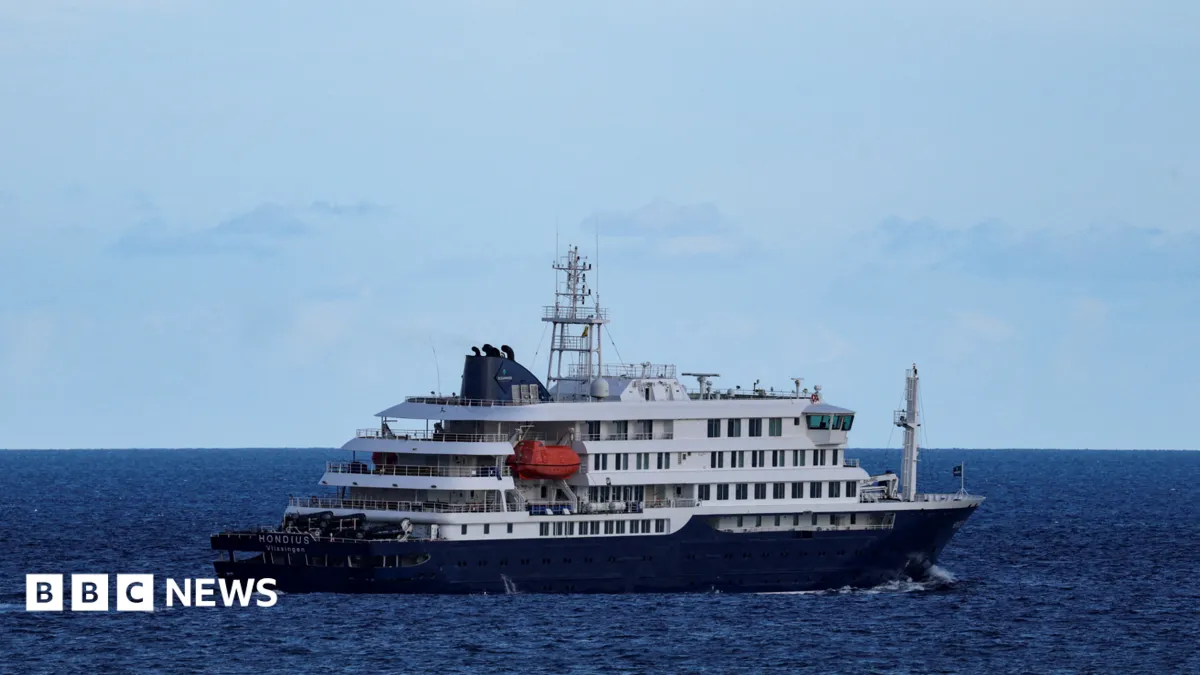
The World Health Organization (WHO) has announced the end of a hantavirus outbreak linked to a cruise ship. This outbreak infected 13 people and caused three deaths.
Dr. Tedros Adhanom Ghebreyesus, WHO director-general, confirmed that the last person exposed to the virus on the MV Hondius finished quarantine. This individual tested negative and has returned home. No new cases have been reported since May 25.
Understanding the Outbreak
The outbreak involved the Andes virus, a rare type of hantavirus. The MV Hondius cruise ship started its journey from Argentina on April 1.
We're a new kind of news feed.
Regular news is designed to drain you. We're a non-profit built to restore you. Every story we publish is scored for impact, progress, and hope.
Start Your News DetoxThe first two cases had traveled through Argentina, Chile, and Uruguay. They visited places where rats known to carry the virus live. Health experts believe the virus might have spread between humans who were in close contact during this outbreak.
More than 650 contacts were identified and monitored by authorities in 33 countries. The WHO plans to continue studying the outbreak and hantavirus in general.
Hantavirus: Risks and Symptoms
Dr. Diana Rojas Alverez, a WHO medical officer, noted that the Andes virus and other hantaviruses remain a public health risk in South America and other areas. She stressed the need to keep monitoring the virus and prepare for its spread.
Hantavirus usually spreads from rodents. People get infected by breathing in air with virus particles from rodent urine, droppings, or saliva.
Symptoms include fever, extreme tiredness, muscle aches, stomach pain, vomiting, diarrhea, and shortness of breath. These symptoms typically appear two to four weeks after exposure. However, they can show up more than a month later. This is why passengers had a long isolation period.
Passengers who were not medically evacuated disembarked in Tenerife, Spain, in May. They were then flown home.