Seventy UC Berkeley students spent one week tackling two problems their city actually needs solved: the mountains of furniture abandoned during student move-out season, and websites that don't work for people who are blind or have low vision.
The inaugural Berkeley Civic Innovation Challenge paired students into 15 teams after city leaders outlined real municipal challenges. In five days, they interviewed residents, researched what already exists, and built prototypes. Then came the pitches.
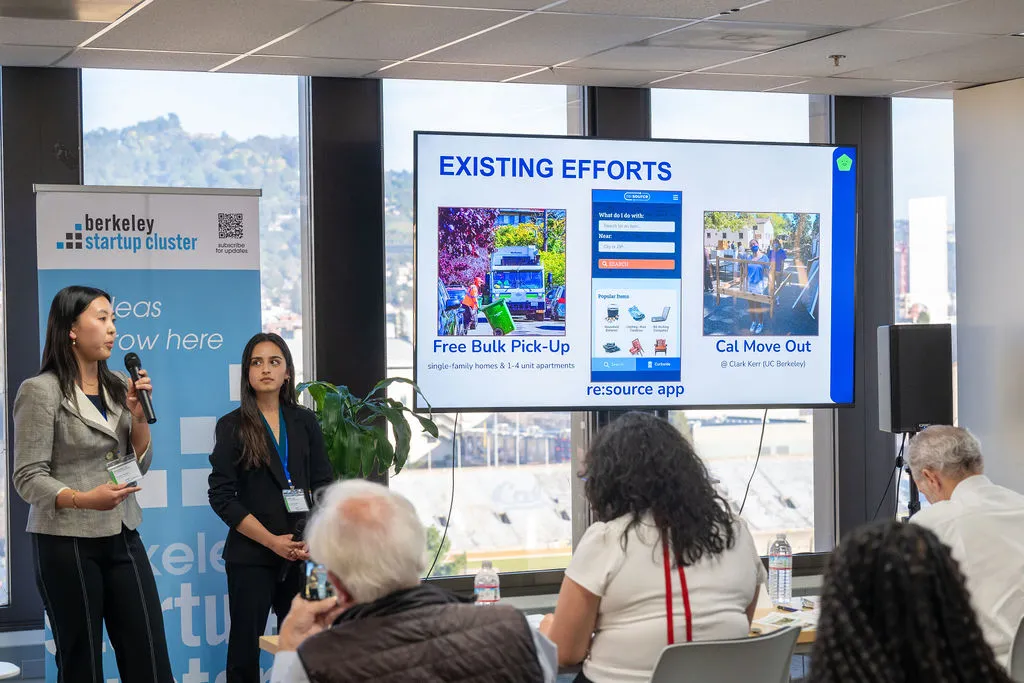
ReMove, one of two winning projects, addresses the annual May chaos when thousands of students leave town. Mattresses, couches, and bulky items pile up faster than the city and campus can handle them. The team, led by Joon Choi, built an AI system paired with outreach to connect residents with donation and disposal services. The existing efforts have limits — not enough capacity, not enough awareness. ReMove closes that gap.
We're a new kind of news feed.
Regular news is designed to drain you. We're a non-profit built to restore you. Every story we publish is scored for impact, progress, and hope.
Start Your News DetoxThe second winner, AccCo, tackles something less visible but affects 2,000 Berkeley residents directly: city websites and documents that don't work for people who are visually impaired. Sejin Kim's team designed an "accessibility coach" — AI that can fix existing inaccessible PDFs and documents while also training city staff to create accessible content from the start. It's the difference between a website that works for everyone and one that locks people out.
What makes this work is the collaboration. UC Berkeley and the City of Berkeley ran the challenge together, which means student ideas land in front of actual decision-makers. "We are a place that wants to welcome entrepreneurs and your entrepreneurial ideas," said Mayor Adena Ishii, who judged the event. "We want to encourage you to think about these civic challenges and how you all can actually help us solve some of these problems."
The winning teams get real support: they're fast-tracked into the campus's Big Ideas Contest with mentorship and up to $20,000 each to develop their solutions further. Darren Cooke, the campus's interim chief innovation and entrepreneurship officer, watched teams present work that was literally one week old. "I can't wait to see what they do when they've worked together for a full semester," he said.
This is what happens when you give students a real problem, a tight deadline, and a city that's actually listening. The challenge proved that innovation doesn't require years of planning — sometimes it just needs a week, a team, and permission to try.