
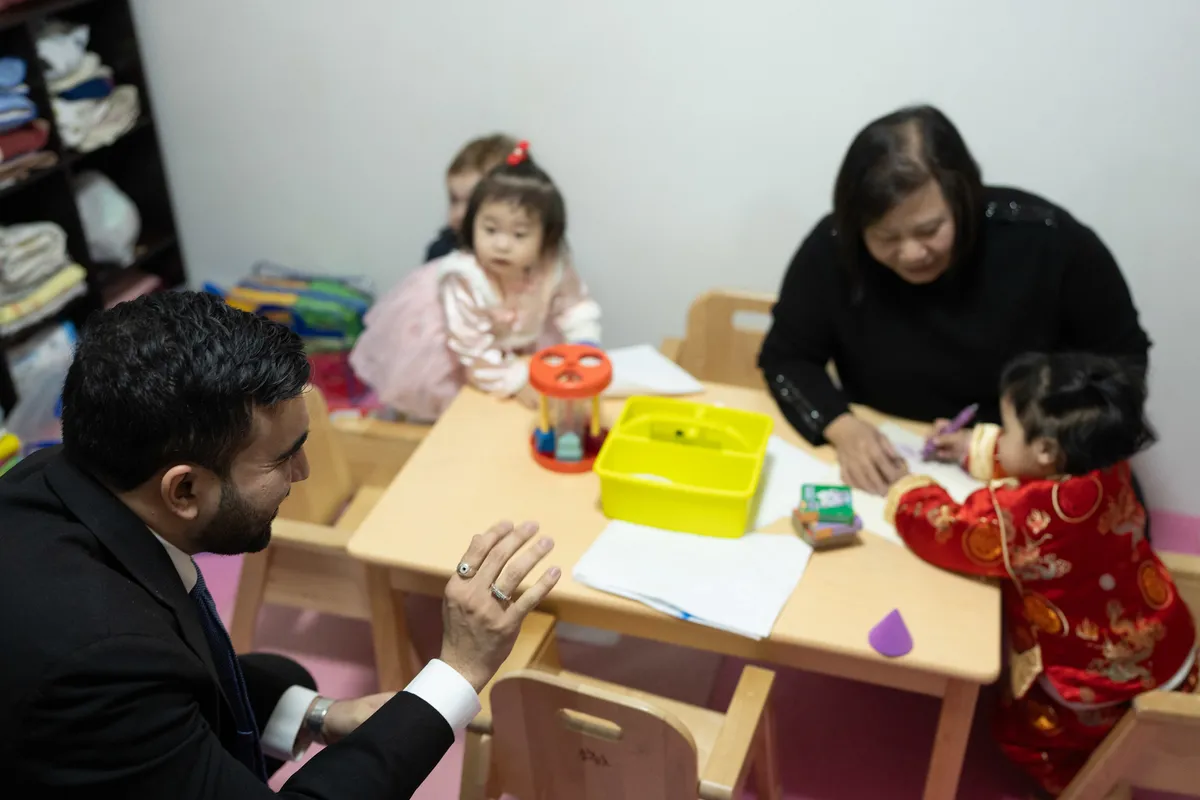
New York City is moving toward universal child care—a proposal that could reshape life for working families. Gov. Kathy Hochul and Mayor Zohran Mamdani have announced funding increases and a path forward. But here's what matters: this only works if the people running child care centers and family programs today have a real say in how it's built.
Child care for infants and toddlers is expensive, complicated, and labor-intensive. It's also fragile. Family child care providers, nonprofit organizations, and neighborhood institutions that have served working families for decades operate on margins so thin that delayed payments or shifting contracts can force closures. If universal child care becomes reality without addressing how providers survive, the system could collapse from the inside.
The workforce problem is urgent
New York needs far more trained educators than it currently has. Gov. Hochul's plan to partner with higher education institutions is a start, but the industry needs immediate action. The proposal includes making tuition free at CUNY and SUNY schools for students pursuing Early Childhood degrees—but only if they commit to working for community-based organizations serving children under 2. This addresses two problems at once: it brings new talent into the field, and it directs that talent toward the providers who need it most.
We're a new kind of news feed.
Regular news is designed to drain you. We're a non-profit built to restore you. Every story we publish is scored for impact, progress, and hope.
Start Your News DetoxThe catch is timing. Expanding a workforce takes years. Universal child care needs to launch sooner. Entry-level incentives that offset low wages and student debt could jumpstart hiring now, while the pipeline builds.
Providers need stability, not just good intentions
Affordability for families is the headline goal. But sustainability for providers is the foundation. Right now, child care centers wait weeks for payments. Contracts are unpredictable. Federal funding freezes ripple through programs immediately. A teacher with the same credentials working for the Department of Education earns more than one at a nonprofit center serving the same neighborhood.
The fix requires three things: predictable, multi-year funding so providers can plan; modernized payment systems that actually pay on time; and salary parity so a trained educator's paycheck doesn't depend on which sector employs them. Without these, even well-designed universal child care risks accelerating closures and consolidation—the opposite of expanding access.
Real estate and real commitment
Expanding supply means finding space. The proposal suggests using government-owned buildings, public housing developments, mixed-use projects, and empty commercial space in neighborhoods that need care most. Smart capital investment and real estate incentives can make this work without waiting for new construction.
But the deeper point is this: universal child care should be treated like public schools or public health infrastructure—major systems that require serious, sustained commitment. That means bringing parents, providers, educators, labor unions, and community organizations into actual decision-making, not consultation theater.
Done right, this becomes one of New York's most powerful tools for workforce development, equity, and economic mobility. Done half-right, it becomes another well-intentioned policy that collapses under its own contradictions. The mayor and governor have made this a priority. The next step is building it with the people who make child care possible.