

When a child gets a math problem wrong, what happens next matters more than the mistake itself.
Researchers at Stanford University discovered something unexpected while studying why some children find math harder than others. It's not that their brains are worse at numbers. It's that they struggle to adjust their thinking after getting something wrong.
Hyesang Chang's team watched children complete a series of tasks where they had to identify which number was larger—sometimes shown as written digits, sometimes as groups of dots. Rather than just counting right and wrong answers, the researchers built a detailed model that tracked how each child's approach evolved over time.
We're a new kind of news feed.
Regular news is designed to drain you. We're a non-profit built to restore you. Every story we publish is scored for impact, progress, and hope.
Start Your News DetoxThe pattern that emerged was striking. Children with typical math skills naturally shifted their strategy after making a mistake. They'd try something different next time. Children who struggled with math did something else: they kept repeating the same approach, even when it clearly wasn't working. Their performance stayed scattered and inconsistent across trials.
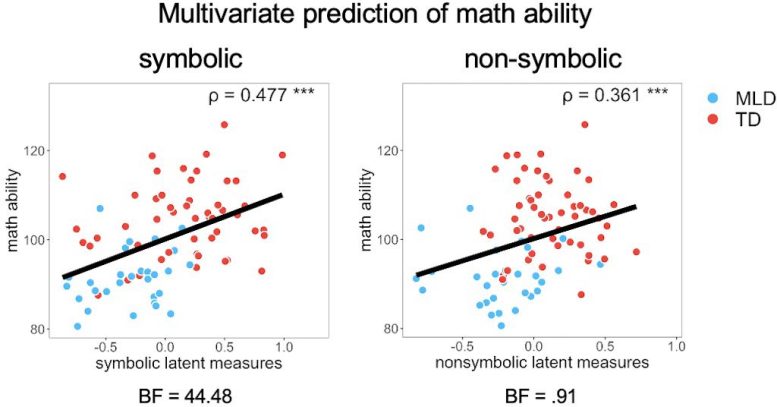
Brain imaging revealed why. The children who struggled showed weaker activity in regions responsible for monitoring performance and adjusting behavior—the mental equivalent of noticing something isn't working and pivoting. The researchers found they could actually predict which children would have math difficulties just by looking at this brain activity.
This reframes the whole problem. "These impairments may not necessarily be specific to numerical skills," Chang noted. "They could apply to broader cognitive abilities that involve monitoring task performance and adapting behavior as children learn."
In other words, a child struggling with math might not have a math problem at all. They might have a problem with the learning process itself—the ability to notice when a strategy isn't working and try something different. That's a crucial distinction, because it opens different doors for support.
The team is now testing their model with larger groups of children, including those with other learning disabilities. If this pattern holds across different subjects, it could reshape how educators identify struggling learners and where they focus help.