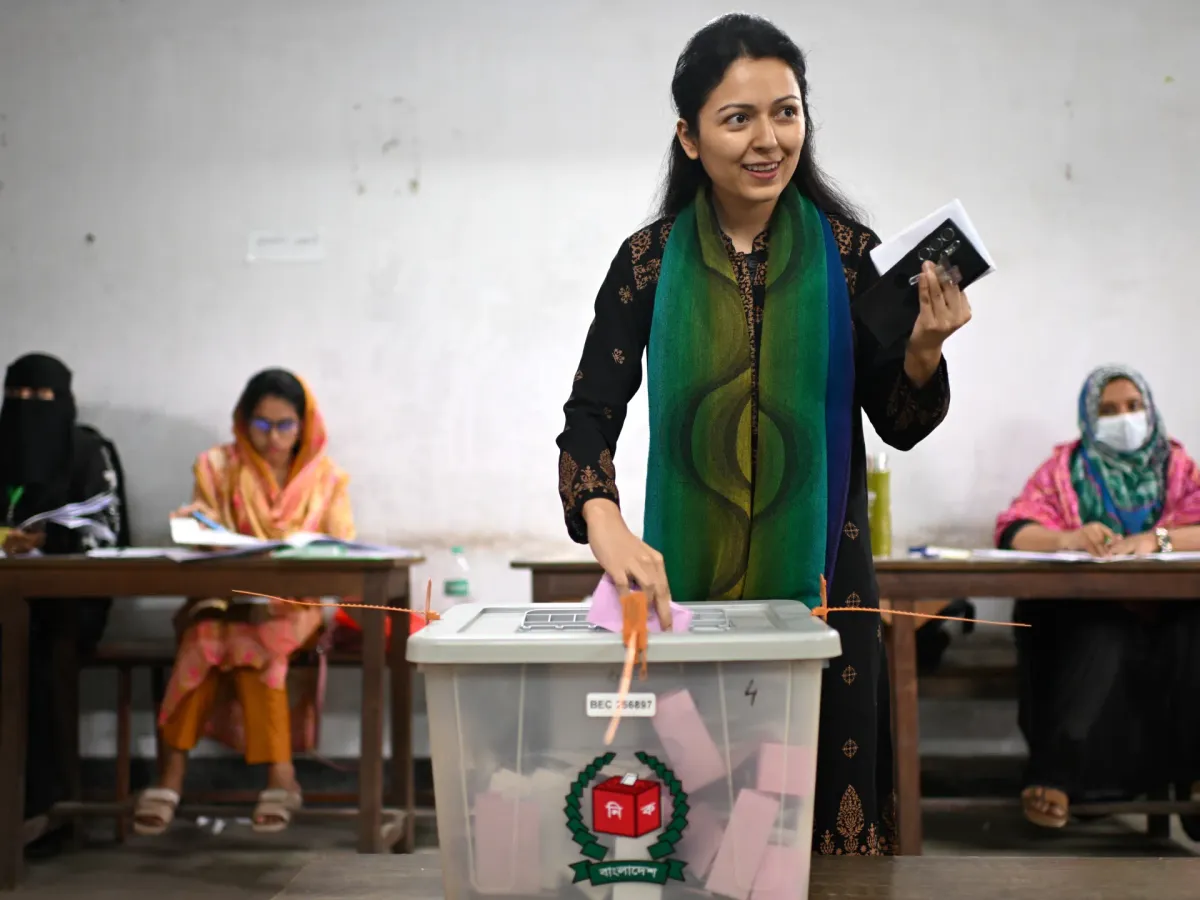
Standing in line at a government school in Dhaka, Hasan Hoque—a former teacher—laughs with the men around him. He hasn't voted since 2008. That was the year Sheikh Hasina returned to power and then, over 15 years, systematically hollowed out elections until a student-led uprising in 2024 forced her into exile.
"It's been a while standing in this line, but nothing matches the feeling of casting my own vote," Hoque tells Al Jazeera, smiling. "It feels like a festival."
For him and millions of Bangladeshis, Thursday's parliamentary election was more than a ballot. It was a return to something that had been stolen.
We're a new kind of news feed.
Regular news is designed to drain you. We're a non-profit built to restore you. Every story we publish is scored for impact, progress, and hope.
Start Your News DetoxThe weight of waiting
Jainab Lutfun Naher had also waited 17 years. She was pregnant with her daughter during the last free election in 2008. Today, her daughter is 17, and Naher voted for the first time since then.
"It feels absolutely great to vote," she said. "I want this country to prosper. I want it to be democratic, where everyone has rights and freedoms."
Across Dhaka's 20 parliamentary constituencies, the same scene repeated: long queues snaking outside school gates and community centres, people arriving early, staying late. First-time voter Nazmun Nahar said she "was so excited I could hardly sleep last night." She wasn't alone in her language. "It felt like Eid," she told Al Jazeera—the Muslim religious festival—a phrase echoed by the Chief Election Commissioner himself, who described an "Eid-like atmosphere" spreading through polling stations.
The government declared a three-day holiday. Millions travelled home to vote, many on crowded trains, rooftops included. Abdur Rahman, a voter in northern Bangladesh, watched his neighbours and extended family pour back into their hometowns. "We were robbed of the joy of voting for so long," he said. "None of us wanted to miss this opportunity."
This wasn't nostalgia. Between 2008 and 2024, elections under Hasina's Awami League became theater. "They would cast our votes themselves, so we were not even needed at the polling centres," Hoque explained. The uprising that toppled Hasina in 2024 wasn't just about removing a leader—it was about reclaiming the right to choose.
What comes next
Beyond choosing a new parliament, voters also endorsed the "July Charter," a constitutional reform document born from the uprising, designed to prevent future authoritarian rule. Two main alliances competed: the Bangladesh Nationalist Party (BNP) and a coalition led by Jamaat-e-Islami, which includes the National Citizen Party—founded by the youth activists who ousted Hasina.
After voting, Muhammad Yunus, head of the interim government, called it "the birthday of a new Bangladesh." Shafiqur Rahman, leader of Jamaat-e-Islami, framed the election as a "turning point," hoping for a government "that does not belong to any individual, family or party, but to the millions of people of this country."
Analysts noted the election was largely peaceful, with only scattered allegations of irregularities—far below the threshold that would change the overall result. "Minimal violence in the election is good," political analyst Dilara Choudhury told Al Jazeera. But she cautioned that an election alone doesn't mean democracy is secured. What matters next is whether both governing and opposition forces jointly pursue the reforms outlined in the July Charter: accountability, rule of law, good governance.
Voters like Mazeda Begum carry specific hopes. "There are many problems in our education system," she said. "We also face economic difficulties in our daily lives. I hope the new government will work for us."
For a country that spent 15 years watching its votes cast for it, the real test begins now—not in the polling booth, but in what happens after.