For the first time in Olympic history, the 2024 Paris Games achieved gender parity. In January 2025, the NCAA unanimously approved revenue-sharing for women's March Madness, matching compensation men's teams have received since 1991. These aren't isolated wins. They're part of a broader shift: in 2024 alone, at least 20 women's sports teams had their inaugural seasons, and three new leagues launched for hockey, volleyball, and professional soccer.
But momentum means nothing without infrastructure. The real question isn't whether women's sports are having a moment—it's whether that moment can become a movement. Here's what's actually building that foundation.
The visibility problem is finally being solved
For years, women's sports existed in the margins of mainstream media. Google changed that by showing men's and women's sports updates side-by-side in search results. More importantly, a new layer of creators is filling the gaps. Coach Jackie J built an audience of hundreds of thousands sharing snappy women's sports stories on TikTok and Instagram. A magazine called Snatch publishes schedules, trophy guides, and maps of women's sports bars—the kind of practical infrastructure that casual fans actually need.
We're a new kind of news feed.
Regular news is designed to drain you. We're a non-profit built to restore you. Every story we publish is scored for impact, progress, and hope.
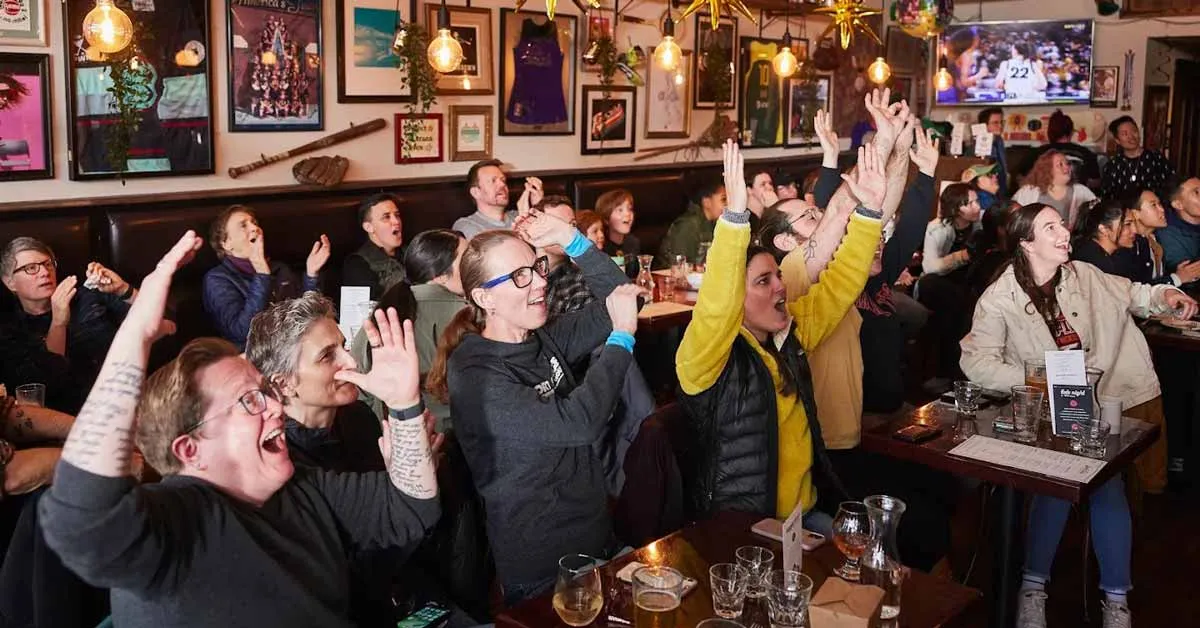
Start Your News DetoxTogethxr, founded by athletes Alex Morgan, Simone Manuel, Chloe Kim, and Sue Bird, took this a step further. In March 2022, exactly one sports bar in the world was dedicated exclusively to women's events. Today, 20 more have opened or are opening soon. That's not just a number—it's a signal that watching women's sports is becoming a normal social activity, not a niche pursuit.
Girls and women must be protected in athletic settings. Photo courtesy of Women's Sports Foundation
Health and safety are becoming non-negotiable
Watching sports means nothing if the athletes playing them aren't protected. Yale Medicine launched the Female+ Athletic Program, the first clinic of its kind dedicated to treating and studying sports injuries that disproportionately affect girls and women. It's a recognition that women's bodies have different injury patterns, and they deserve specialized care.
The other safety crisis is less visible but just as urgent: cyberbullying. Elite women athletes competing in public-facing events face relentless sexist and racist harassment online. After the 2024 Olympics, World Athletics took action, offering 25 athletes AI protection on their social media accounts. It's a band-aid on a larger wound, but it's also proof that governing bodies are starting to treat athlete safety as a requirement, not an afterthought.
Jenny Nguyen, founder of Sports Bra, a franchise opening women's sports bars across the country. Photo courtesy of Sports Bra
Leaders are actively building the next generation
Billie Jean King wasn't the last athlete to weaponize her platform for change. Track star Allyson Felix famously pushed back when Nike refused to protect her during pregnancy, then launched Always Alpha, a sports management firm exclusively representing women athletes. That's not just a business move—it's a signal to young athletes that success comes with responsibility.
Professional women's rugby is expanding into Denver, Boston, Chicago, and Minneapolis. The Philadelphia Eagles' all-women management team, highlighted when Jalen Hurts became Super Bowl MVP, introduced thousands of new fans to the sport while modeling what leadership looks like.
Left to right: Alex Morgan, Simone Manuel, Chloe Kim, and Sue Bird, the founders of Togethxr. Photo courtesy of Togethxr
What's actually at stake
There's one critical conversation happening in parallel to all this growth: policies targeting transgender athletes have swept through statehouses and the NCAA. These policies are narrowing who gets to call themselves a woman athlete, and they contradict the momentum of inclusion. As fans, athletes, and people, the work is to keep shifting culture in the opposite direction—toward a sports world that's actually big enough for everyone.
The infrastructure for women's sports isn't built yet. But for the first time, it's being built intentionally, by people who understand that visibility, safety, and leadership aren't nice-to-haves. They're the foundation. What happens next depends on whether fans keep showing up.