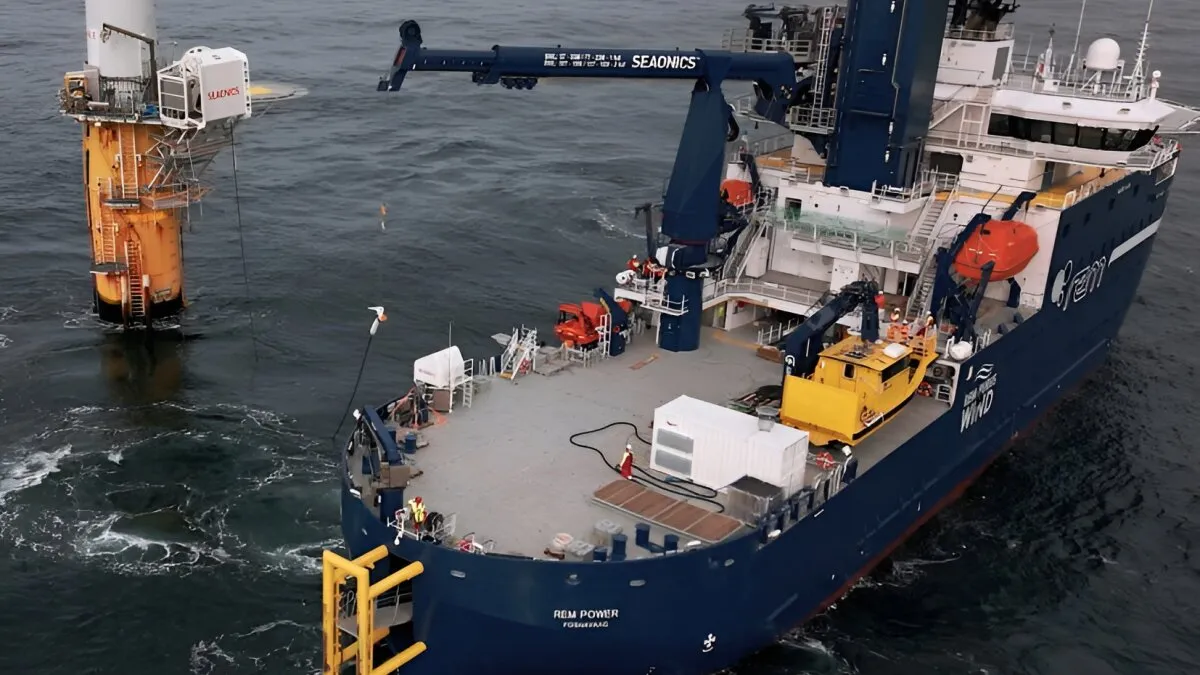
Engineers in Norway have created a new "plug and play" charging system. It allows electric ships to recharge at sea using a magnetic field. This inductive technology replaces traditional physical plugs. These plugs often suffer from corrosion and wear in saltwater.
The system is a breakthrough from the Ocean Charger project. This project is a team effort led by shipbuilding company VARD and other green energy partners. It started in 2023 to test a charging solution for ships at offshore wind farms. The goal is to keep emission-free vessels running without needing to return to shore for power.
Solving the Offshore Charging Challenge
The maritime industry is moving towards electric and hybrid-electric ships. However, recharging batteries has been a big hurdle. Charging stations are usually on land, which limits how far electric vessels can travel. Experts suggested building charging stations at sea, powered by wind turbines. This would allow ships to recharge without long trips back to port.
We're a new kind of news feed.
Regular news is designed to drain you. We're a non-profit built to restore you. Every story we publish is scored for impact, progress, and hope.
Start Your News DetoxBut offshore charging brought new problems. Regular charging plugs are made for stable, dry places. They need direct metal-to-metal contact. At sea, waves, currents, and wind constantly move ships and charging platforms. Even small shifts can damage connectors or stop power flow.
Saltwater also causes issues. It conducts electricity and corrodes metal. Over time, salt and rust can degrade contacts, making charging less efficient and risking overheating. Water getting into connectors can also cause short circuits.
To fix these problems, researchers developed contactless marine charging systems. These systems use inductive power transfer, sending electricity wirelessly through magnetic fields. It's like wireless phone charging, but much bigger.
A transmitting coil in the charging platform creates a magnetic field. A receiving coil on the ship picks up this field, which creates an electric current. This happens without any physical contact. Both coils are sealed in waterproof, salt- and algae-resistant material.
Giuseppe Guidi, a senior research scientist at SINTEF, explained that they found a solution that works like a regular electrical contact. But it avoids problems by encapsulating the plug in materials that can withstand harsh conditions.
This method solves many issues with charging at sea. It removes exposed electrical contacts, reducing corrosion. Small movements between the ship and platform are less of a problem because power can still transfer. There's also less risk of electrical arcing. The sealed system protects components from seawater and moisture.

Powering the Future of Sea Travel
While the technology seems simple, it requires precise engineering. Researchers say it's much more complex than just scaling up wireless phone charging. The system uses special cables, smart control software to reduce energy loss, and electromagnetic parts that can handle high power in rough seas.
Another key part of the project is using wind turbines to generate energy locally. If winds are low, backup storage ensures continuous charging. This creates a fully working "Offshore Substation (OSS)."
Håvard Vollset Lien, head of the Ocean Charger project at VARD, said the OSS acts as an electrical hub at sea. It collects electricity from wind turbines and allows ships to charge directly, without going to shore.
The project aims to build networks of these substations along coastlines, starting with Norway. Compatible vessels could then stop and charge. Vollset Lien hopes that one day, electric service and coastal vessels charging at sea will be a common sight.
This project is very important for the maritime industry. It will especially help service vessels used in oil and gas, offshore electrical work, and marine law enforcement.