Every time you toss a receipt into a bag or bin, you're holding a small piece of chemical engineering. Thermal paper—the stuff that prints your supermarket receipt, boarding pass, or restaurant bill—relies on toxic compounds like BPA and BPS to create images without ink. When these papers get recycled, those chemicals leach into water and soil. It's a tiny environmental wound we inflict millions of times a day, mostly without noticing.
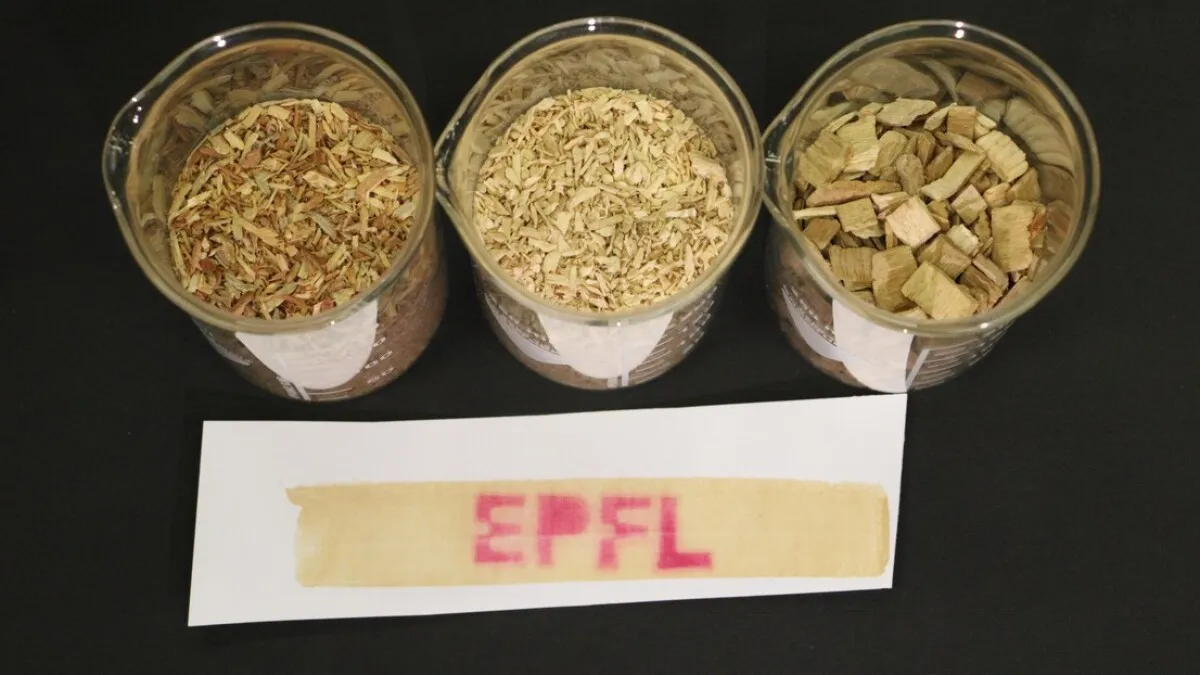
Researchers at Switzerland's Federal Technology Institute of Lausanne (EPFL) have found a way to close that wound. They've developed a thermal paper coating made from lignin—essentially the natural glue that holds wood fibers together—combined with a sensitizer derived from plant sugars. The result works like conventional thermal paper but without the toxicity.
The chemistry here is elegant. Lignin contains chemical groups that naturally act as color developers—doing the job that synthetic toxins currently handle. By applying a special fractionation process to the lignin and pairing it with the plant-based sensitizer, the EPFL team created a coating that responds to heat just like traditional thermal paper. When printed receipts were tested, they remained legible even after a year of exposure. The toxicity levels dropped by two to four orders of magnitude compared to BPA-based paper.
We're a new kind of news feed.
Regular news is designed to drain you. We're a non-profit built to restore you. Every story we publish is scored for impact, progress, and hope.
Start Your News DetoxThere's a catch, though not a fatal one. The bio-based receipts produce lower contrast than conventional thermal paper, so the text isn't quite as crisp. Before this can move to large-scale production, the researchers need to refine the print quality. But the core problem is solved: you can have thermal paper that works, lasts, and doesn't poison the water supply.
The work, published in Science Advances, fits into a broader pattern of wood-based innovation. Scientists have already used engineered wood polymers for helmets, batteries, and sports cars. Thermal paper is smaller in ambition but perhaps more consequential—it's a solution to a problem that affects billions of everyday transactions. Once the contrast improves, this could become the default rather than the exception.