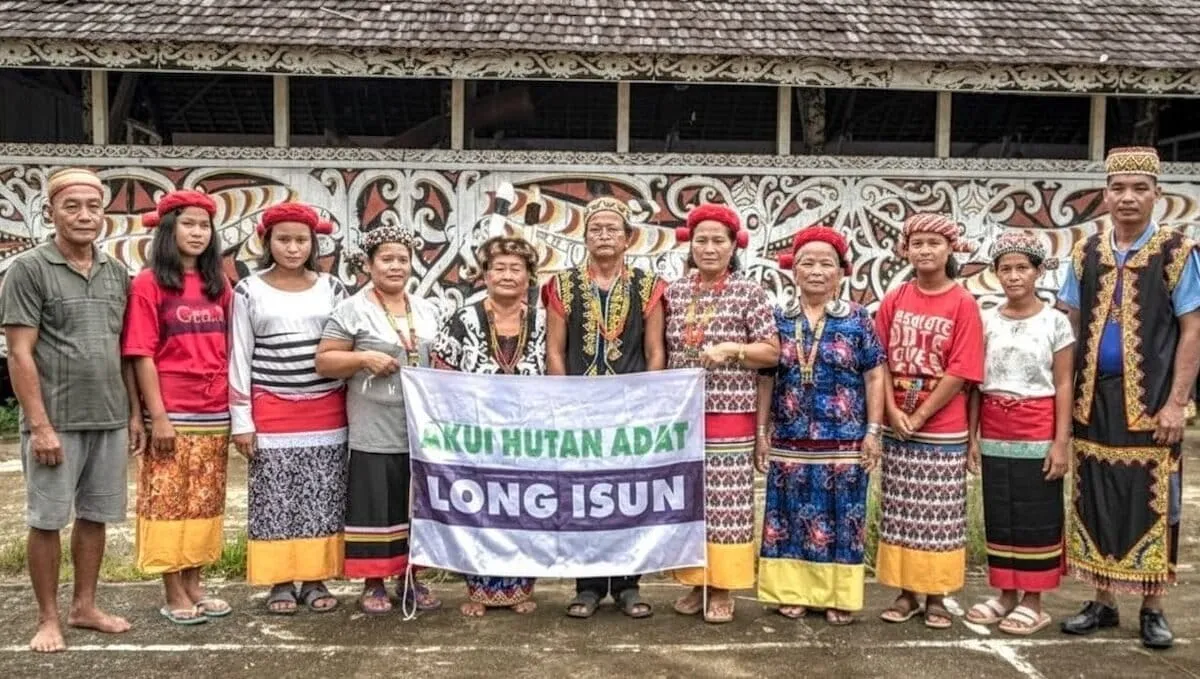
In the upper reaches of the Mahakam River, inside one of the last intact rainforest corridors of Borneo, the Dayak Bahau community of Long Isun has been fighting for recognition of land they've inhabited for generations. On official maps, their existence is reduced to an administrative code—no record of the rivers they follow like family, the sacred groves where elders are buried, the hills that hold ancestral stories. Their cosmology simply disappears beneath lines drawn to serve other interests.
This erasure has real consequences. When companies arrive with permits approved in distant government offices, those papers carry more weight than generations of lived governance. Now, international climate finance has entered the same forest, treating the landscape as a source of carbon credits while the people who protected it have yet to see their rights formally acknowledged.
The complaint
In November 2025, representatives from Long Isun filed a formal grievance against the World Bank's Emission Reduction Program in East Kalimantan province. Their argument is straightforward: the project infringed upon their rights, ignored unresolved territorial conflicts, and failed to uphold a meaningful process of free, prior and informed consent—what's known as FPIC in climate and development work. This complaint isn't a sudden reaction. It's the culmination of more than a decade of resistance: daily patrols, enforcement of customary law, legal battles, and international advocacy.
We're a new kind of news feed.
Regular news is designed to drain you. We're a non-profit built to restore you. Every story we publish is scored for impact, progress, and hope.
Start Your News DetoxThe tension sits at the heart of how climate finance works on the ground. Carbon reduction programs need to show emissions prevented. Forests prevent emissions. But forests don't exist in isolation—they're territories with histories, governance systems, and people who've stewarded them through centuries of change. When a climate program arrives without first resolving who actually holds rights to the land, it can inadvertently replicate the same power dynamics that led to the erasure in the first place.
Long Isun's grievance raises a question that climate funders are only beginning to grapple with: Can you authentically reduce emissions while leaving Indigenous land rights unresolved. The answer, based on years of implementation in similar contexts, appears to be no—or at least, not without creating new conflicts that undermine the very conservation goals the program aims to achieve.
The World Bank's ER Program is designed to provide financial incentives for reducing deforestation. On paper, this aligns with both climate and conservation goals. But implementation requires clarity on land tenure, genuine consultation with communities, and recognition of existing governance systems. Long Isun's case suggests that clarity and recognition were missing from the start.