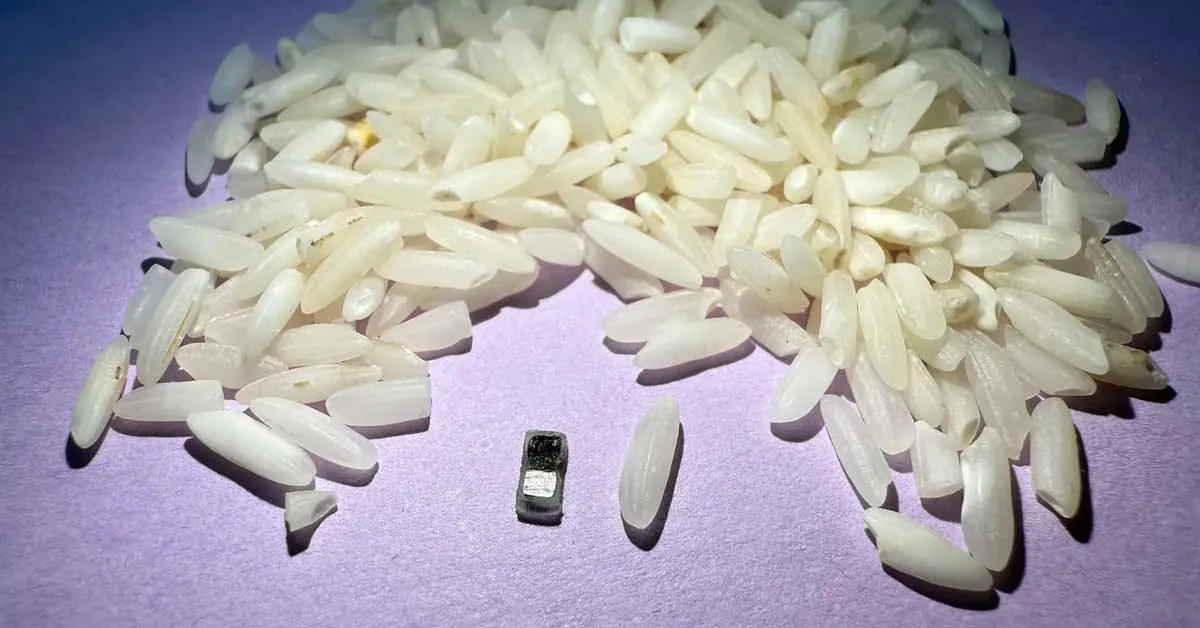
A Northwestern University team has created a pacemaker smaller than a grain of rice that dissolves once it's no longer needed—solving a problem that has haunted cardiac surgery for decades.
About one percent of babies are born with congenital heart defects. Many need temporary pacing for just seven days after surgery while their hearts self-repair. But those seven days matter enormously, and the traditional solution carries real danger.
Conventional pacemakers rely on wires that protrude through the skin, attached to a device outside the body. When the temporary pacing is done, a surgeon must remove those wires. The problem: scar tissue often envelops them. Pulling them out can damage the heart muscle itself, sometimes fatally. Astronaut Neil Armstrong died from internal bleeding after wires from his temporary pacemaker were removed following bypass surgery.
We're a new kind of news feed.
Regular news is designed to drain you. We're a non-profit built to restore you. Every story we publish is scored for impact, progress, and hope.
Start Your News DetoxIgor Efimov, a biomedical engineering and cardiology professor at Northwestern, set out to create a pacemaker as small and temporary as the clinical need itself. Working with colleagues, he developed a device no larger than a grain of rice that can be injected minimally invasively and then simply dissolves when the heart has healed. No removal surgery. No scar tissue. No risk.
How It Works
The team paired the tiny pacemaker with a flexible patch that sits on the patient's chest. The patch detects irregular heartbeats and, when an arrhythmia occurs, automatically emits pulses of near-infrared light to wirelessly control the pacemaker and restore the correct heart rate.
Researchers tested the design in animal models and in hearts from organ donors. Despite its minuscule size, the device delivered as much electrical stimulation as a full-size pacemaker. The wireless control means no wires, no external device to manage, no complicated removal procedure.
For infants born with heart defects, this changes the equation. Those critical seven days of pacing support become safer, less invasive, and free from the complications that have haunted temporary pacing for generations. Efimov's team is already exploring how this approach might extend to other temporary implants across cardiology and beyond—a shift toward medical devices designed to heal and then disappear.